

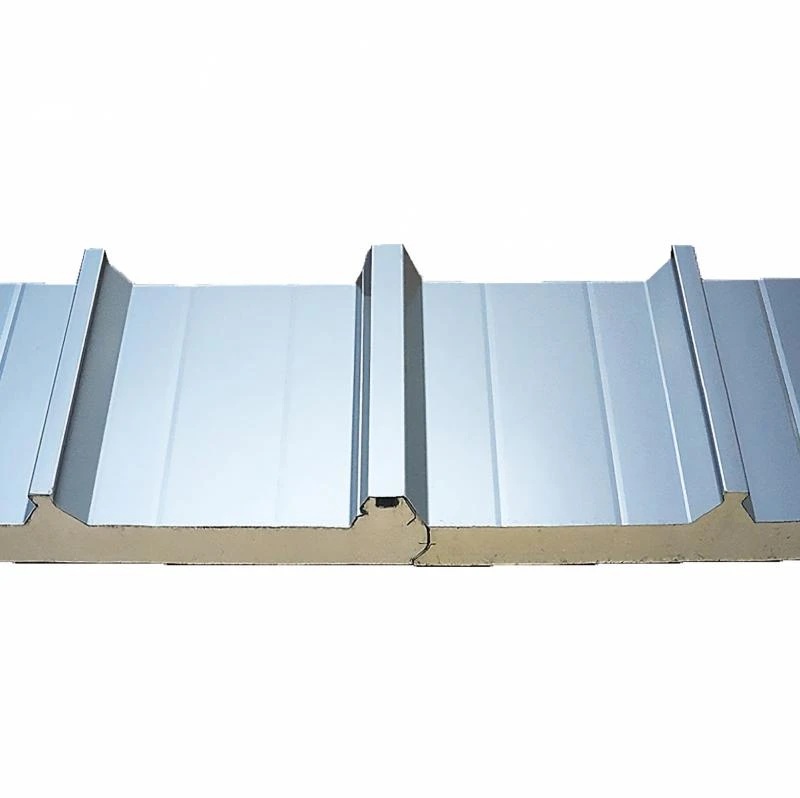
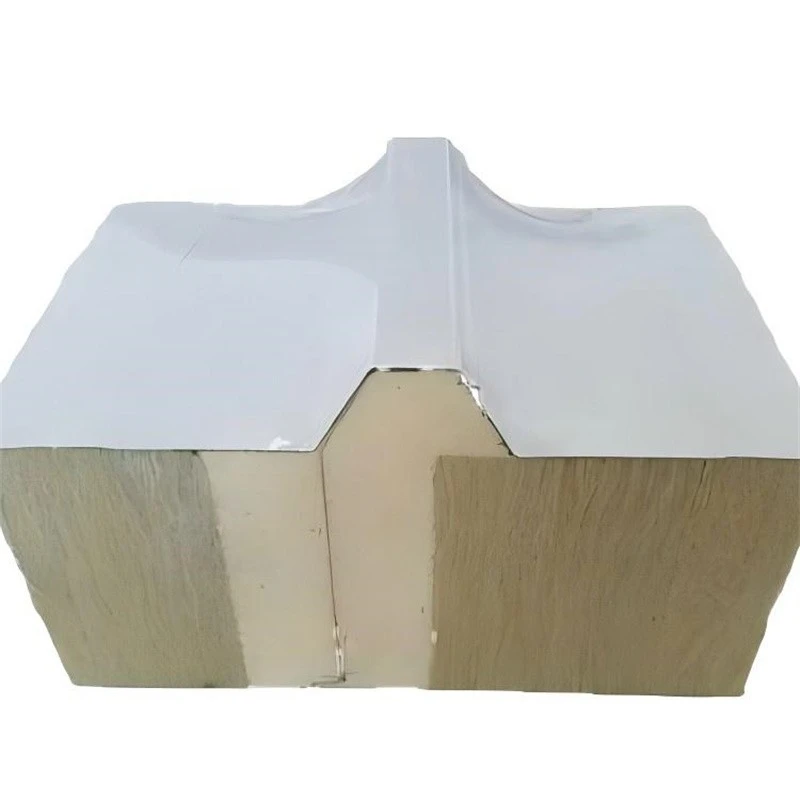
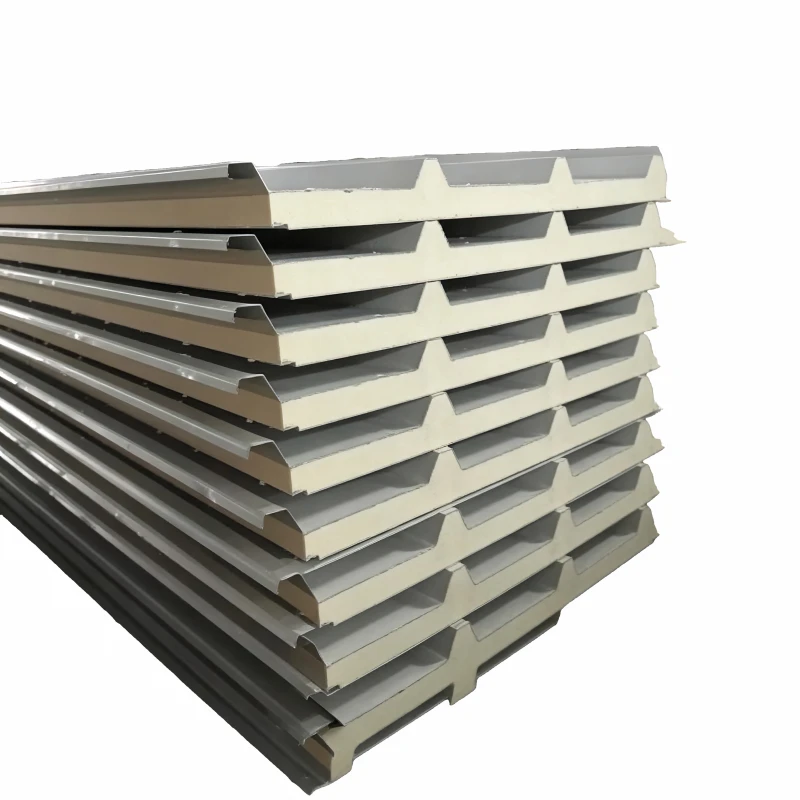
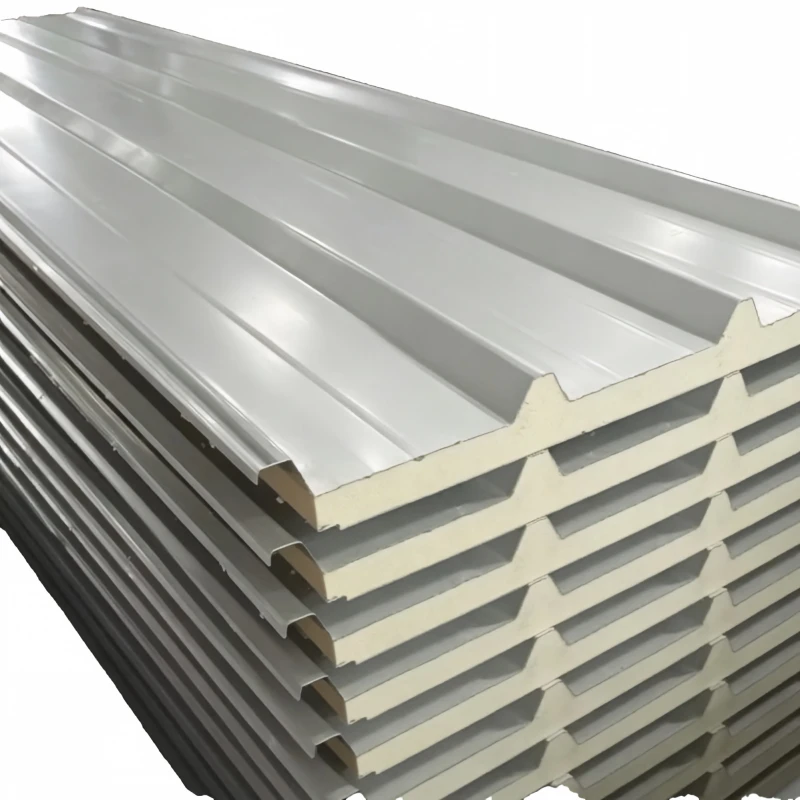
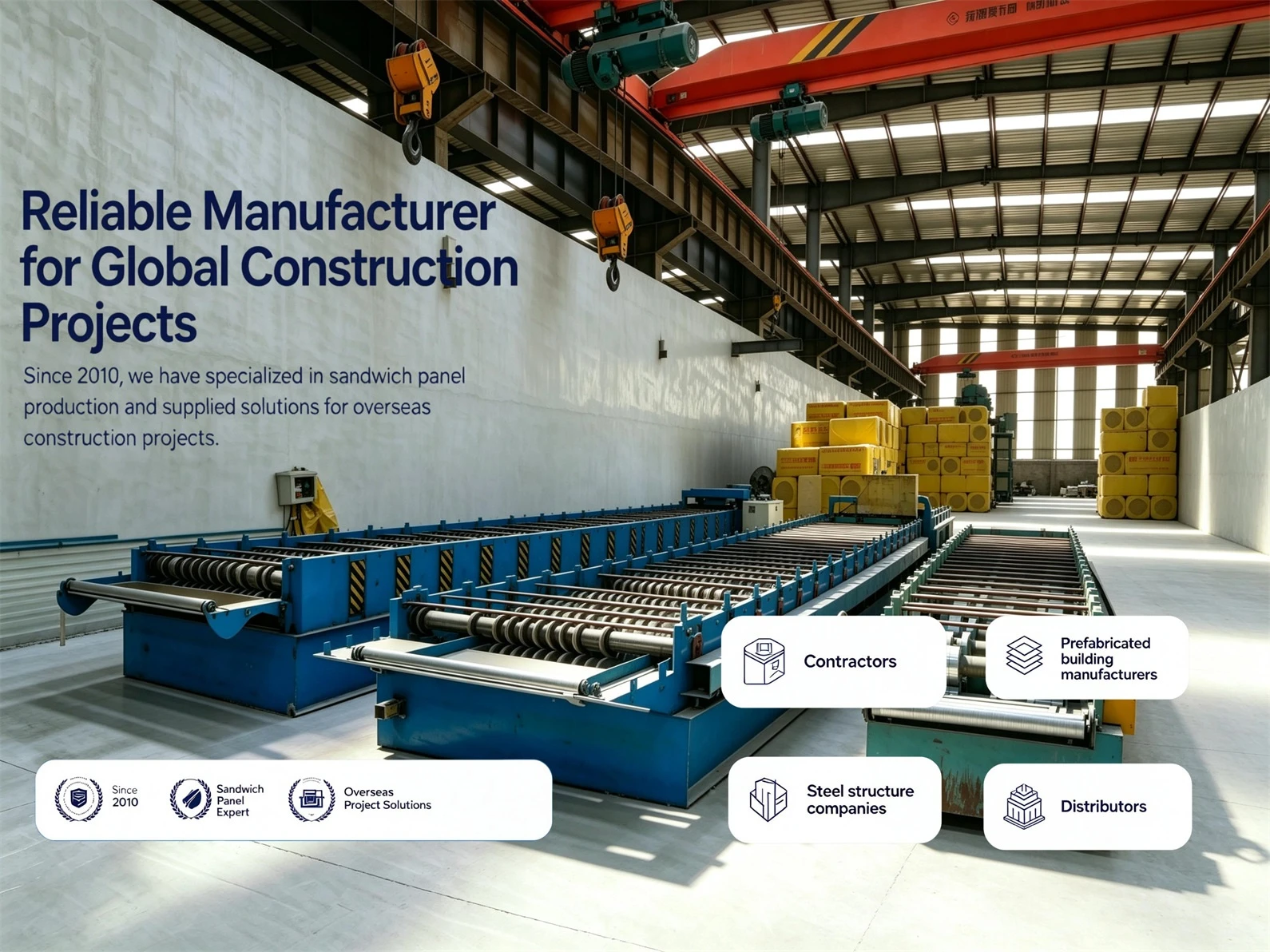
Shenyang Qiangyun Color Steel & Steel Structure Co., Ltd. is one of the most reliable manufacturers and suppliers of roof insulated sandwich puf panel in China. With abundant experience, we are committed to providing high quality customized products with competitive price. Welcome to wholesale advanced roof insulated sandwich puf panel in stock here from our factory. Also, pricelist is available.
Technical Specifications
|
Parameter |
Specification |
|
Product Name |
Roof Insulated Sandwich Puf Panel |
|
Material |
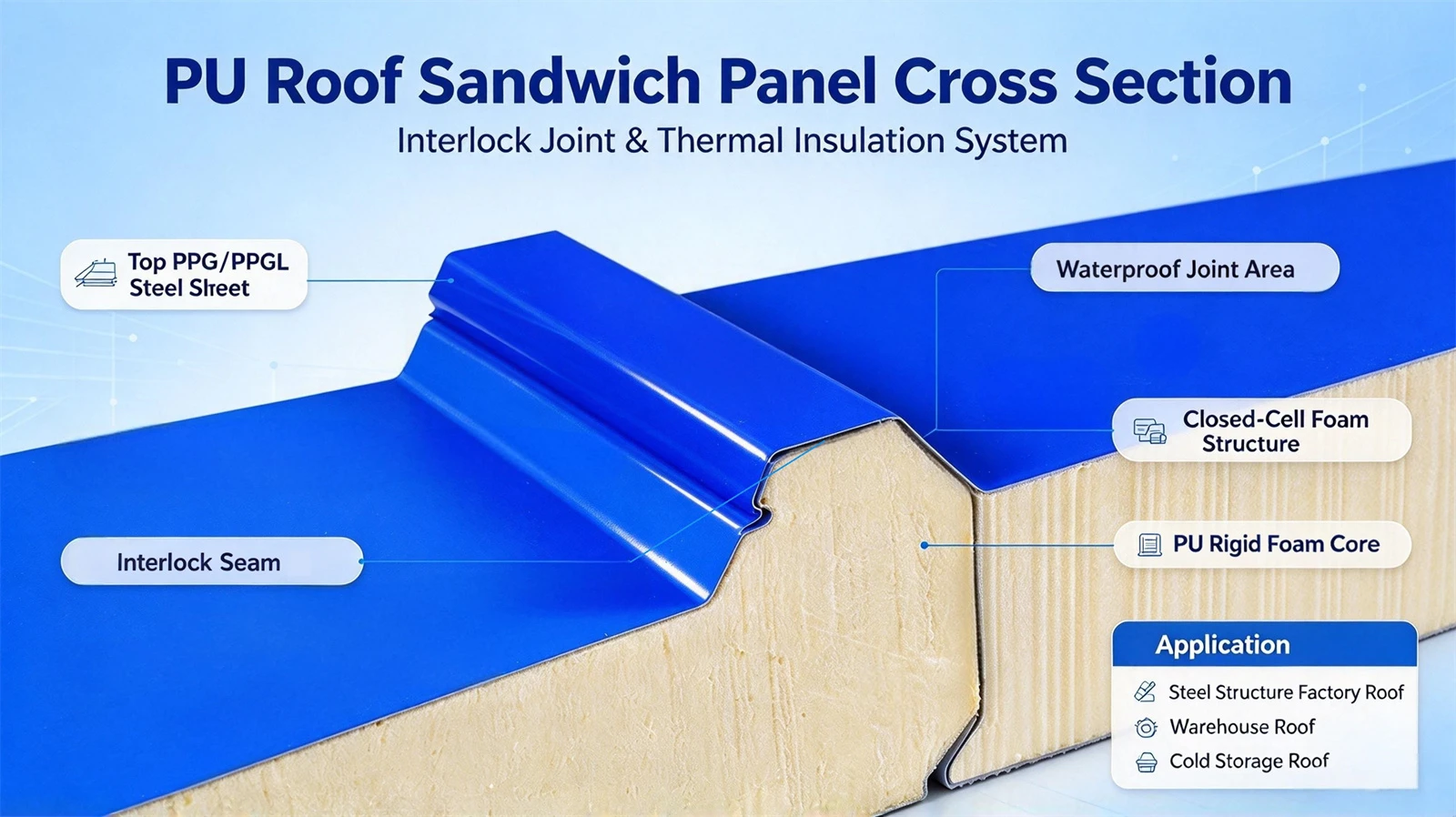
Non-combustible rock wool core + closed-cell PU edge seal, between two metal faces |
|
Surface Material |
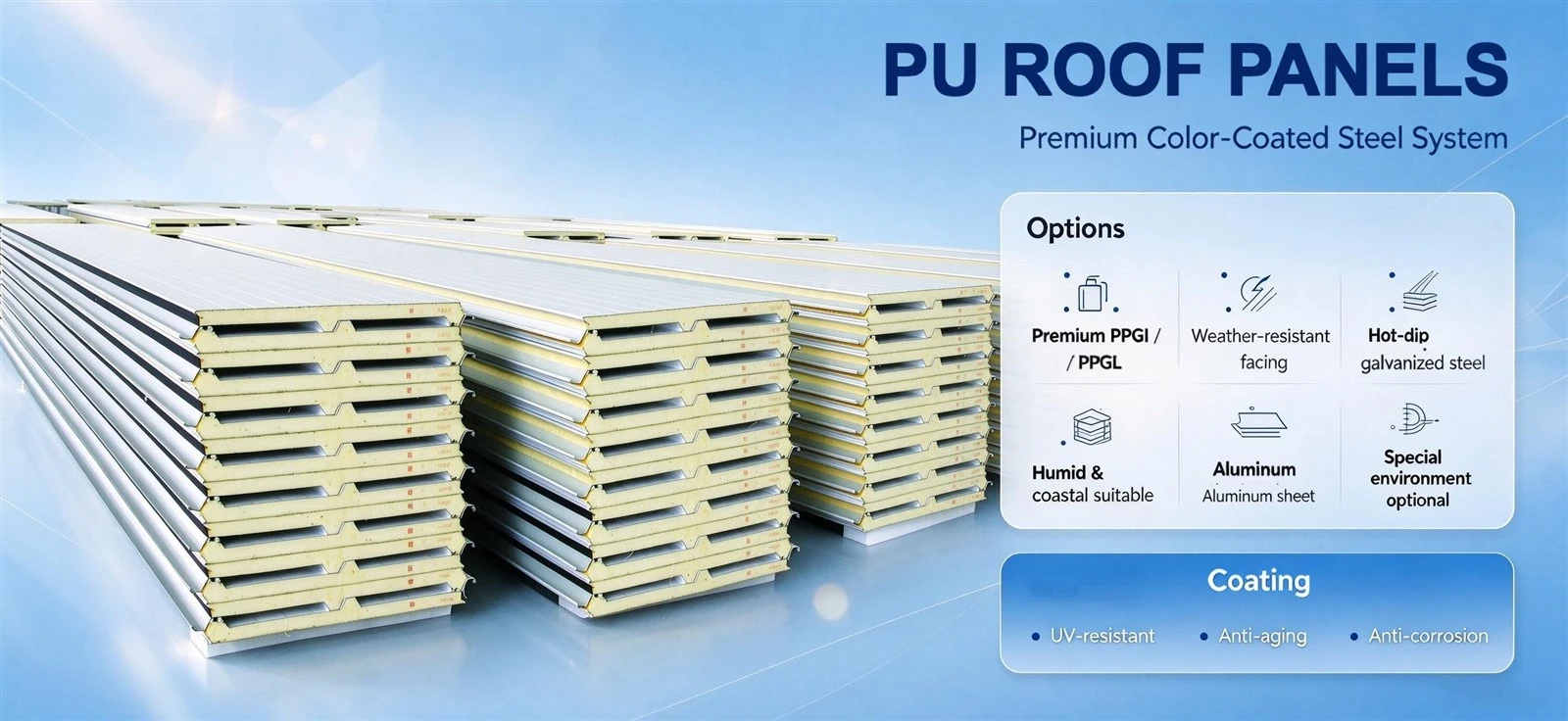
PPGI/PPGL, galvanized, Galvalume, optional Al/stainless |
|
Core Material |
Mineral rock wool to EN 13162; rigid PU confined to the edge seal zone |
|
Panel Thickness |
30 / 50 / 75 / 100 / 120 / 150 / 200 mm - 100 mm default for cooled buildings |
|
Sheet Thickness |
0.3–0.8 mm |
|
Width |
950 / 1000 mm (custom available) |
|
Length |
Cut to drawing, maximum 11.9 m for a 40HQ container |
|
Core / Edge-Seal Density |
Rock wool 100-150 kg/m³; PU edge seal 38-43 kg/m³ |
|
Thermal Conductivity |
Rock wool core 0.036-0.040 W/(m·K); PU edge seal 0.022-0.024 W/(m·K) |
|
Water Absorption |
≤ 1.5% |
|
Reaction to Fire |
Euroclass A2-s1,d0 - EN 13501-1 (rock wool build-up); full PIR core B-s1,d0 - verify per thickness |
|
Connection |
Concealed-fixed corrugated / tongue-and-groove, sealed |
|
Custom Colors |
High-SRI whites and light tones recommended; full RAL available |
|
Applications |
Cooled factories, distribution centres, malls, civil-defence-approved industrial roofs |
|
Service Lifespan |
20-25 years; limited by coating choice rather than by the core |
|
Brand |
QY |
|
Place of Origin |
Liaoning, China |
Thickness & Core Options
Two variables decide the answer in this climate: whether the building is cooled, and what the roof colour is. Working from lambda = 0.040 W/(m·K) for the rock wool core, indicative a 50 mm panel works out near 0.80 W/(m²·K), 75 mm near 0.53, 100 mm near 0.40, 120 mm near 0.33 and 150 mm near 0.27 - and even those need the 5-10% joint and fastener allowance added before they mean anything. For a cooled building in the Gulf we normally land on 100 mm with a light-coloured PVDF face - beyond that the incremental energy saving is smaller than most expect, and the money is usually better spent on the reflectance of finish. Uncooled warehouses and shade structures often sit at 75 mm.
|
Thickness (mm) |
Recommended for Gulf duty |
|
50 mm |
Shade structures, canopies, uncooled storage |
|
75 mm |
Uncooled warehouses and workshops with a light finish |
|
100 mm |
Default for air-conditioned factories and distribution centres |
|
120-150 mm |
Chilled storage, food plants, tight energy targets |
|
200 mm |
Frozen storage and blast freezers |
|
Do not overlook |
Solar reflectance of the finish - it often outweighs an extra thickness step |
Surface Material & Coating Options
|
Option |
Guidance for Gulf duty |
|
PPGI / PPGL pre-painted steel |
Inland sites away from salt exposure |
|
Hot-dip galvanized steel |
Acceptable inland; avoid within coastal salt-spray range |
|
Galvalume (aluminium-zinc) |
Specified as standard for Jeddah, Dammam, Dubai and coastal projects |
|
Aluminium / stainless steel |
For food-grade and chemically aggressive environments on request |
|
Coating |
PVDF for UV and chalk resistance; high-build SMP as the value alternative; avoid PE externally |
Color Customization
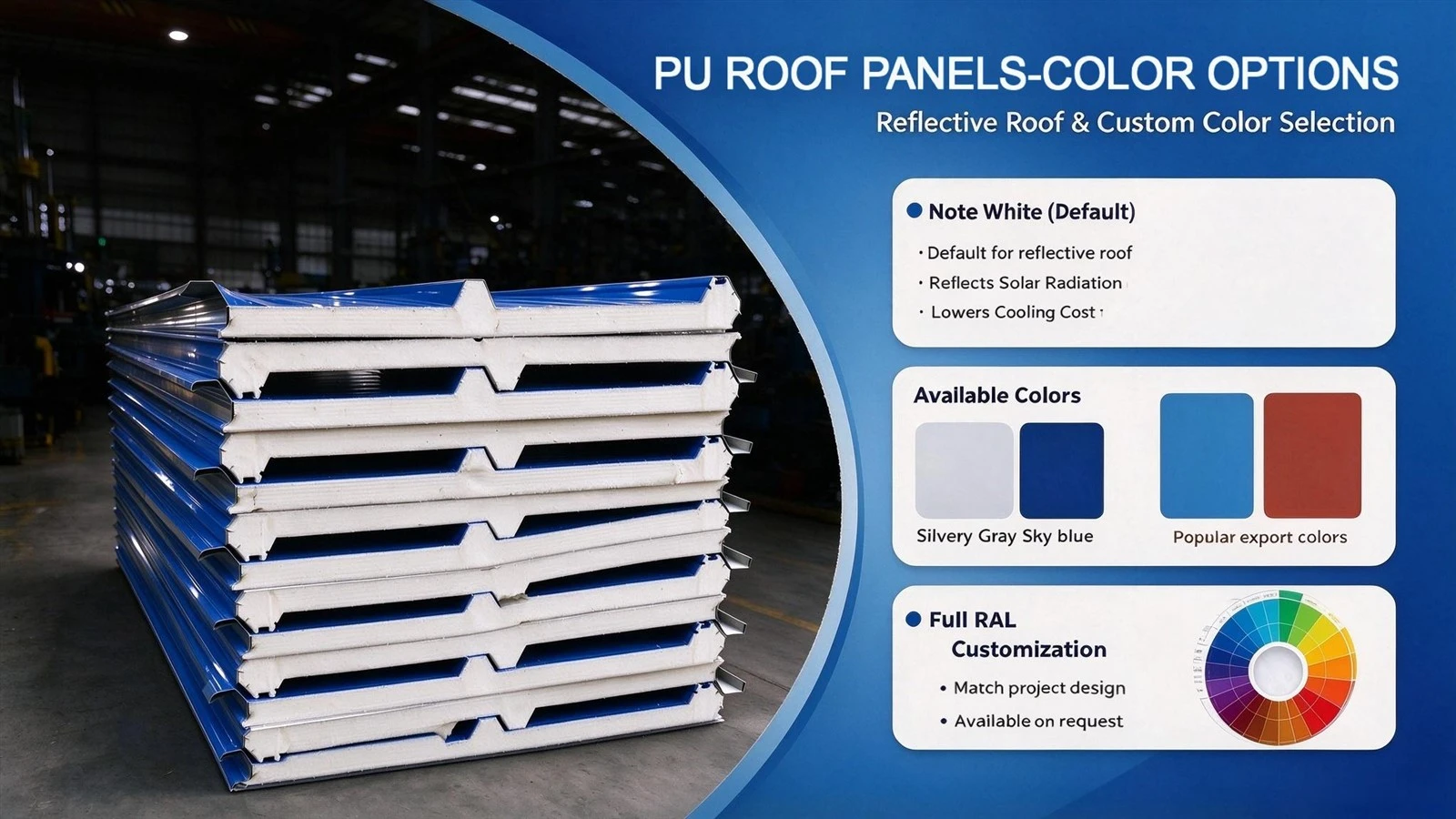
White, light grey, sky blue and brick red are stocked and full RAL matching is available, but in this region colour is a performance choice. A light-coloured face with high solar reflectance can sit tens of degrees cooler than a dark one under the same sun, and that difference shows up directly in the chiller load. Where a corporate colour is mandatory we will quote the solar reflectance figure for each option so the trade-off is visible before you decide, rather than discovering it on the first summer power bill.
Application Scenarios
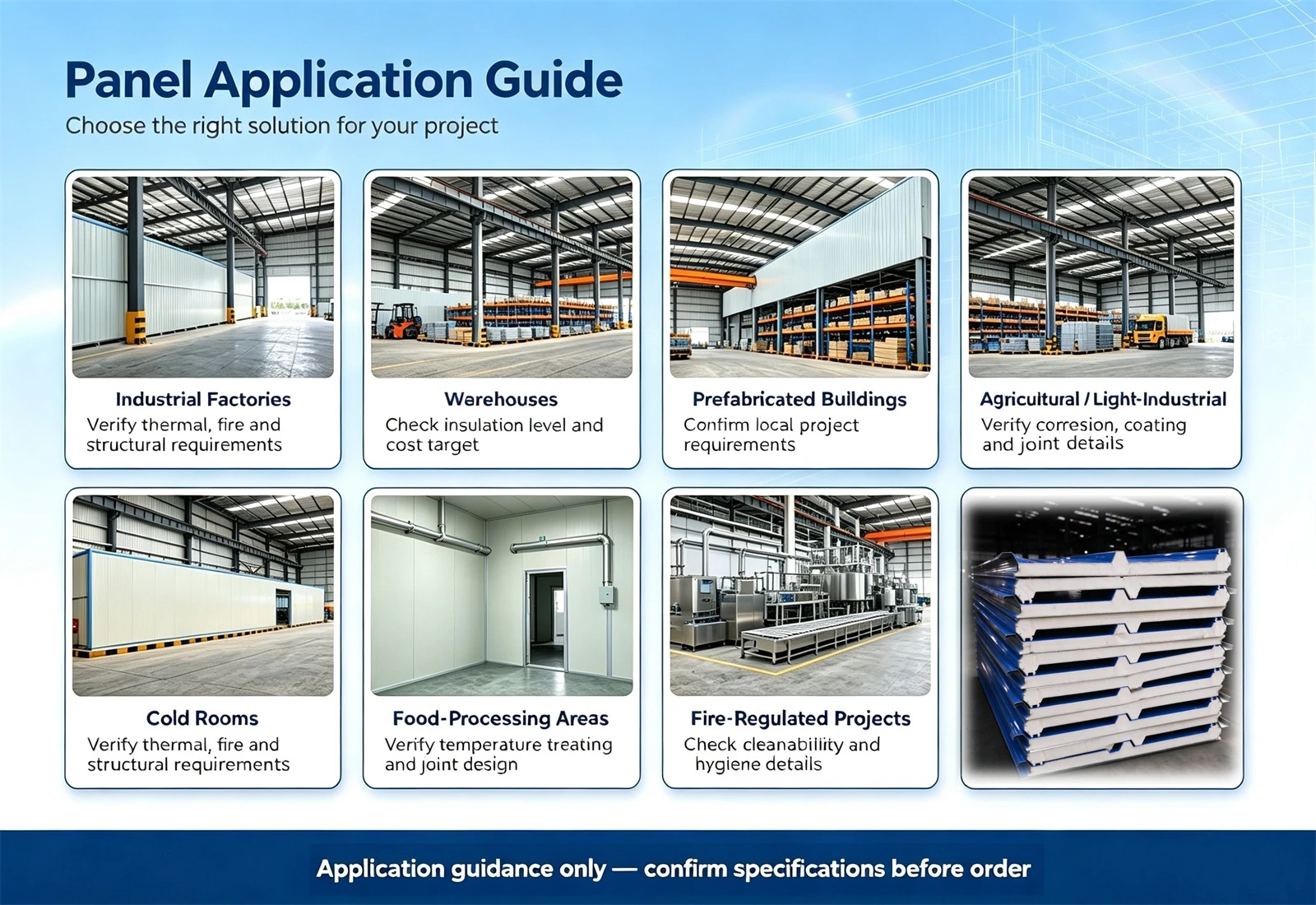
Typical Gulf specifications: air-conditioned factories and assembly plants where the roof dominates the cooling load, large logistics and distribution centres running continuous refrigeration, malls and public buildings with very large uninterrupted roof areas, coastal installations from Jeddah to Dubai where salt spray dictates the substrate, and industrial sheds where a mineral wool core is required to satisfy civil defence fire review.
Target Markets & Climate Fit
This panel is sold globally, but the reason it is specified in the Gulf is specific: heat, UV and, on the coast, salt. The table below sets out how we configure it for the markets we ship most into, so you can see what changes and what does not.
|
Market |
How we configure the panel |
|
Saudi Arabia (Riyadh, Dammam) |
100 mm with white PVDF on Galvalume; civil-defence fire file prepared in advance |
|
UAE (Dubai, Abu Dhabi) |
PVDF mandatory for most consulted projects; reflectance data submitted with the finish sample |
|
Qatar, Kuwait, Bahrain |
Coastal substrate upgrade as standard; sealants rated for high service temperature |
|
Oman, Jordan, Iraq |
Inland sites can drop to Galvanized with SMP where budget is binding |
|
Other regions we ship into |
Same panel, different substrate and thickness - the core specification does not change |
|
Note |
Classifications are thickness-dependent; we issue the report for the build-up you order |
Project Reference
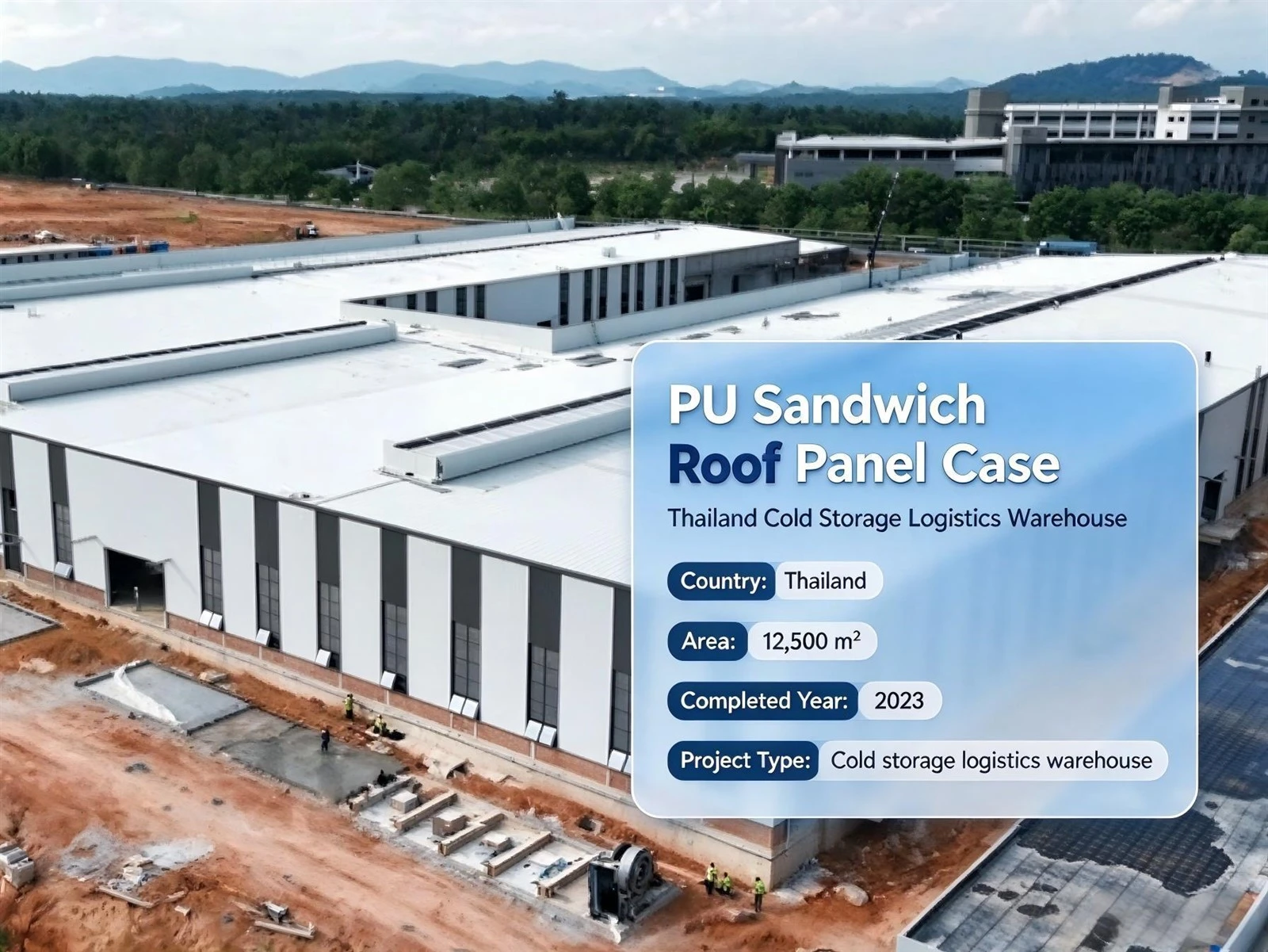
Dammam, Saudi Arabia - 7,800 m² distribution centre for a regional food distributor, completed 2023. The building runs chilled and ambient zones under one roof, so the design challenge was heat gain through the largest surface rather than water ingress. We supplied 100 mm panels with a white PVDF finish, which the client's engineer specified over SMP specifically for gloss retention after watching a neighbouring roof chalk within three years. Sealed PU laps were used to remove thermal bridging along the joints. Post-handover the operator reported lower peak chiller demand than the comparable building they operate on the same site with a darker roof. Energy figures vary with operation and we cannot certify them; what we can supply are the shipment records, coating certificates and reflectance data for the finish used.
Customization & OEM Service
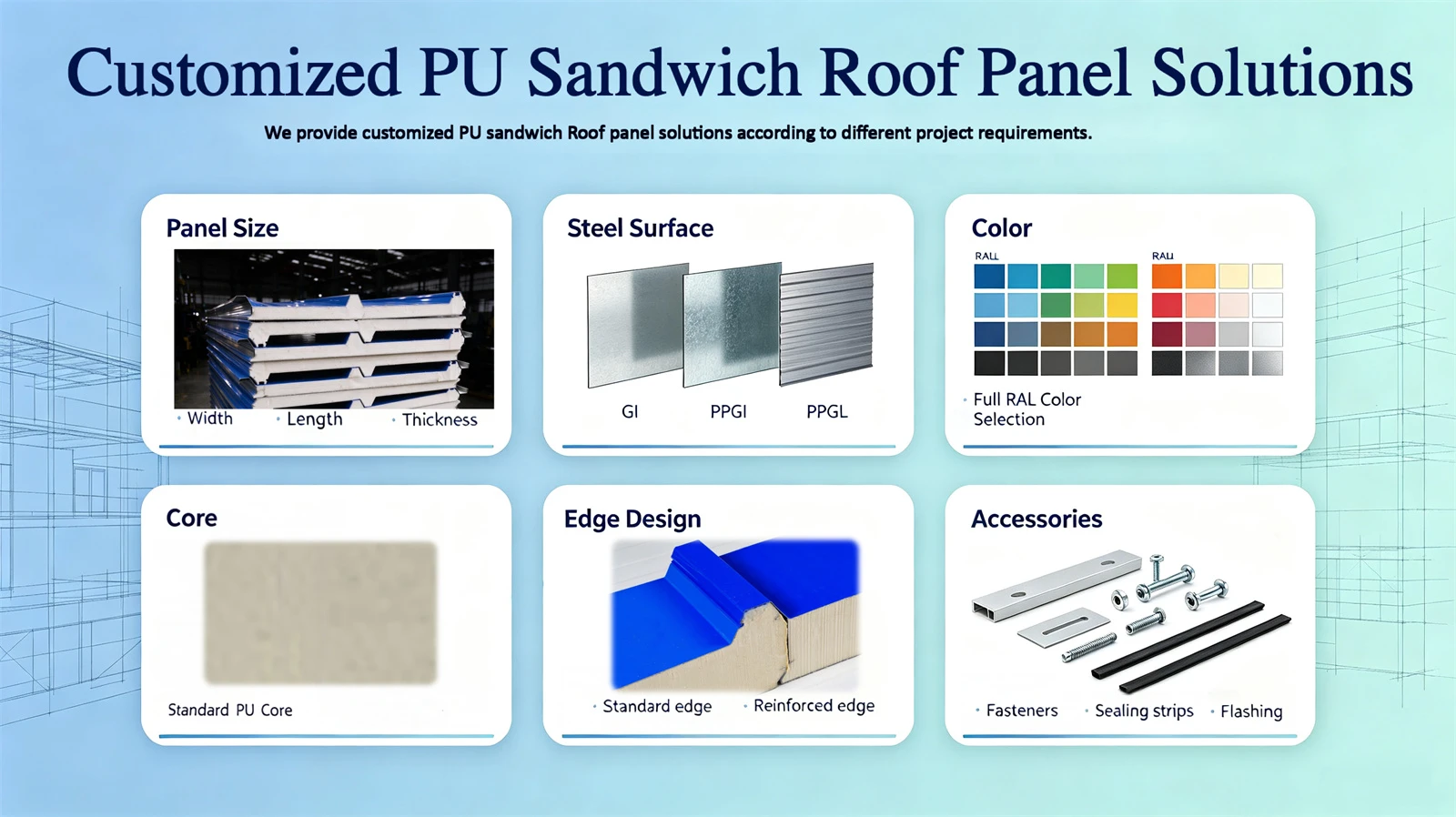
Thickness 30-200 mm, widths of 950 / 1000 / 1150 mm and lengths up to 11.9 m, with faces, substrate, core grade and colour configurable. For Gulf orders we steer clients toward PVDF or high-build SMP on Galvalume rather than steel on zinc, because the failure mechanism here is UV chalking and salt attack at the cut edge, not panel strength. Matching trims, sealants rated for 80 °C service, flashings and fasteners ship together. We also provide the reflectance data for whichever finish you choose.
Certifications & Compliance
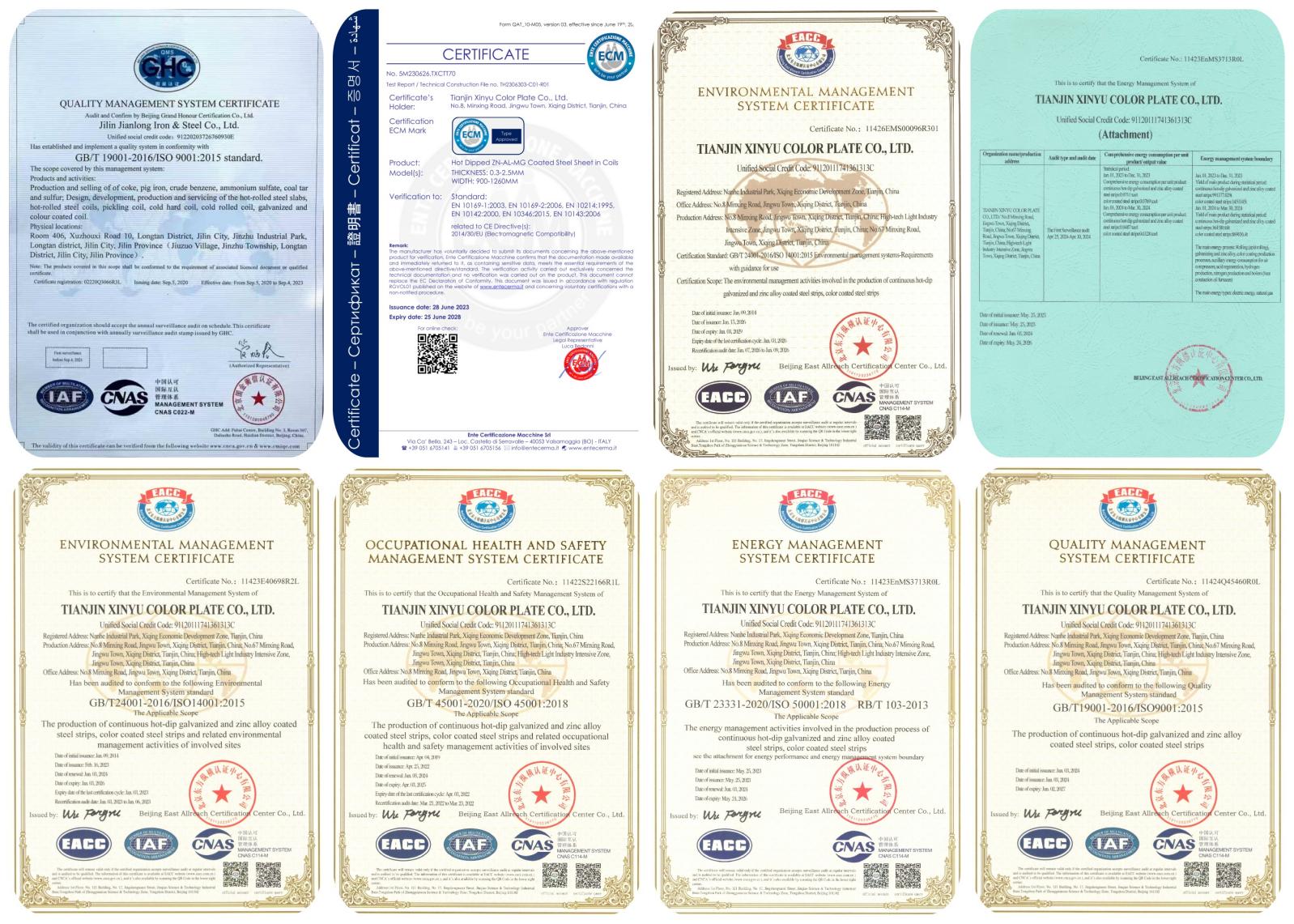
Documentation for this region tends to be reviewed by a consultant before it reaches site, so we prepare it accordingly: EN 13501-1 reaction-to-fire classification for the build-up ordered, EN 13162 conformity for the mineral wool core, EN 14509 for the assembly and EN 12667 thermal conductivity data, plus solar reflectance measured to ASTM C1549 and SRI calculated to ASTM E1980 for light-coloured finishes. Steel is supplied to EN 10346. The plant is certified to ISO 9001, ISO 14001, ISO 45001 and ISO 50001. Where a project requires SASO, local civil defence approval or GOST, we will tell you which items our test evidence covers and which still need local attestation.
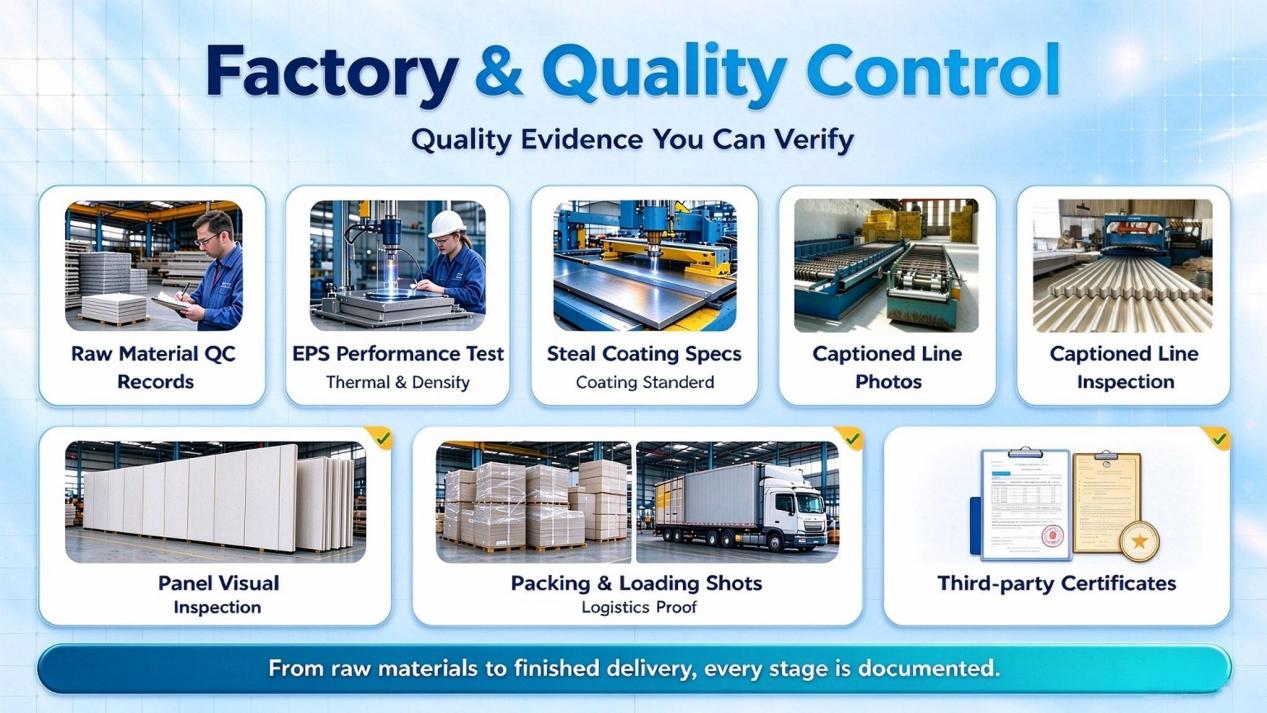
Manufacturing Strength & Quality Control
- Track record: exporting since 2010 into the GCC, wider Middle East, Africa and Asia, including projects reviewed by international consultants and civil defence authorities.
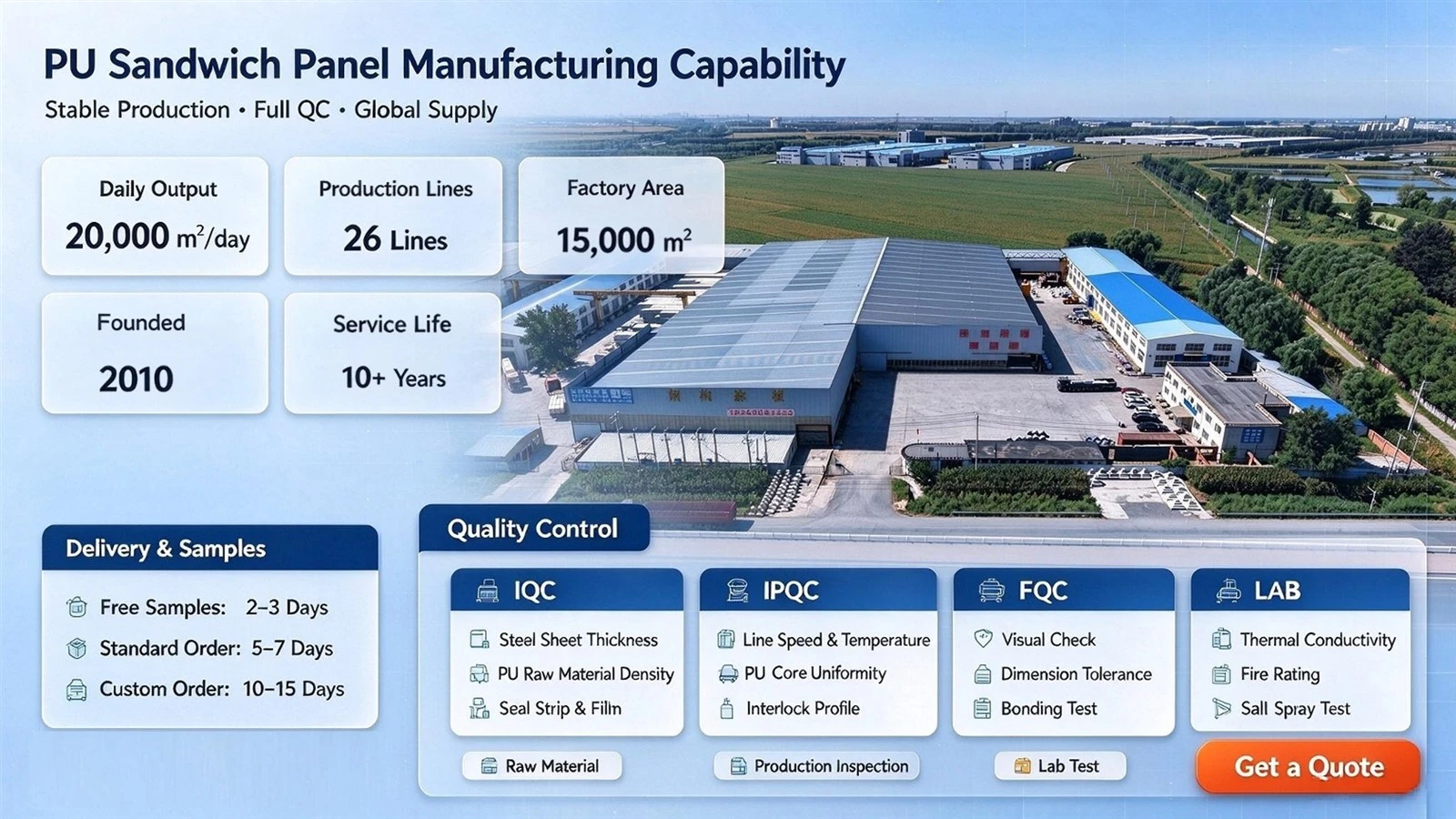
- Capacity: a 15,000 m² plant operating 26 lines at roughly 20,000 m² per day, so container programmes are scheduled rather than squeezed in.
- Heat-ageing control: core density and thickness are verified per batch, and the bond line is tested after accelerated ageing - because a roof that survives Jeddah summers is a bond-strength problem before it is anything else.
- Inspection: coating mass and thickness verified against the coil certificate; bond strength, panel flatness and dimensional tolerance sampled every shift; third-party inspection arranged on request.
- Despatch control: each pallet is numbered against your drawings and photographed at loading, so a short shipment is caught before it sails rather than after.
- Engineering support: U-value calculations, reflectance data and fixing layouts returned with the quotation - normally within one working day.
Lead Time, MOQ & Trade Terms
|
Item |
Detail |
|
Lead Time |
Samples 2 working days. Production 5-7 days below 5,000 m², 7-15 days between 10,000 and 50,000 m², and 10-18 days from drawing sign-off for custom profile or coating. |
|
Minimum Order |
1 m² for samples; 20GP minimum for export freight economics, 40HQ typical for programme volumes |
|
Trade Terms |
FOB / CIF / CFR / DDP / EXW under Incoterms 2020 |
|
Payment |
T/T or L/C at sight; terms confirmed on the proforma invoice |
|
Packing |
Palletised by roof zone, protective film, corner guards, fumigated timber, heat-reflective top sheet |
Warranty and After-Sales Service
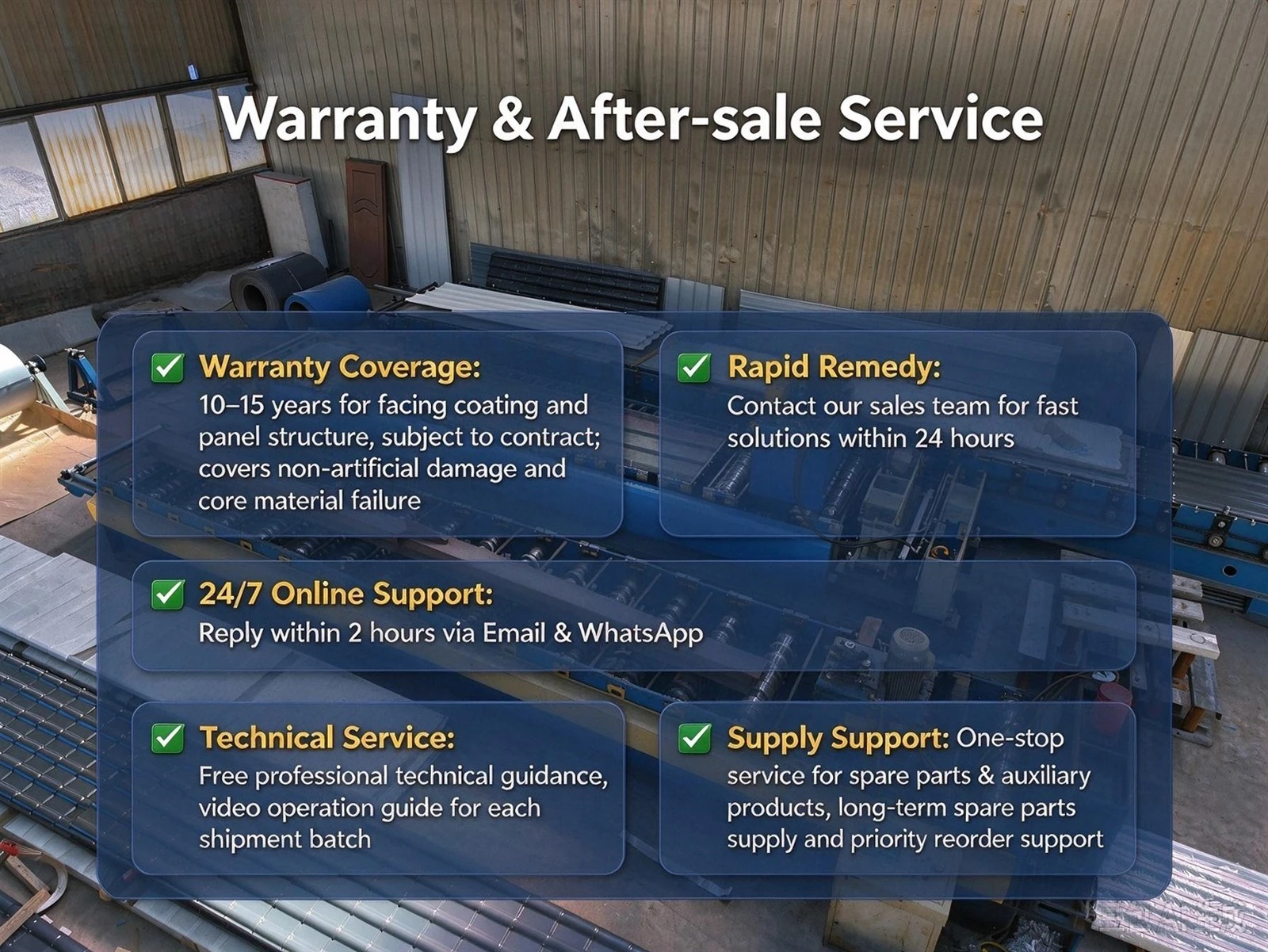
Panels are warranted against delamination and against manufacturing defects in the core or bond, and the coating carries a separate film-integrity warranty with a term set by the coating system and the exposure class - PVDF against chalk and fade runs materially longer than PE, and we state the exact period on the quotation. Not covered: mechanical damage, ponded water, unwashed salt deposits and unsealed field-cut edges. Given how dependent roof life is on installation in this heat, remote guidance is included as standard, along with a 24-hour response commitment on technical queries.
Company Profile
Send roof area, bay spacing, whether the building is cooled, and the destination port, and we will come back with a thickness recommendation, an indicative U-value, reflectance data for your preferred finish and a loaded quotation - normally within one working day. Established 2010, our 15,000 m² plant in Liaoning runs 26 lines at about 20,000 m² per day and exports from Dalian, Tianjin and Yingkou. Samples, third-party reports and the full certification set accompany any serious enquiry.
FAQ
Q1: Will the roof hold up under continuous 45 °C and strong UV?
A: The mineral wool core is inorganic and unaffected by heat, so nothing in the insulation degrades. The component that decides roof life is the coating, which is why we push PVDF in the Gulf and why we quote a fixed film-integrity term rather than a vague promise of durability.
Q2: Does the colour of the roof really change the cooling bill?
A: Yes, and by more than most people expect. A light high-reflectance finish can stay tens of degrees cooler than a dark one under the same sun, which reduces the temperature difference your insulation has to bridge. We supply reflectance figures so you can judge rather than take our word.
Q3: What substrate should we use near the coast?
A: Aluminium-zinc coated steel (Galvalume) rather than plain galvanized, with PVDF on top. Between salt spray and humidity, standard zinc is the failure mechanism we see most on Gulf coastal roofs, and the upgrade costs far less than re-sheeting.
Q4: How do you handle thermal bridging at the joints?
A: That is precisely why the edge seal exists. An unfilled lap is a conductive stripe down every panel joint and a condensation line waiting to form. Filling it with closed-cell PU removes both, and it seals the joint against driven rain at the same time.
Q5: What fire class will civil defence accept?
A: We supply the EN 13501-1 classification report for the exact thickness you order - Euroclass A2-s1,d0 for the rock wool build-up. Classification is thickness-dependent, so order-specific paperwork matters; we will also flag early if your authority requires its own local listing.
Related Sandwich Panel Products
Be careful comparing cores purely on lambda. PIR's 0.022 W/(m·K) is genuinely better insulation per millimetre, and for a cold store it wins outright - but it is Euroclass B-s1,d0, and several Gulf authorities will not accept it on large roofs. EPS is cheaper still and loses the fire argument entirely. The rock wool core here sits at 0.036-0.040 but carries A2-s1,d0, which is why it is the specification that actually gets approved. We make all four and will quote them side by side, including the fire evidence.
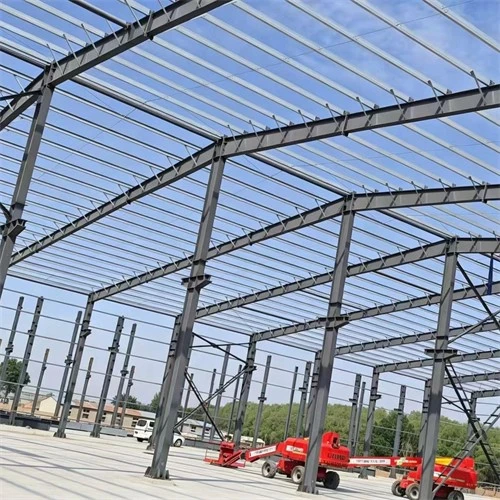
Steel Structure
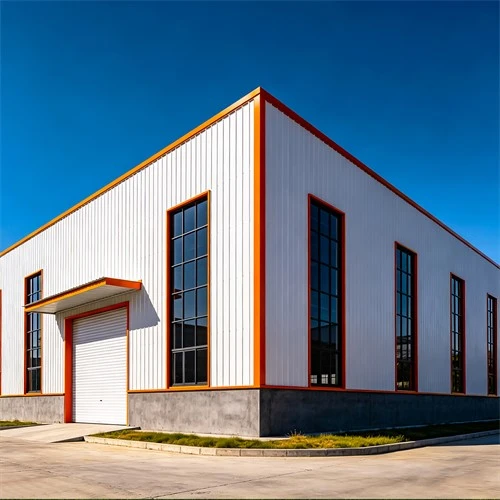
Steel Structure
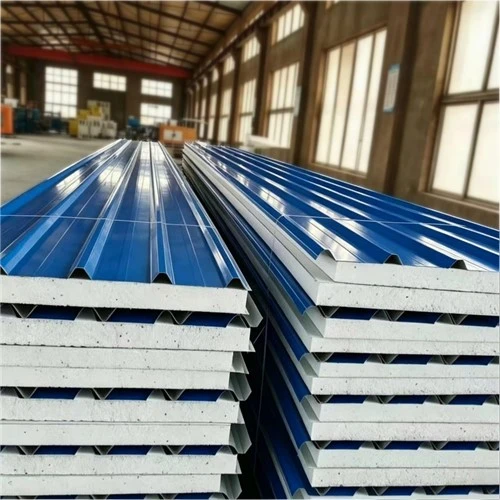
Eps Composite Panels
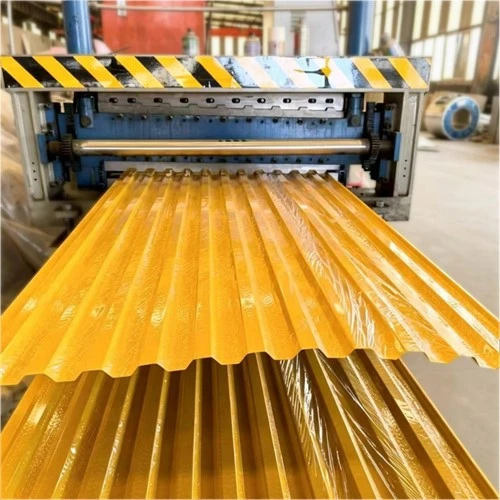
PPGI/PPGL Sheet
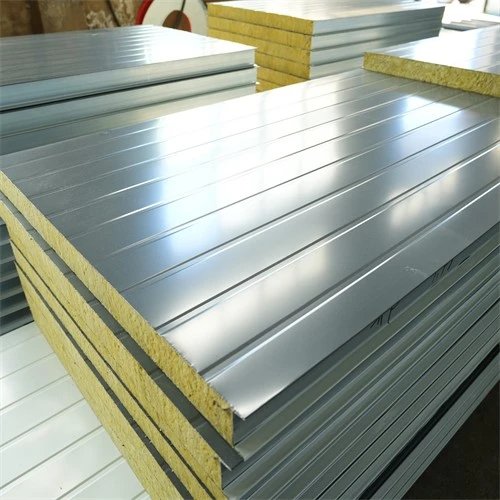
Rockwool Sandwich Panels
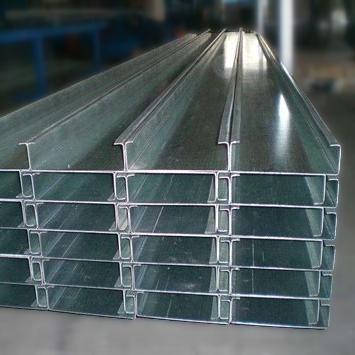
C and Z purlin
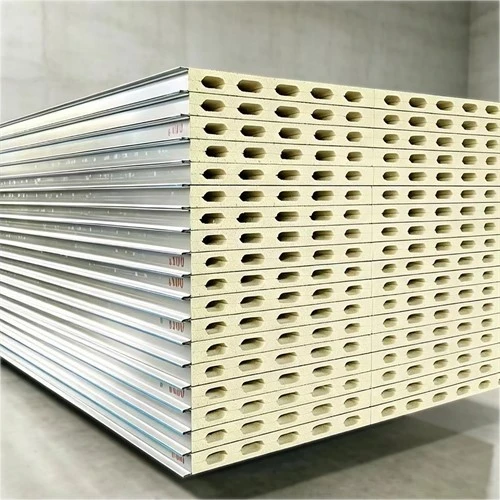
Clean Room Sandwich Panel
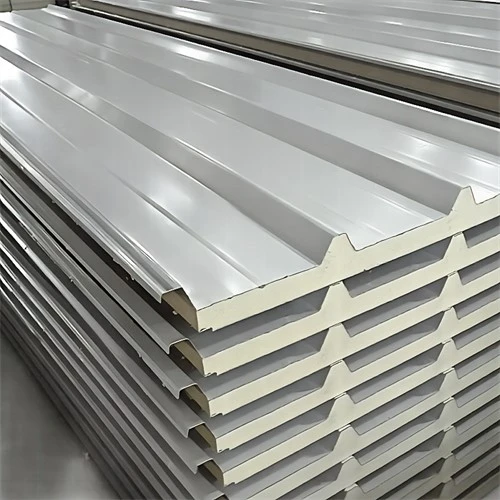
PIR Sandwich Panel
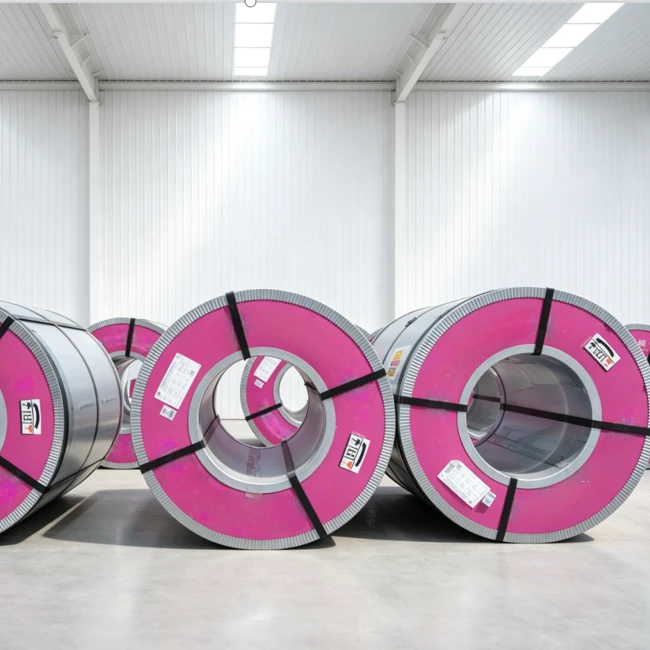
PPGI/PPGL Coil
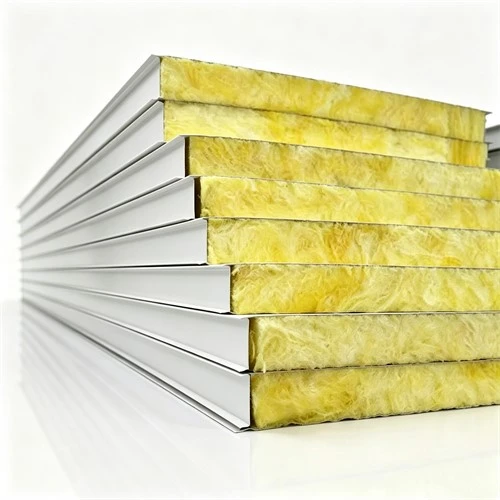
Glasswool Sandwich Panel
Hot Tags: roof insulated sandwich puf panel, China roof insulated sandwich puf panel manufacturers, factory


