

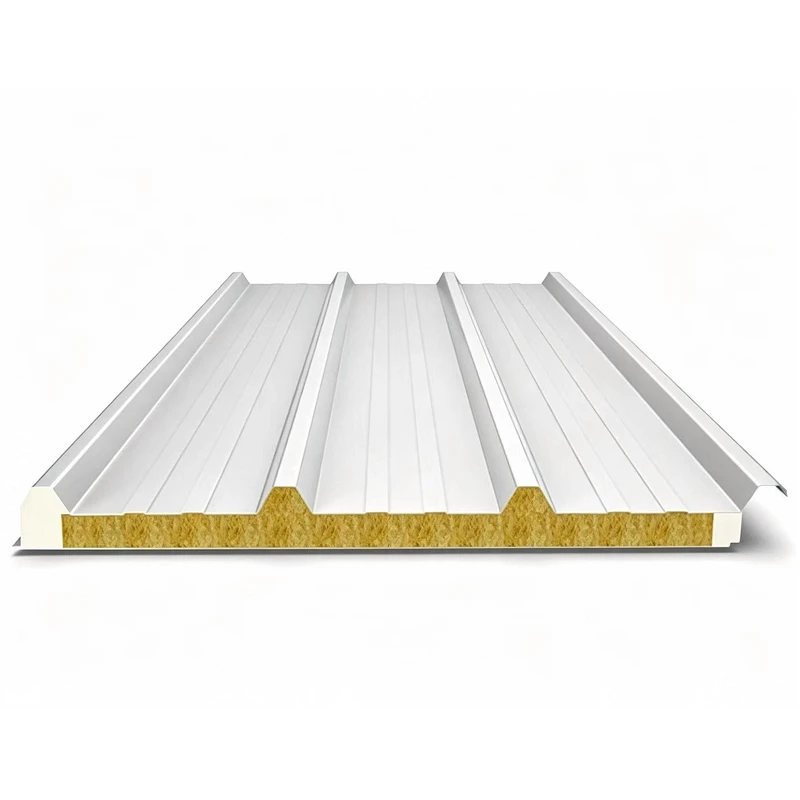
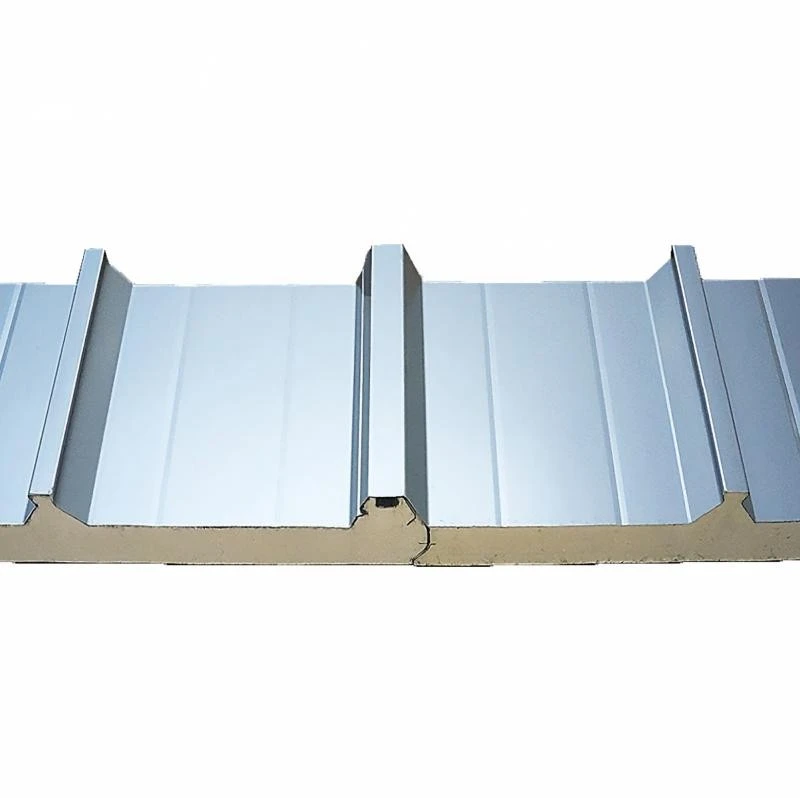
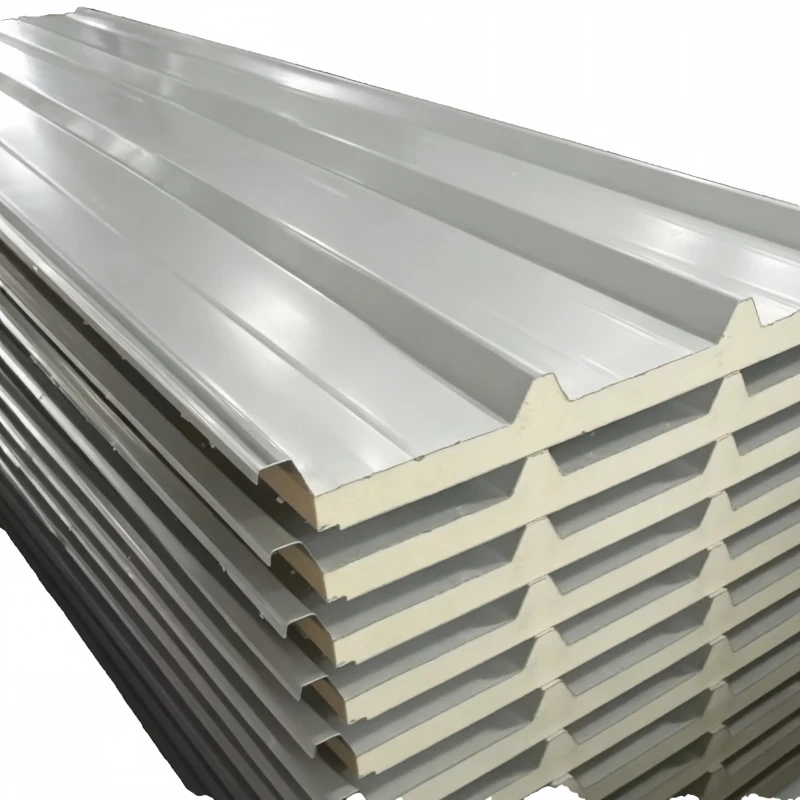
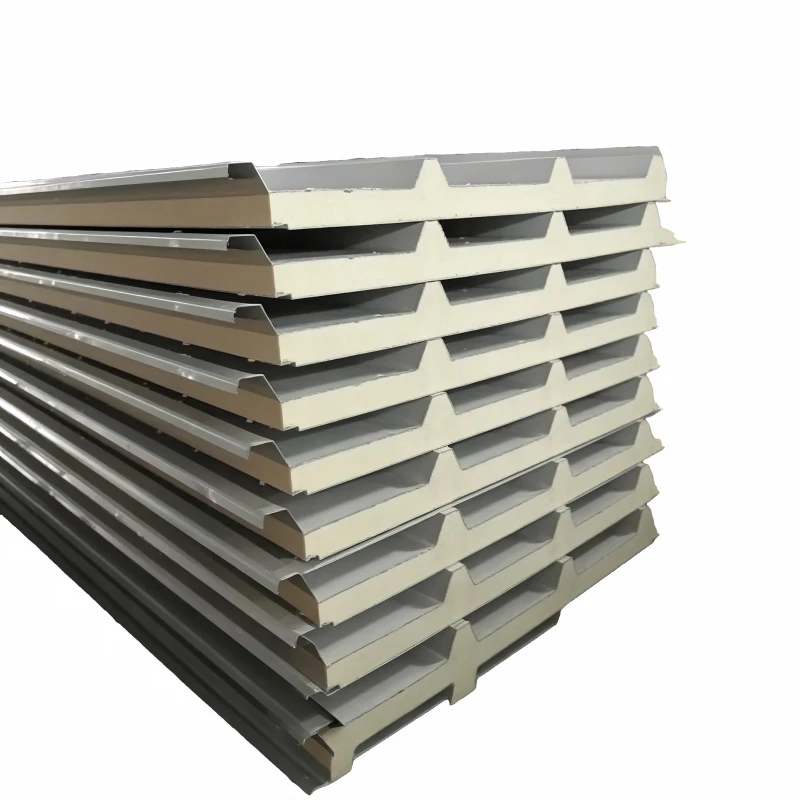
Shenyang Qiangyun Color Steel & Steel Structure Co., Ltd. is one of the most reliable manufacturers and suppliers of roofing puf insulation panels in China. With abundant experience, we are committed to providing high quality customized products with competitive price. Welcome to wholesale advanced roofing puf insulation panels in stock here from our factory. Also, pricelist is available.
Technical Specifications
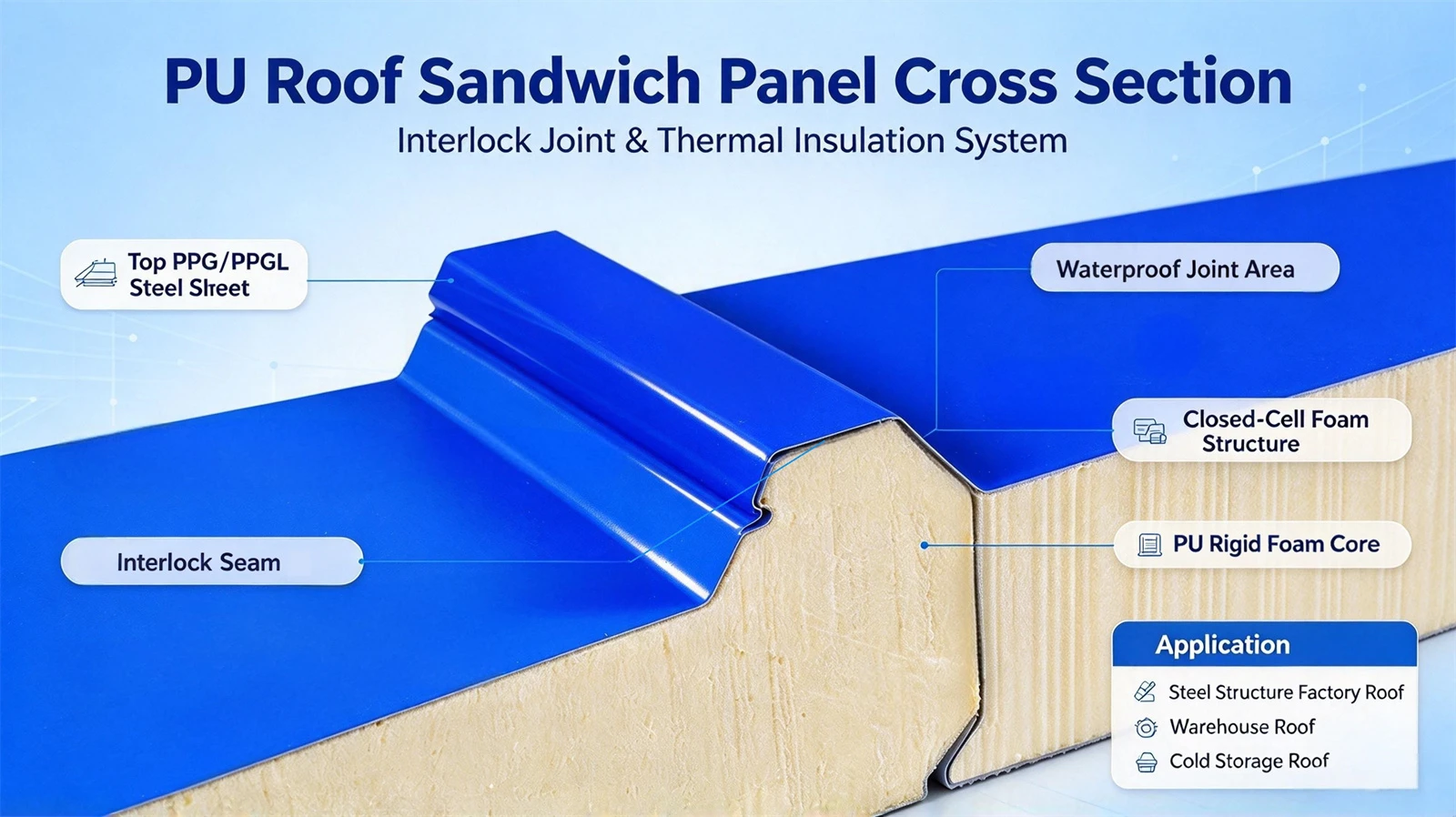
|
Parameter |
Specification |
|
Product Name |
Roofing Puf Insulation Panels |
|
Material |
Non-combustible rock wool core + closed-cell PU edge seal, between two metal faces |
|
Surface Material |
PPGI/PPGL, galvanized, Galvalume, optional Al/stainless |
|
Core Material |
Mineral rock wool to EN 13162; rigid PU confined to the edge seal zone |
|
Panel Thickness |
30 / 50 / 75 / 100 / 120 / 150 / 200 mm - 75-100 mm typical for large roofs |
|
Sheet Thickness |
0.3–0.8 mm |
|
Width |
950 / 1000 mm (custom available) |
|
Length |
Cut to slope, maximum 11.9 m single board; longer on request |
|
Core / Edge-Seal Density |
Rock wool 100-150 kg/m³; PU edge seal 38-43 kg/m³ |
|
Thermal Conductivity |
Rock wool core 0.036-0.040 W/(m·K); PU edge seal 0.022-0.024 W/(m·K) |
|
Water Absorption |
≤ 1.5% |
|
Reaction to Fire |
Euroclass A2-s1,d0 - EN 13501-1 (rock wool build-up); full PIR core B-s1,d0 - verify per thickness |
|
Connection |
Concealed-fixed corrugated / tongue-and-groove, sealed |
|
Custom Colors |
Full RAL, textures and printed board numbering by roof zone |
|
Applications |
Distribution centres, clear-span manufacturing, assembly hangars, bulk storage, sports halls |
|
Service Lifespan |
20-25 years; coating selection governs life on very large roof areas |
|
Brand |
QY |
|
Place of Origin |
Liaoning, China |
|
Joint Planning |
Board schedule supplied with the quotation showing transverse joint count by zone |
Surface Material & Coating Options
|
Option |
Guidance for large roofs |
|
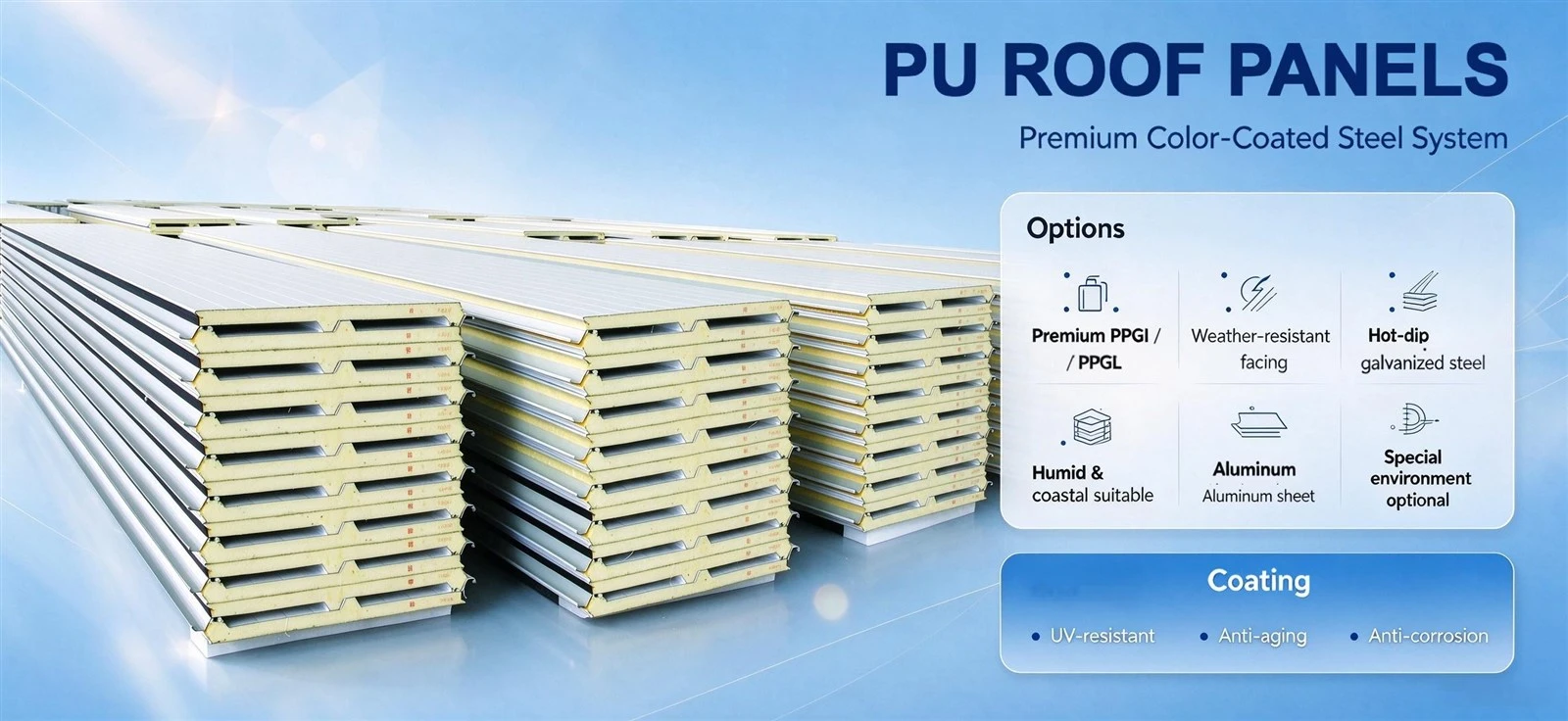
PPGI / PPGL pre-painted steel |
Inland sites; lowest cost per square metre on very large areas |
|
Hot-dip galvanized steel |
Where transported sea salt reaches; avoided near open coast |
|
Galvalume (aluminium-zinc) |
Default for coastal, high-humidity and industrial atmospheres |
|
Aluminium / stainless steel |
Available where process atmospheres or hygiene rules demand it |
|
Coating |
PVDF where UV load is high or colour retention matters; SMP as the volume default |
How to choose the panels as the thickness?
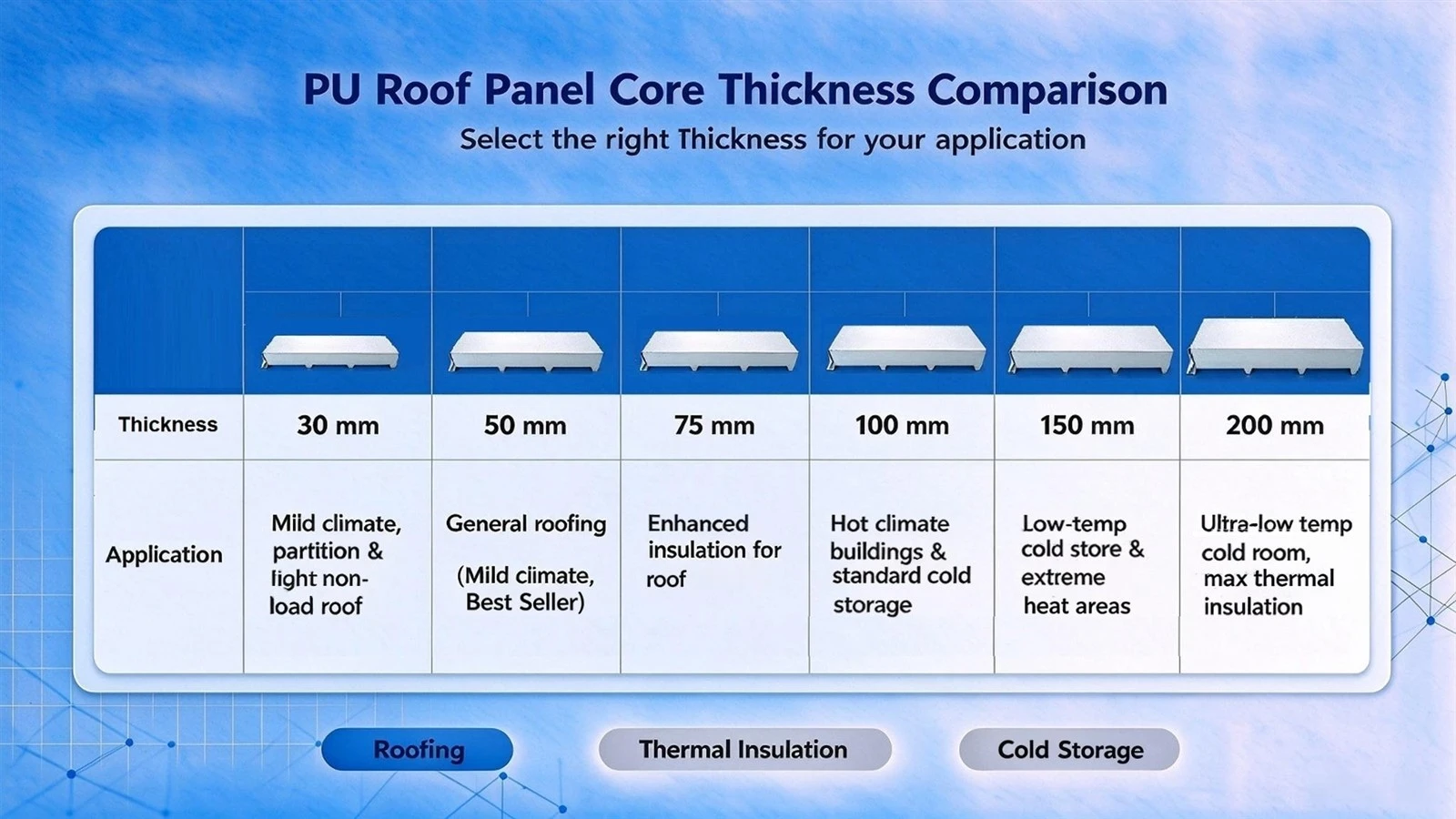
For large roofs we size thickness zone by zone rather than picking one number for the whole building. From lambda = 0.040 W/(m·K) the core-only 50 mm sits at about 0.80 W/(m²·K) core-only, 75 mm at 0.53, 100 mm at 0.40, 120 mm at 0.33 and 150 mm at 0.27, before adding 5-10% for joints and fixings. In practice, ambient storage sits at 75 mm, general logistics at 100 mm, and chilled zones at 150 mm, with the rest of the roof kept thinner so the extra spend lands where the cooling actually is.
Color & Customization
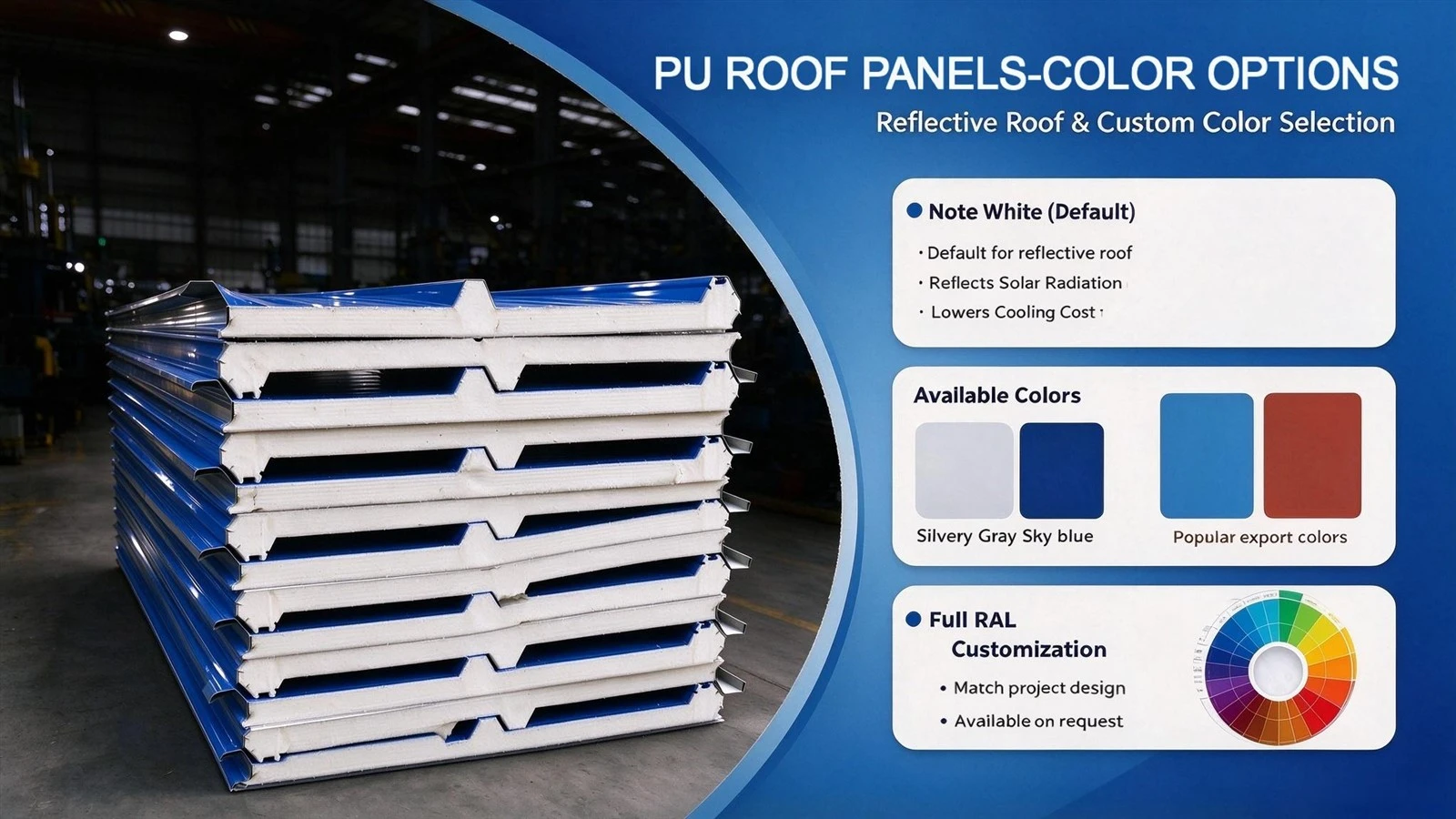
Faces are galvanized or Galvalume steel finished in PVDF or SMP, and can be supplied in any RAL colour or with printed patterns and board numbering so panels can be identified by roof zone on arrival. White remains the practical default on huge roofs because it keeps surface temperatures down across tens of thousands of square metres, which is where even a small reflectance penalty becomes real energy money. The core can be upgraded to an eco-formula PIR grade where maximum insulation per millimetre is required, and the standard maximum length of 11.9 m is extended on request for very deep single-pitch roofs.
Application Scenarios
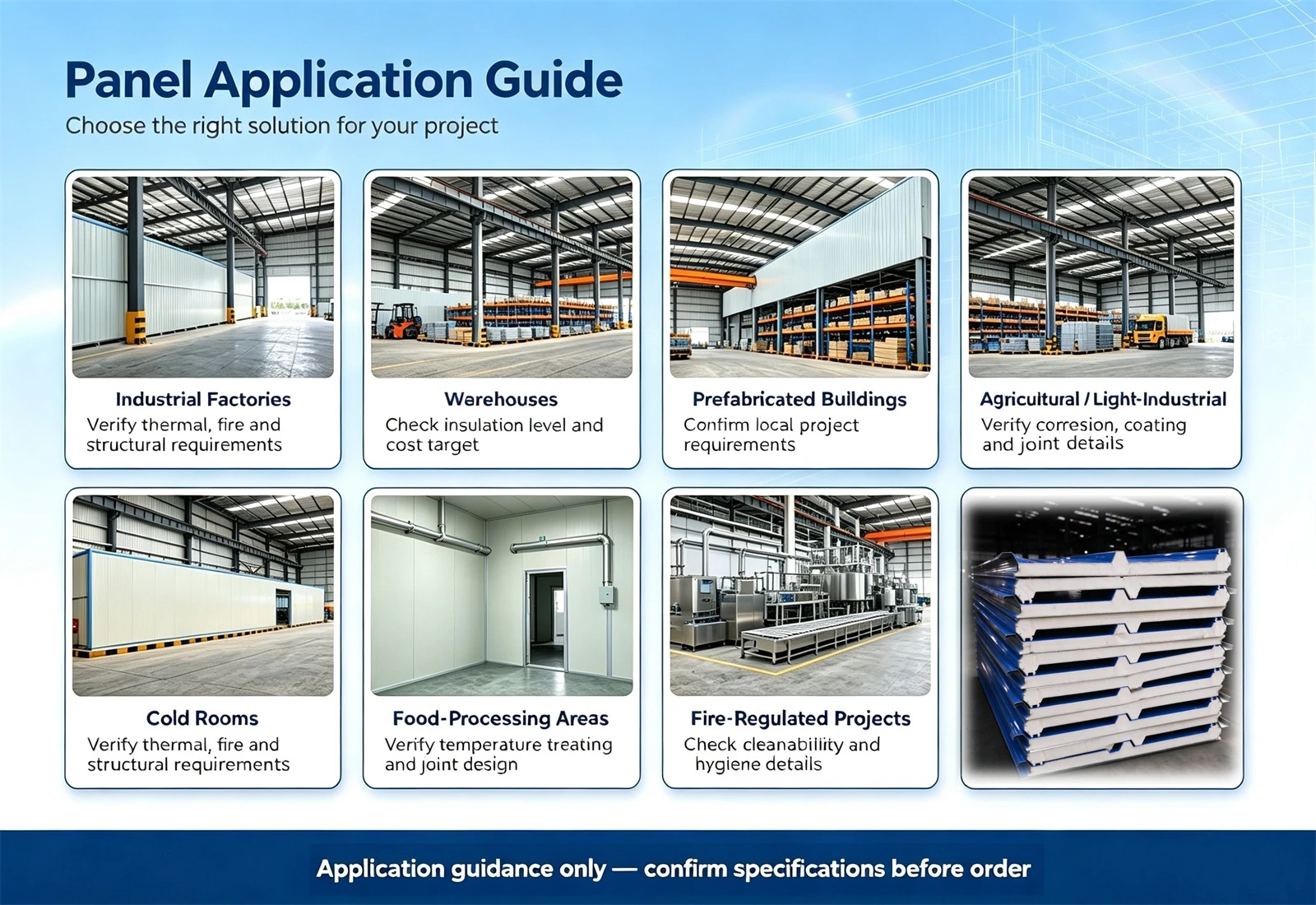
Specified most often where the roof is large and uninterrupted: national distribution centres and logistics parks with 20,000 m² plus footprints, manufacturing halls with clear-span trusses, aircraft and vehicle assembly buildings, bulk storage and agricultural sheds with very long single-slope runs, and public buildings - sports halls, exhibition space - where the span is the design problem. Anywhere the roof is measured in tens of thousands of square metres is where this panel pays back.
Target Markets & Climate Fit
Joint count is the variable most roof specifications ignore. A roof laid in 11.9 m boards instead of 6 m boards roughly halves the number of transverse laps, and each lap removed is one less seal to fail, one less place for standing water to sit and one less thermal bridge across the insulation. On a 20,000 m² roof that is hundreds of joints. It also shortens erection measurably, because the crew handles fewer pieces and spends less time cutting and sealing.
|
Project type |
What it optimises for |
|
National distribution centre |
Minimum joint count and fastest erection across 20,000 m² plus |
|
Clear-span manufacturing hall |
Single boards matching truss spacing so no end lap is needed |
|
Aircraft and vehicle assembly |
Stiffness over long runs plus a finished interior surface in one pass |
|
Bulk agricultural storage |
Long single-slope boards; no transverse joint for grain dust to enter |
|
Sports hall / exhibition |
Span performance combined with an acceptable exposed soffit |
|
Common thread |
Large uninterrupted area - which is exactly where joint count starts to dominate cost |
Project Reference
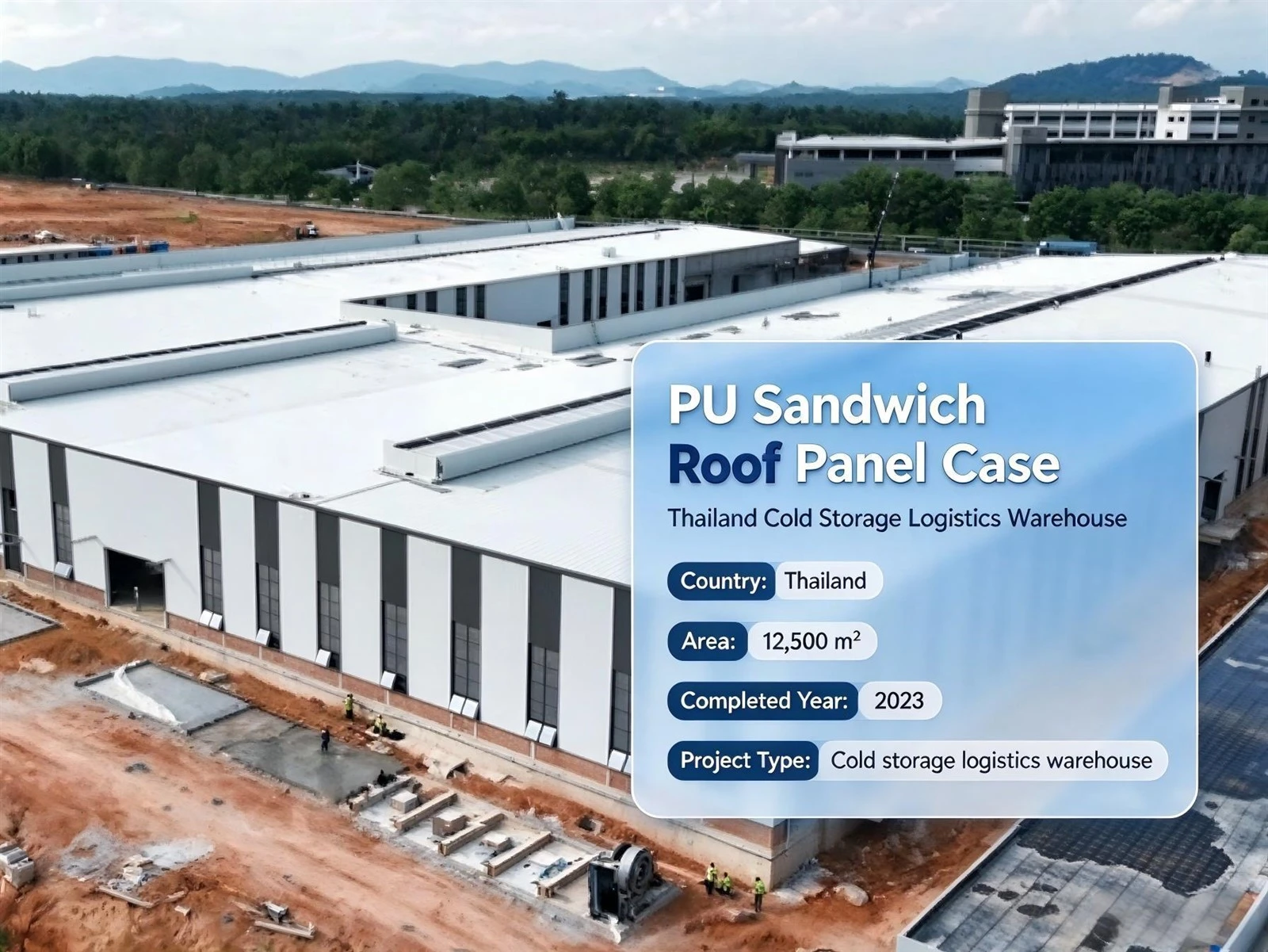
Hai Phong, northern Vietnam - 15,200 m² regional distribution centre, delivered 2023. The design used a clear-span structure with a 10.6 m panel run, which let us supply every board cut to full slope length with no transverse joint anywhere on the roof. The client's engineer had costed both options; the longer boards cost slightly more per square metre and saved roughly a week of installation plus an estimated several hundred metres of site-applied sealant. We supplied 100 mm panels on Galvalume with SMP, palletised and numbered by roof zone so the crew could lay directly from the delivery sequence. No leak has been reported since handover. Read the programme savings as indicative - they depend on your own sequence and crew - but we can supply the packing list and loading records.
Customization & OEM Service
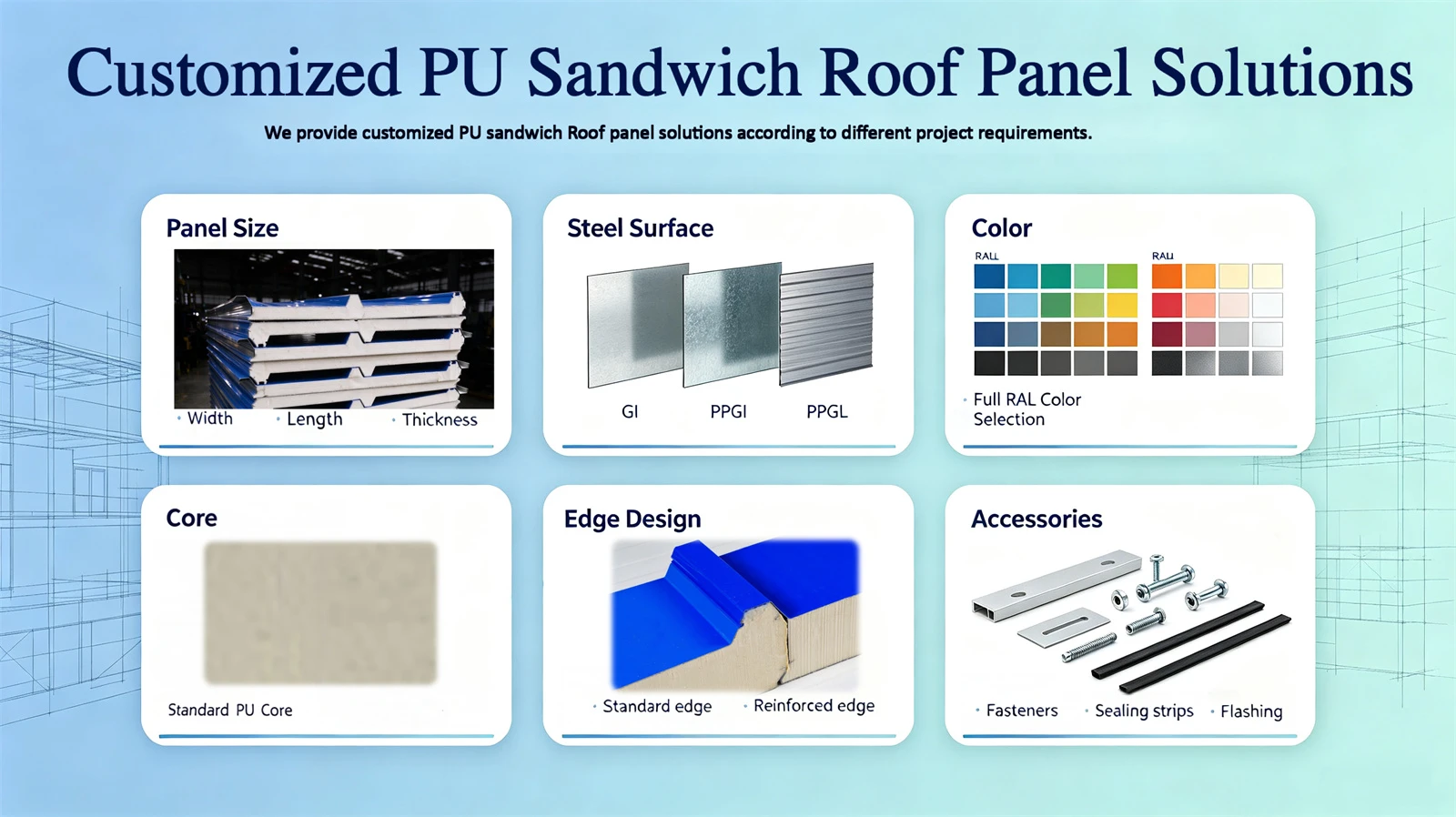
Everything is configured around the panel schedule rather than around a stock list: thickness 30-200 mm, length cut to your actual slope length up to 11.9 m (longer on request), widths of 950 / 1000 / 1150 mm, Galvalume, galvanized or stainless faces with PE / SMP / HDP / PVDF topcoats, full RAL and textured finishes, PIR core upgrade where green-building standards require the lower lambda, and eco-formula blowing agents. We print board numbers to match your drawings and pack by roof zone, and we will review the panel schedule with your engineer before production rather than after.
Certifications & Compliance
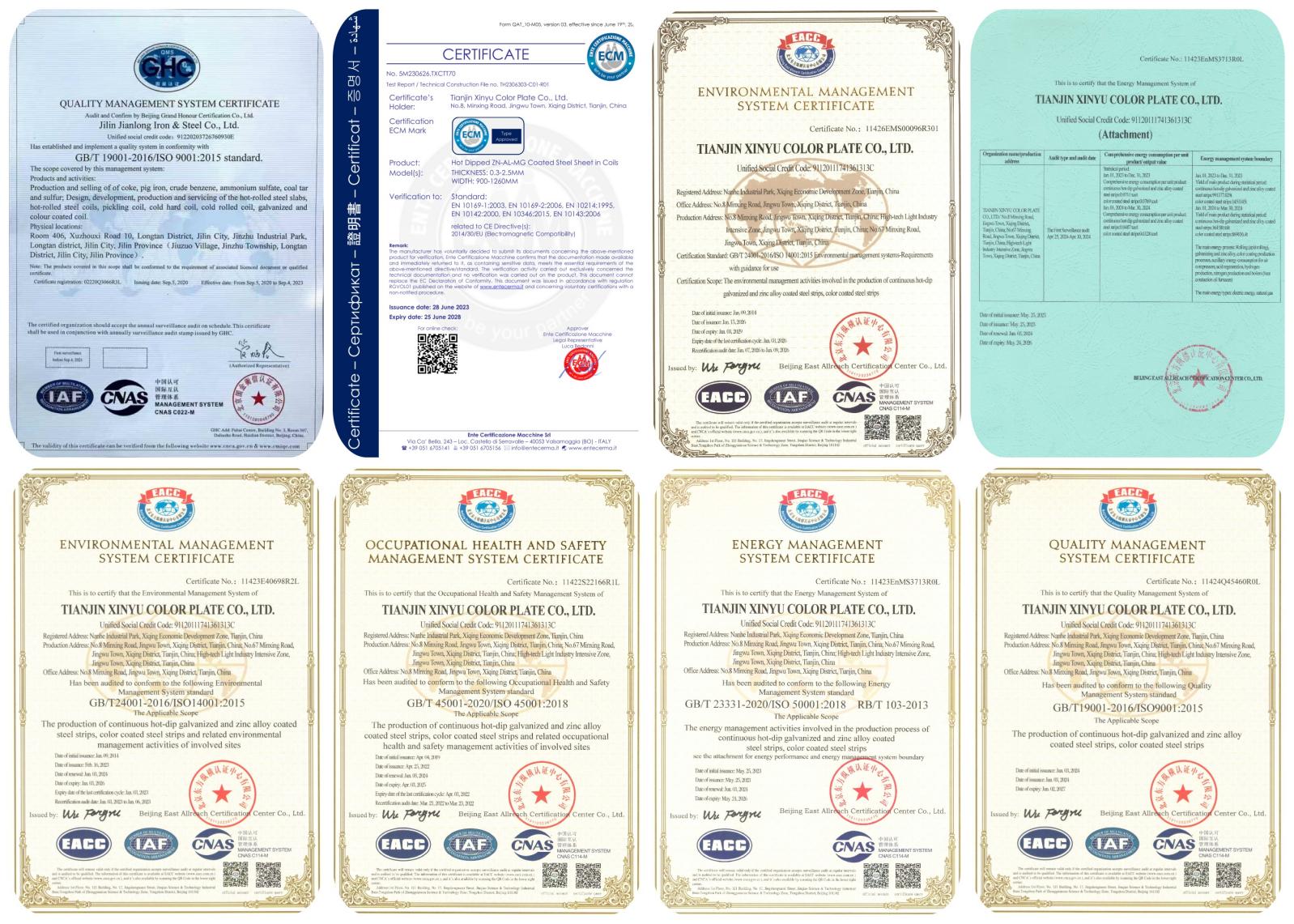
Large projects are usually reviewed by a consulting engineer, so documentation is prepared to be read rather than merely filed: EN 13501-1 classification for the build-up ordered, EN 13162 conformity for the mineral wool core, EN 14509 data for the self-supporting panel including span and load behaviour, and EN 12667 thermal conductivity. Mill certificates stating substrate and coating mass accompany every coil. Where a standard bamboo-green rating, LEED credit or local energy code is invoked, we supply what is evidenced and identify honestly what still requires calculation or local attestation. The plant is certified to ISO 9001, ISO 14001, ISO 45001 and ISO 50001.
Lead Time, MOQ & Trade Terms
|
Item |
Detail |
|
Lead Time |
Samples in 2 working days, then 5-7 days up to 5,000 m², 7-15 days for 10,000-50,000 m² and 10-18 days from approved drawings for custom profile or coating. |
|
Minimum Order |
1 m² for samples; 20GP minimum, 40HQ typical for large-roof programmes |
|
Trade Terms |
FOB / CIF / CFR / DDP / EXW under Incoterms 2020 |
|
Payment |
T/T or L/C at sight; terms stated on the proforma invoice |
|
Packing & Documents |
Boards numbered by roof zone, protective film, corner guards, fumigated pallets; loading photographed |
Company Profile
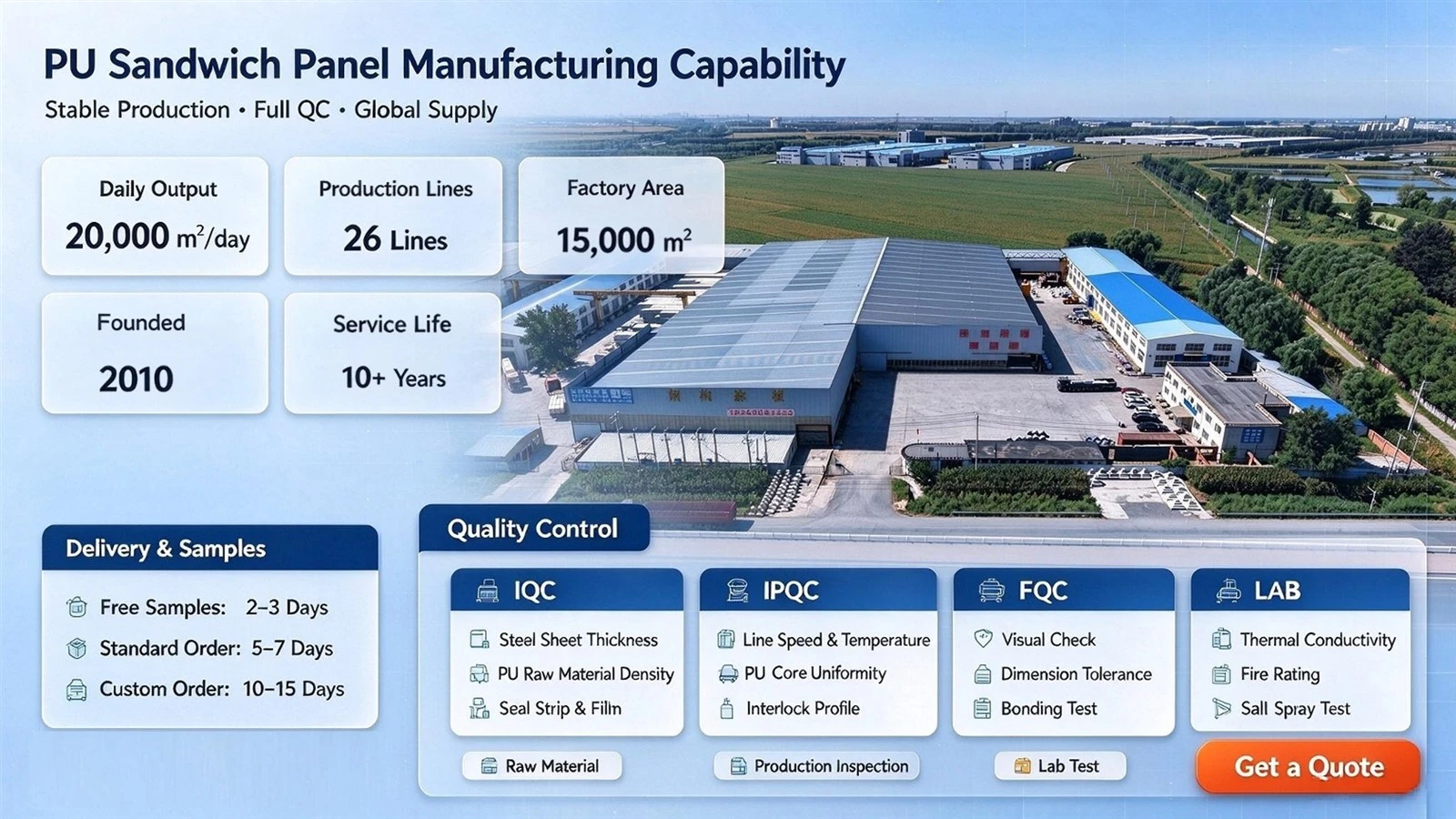
Send roof area, clear span, slope length and purlin spacing and we will return a board schedule, a joint-count comparison against shorter panels, a thickness recommendation and a loaded quotation - normally within one working day. Established 2010, our 15,000 m² Liaoning plant runs 26 lines at roughly 20,000 m² per day and ships from Dalian, Tianjin and Yingkou. If a shorter panel genuinely works out cheaper for your schedule, we will tell you; we sell either length.
FAQ
Q1: How many joints will my roof actually have?
A: Adopt concealed fixed corrugated or tongue-and-groove sealed connections to prevent water ingress.
Q2: Does a long board create handling problems?
A: High compression, shear and tensile strength from solid core delivers reliable snow and wind resistance.
Q3: What actually determines how long the roof lasts?
A: UV and corrosion resistant, it lasts 15–25 years under normal atmospheric environments.
Q4: What thickness suits a large distribution centre?
A: Standard single panel up to 11.9 m; custom longer lengths are available upon request.
Related Sandwich Panel Products
On a very large roof, core choice becomes a capital-versus-compliance calculation rather than a technical preference. EPS is cheapest and lightest but will not pass an industrial fire review. PIR gives the best insulation per millimetre and can let you reduce thickness, which saves on every square metre - at Euroclass B-s1,d0. The rock wool core here carries A2-s1,d0 and survives fire review on its own. We will run the numbers for all three against your roof area and give you the difference in both cost and classification.
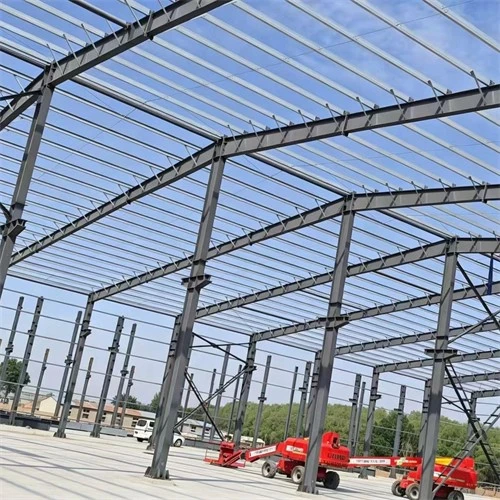
Steel Structure
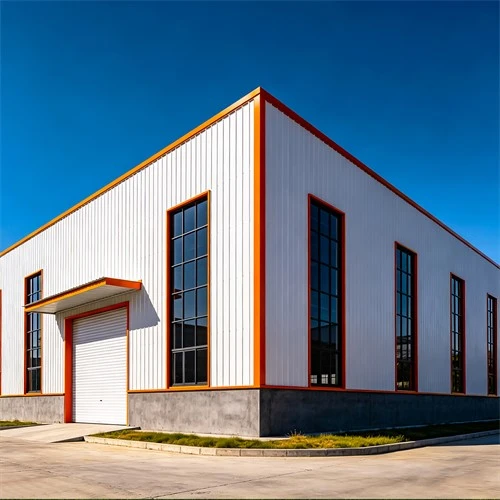
Steel Structure
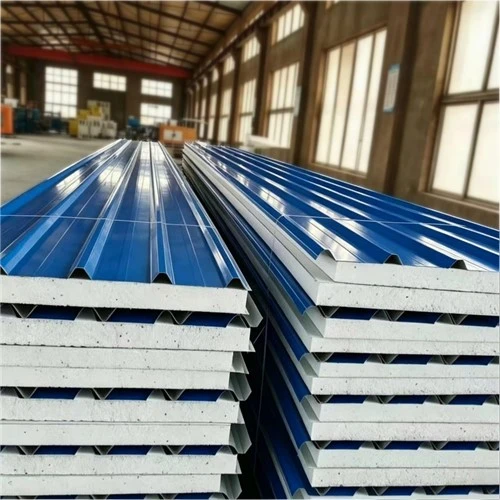
Eps Composite Panels
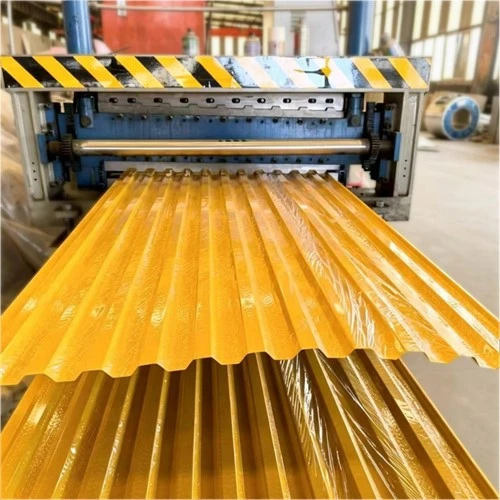
PPGI/PPGL Sheet
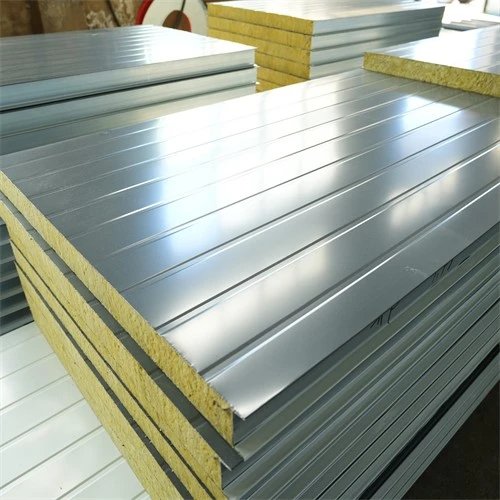
Rockwool Sandwich Panels
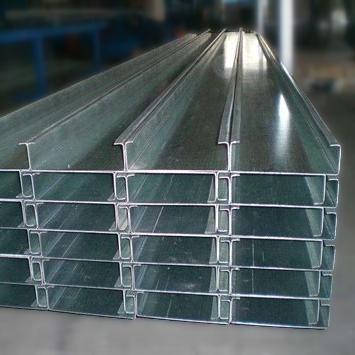
C and Z purlin
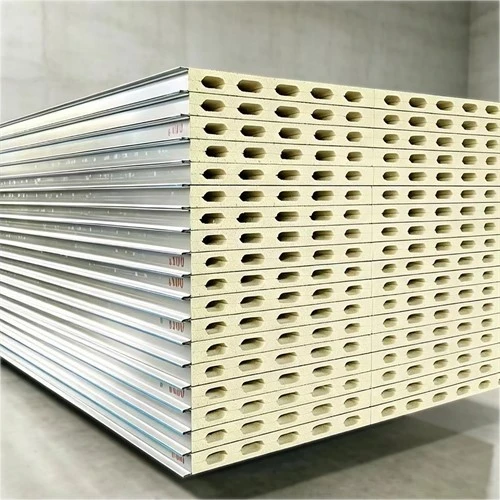
Clean Room Sandwich Panel
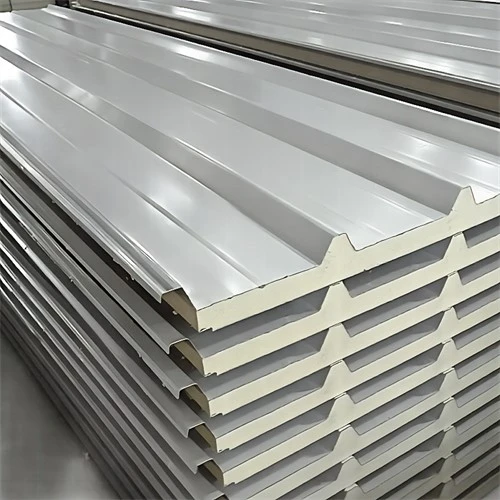
PIR Sandwich Panel
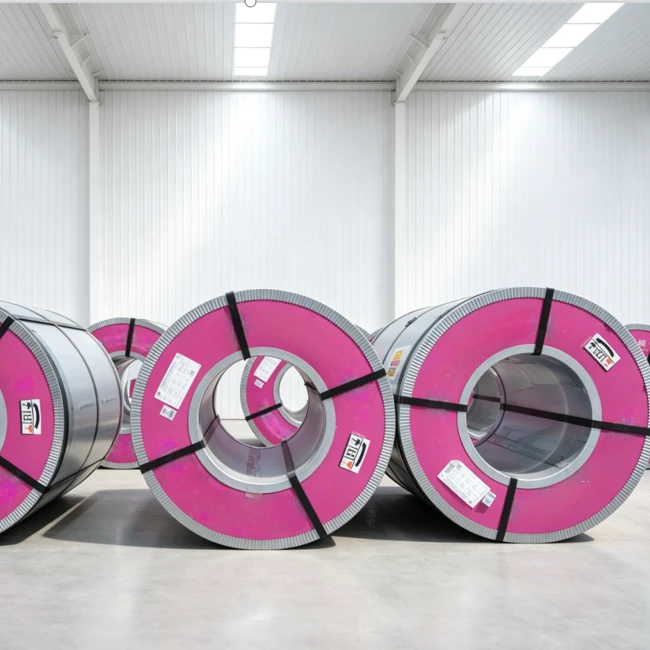
PPGI/PPGL Coil
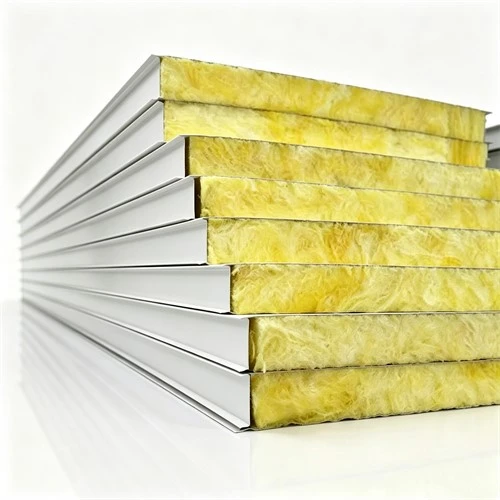
Glasswool Sandwich Panel
Hot Tags: roofing puf insulation panels, China roofing puf insulation panels manufacturers, factory


