

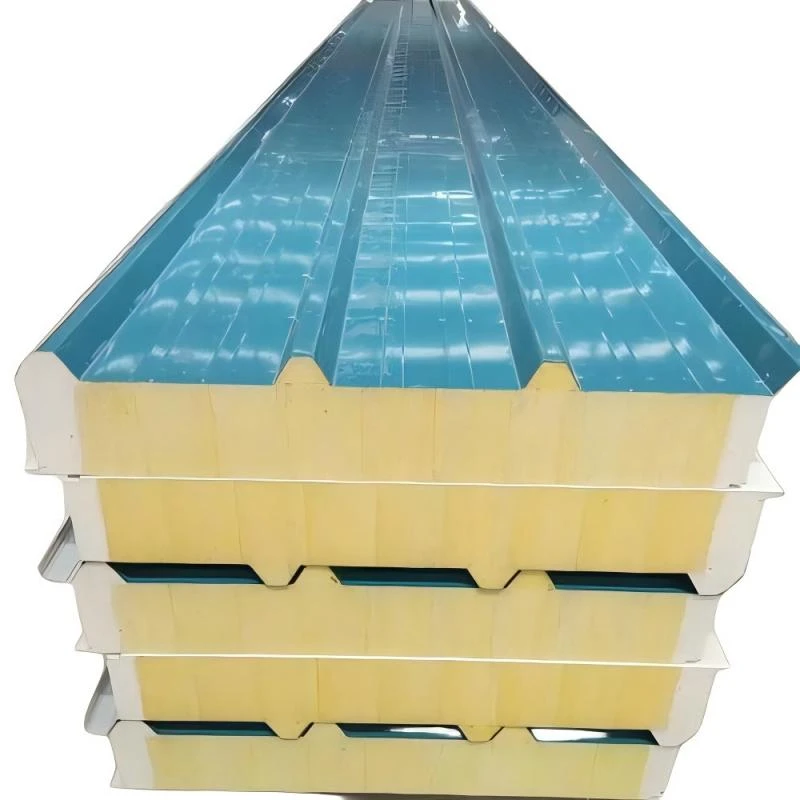
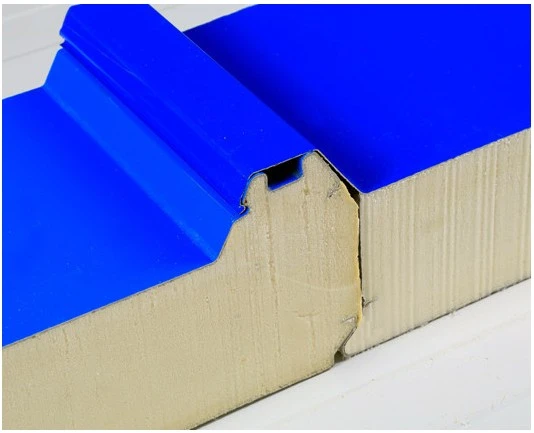
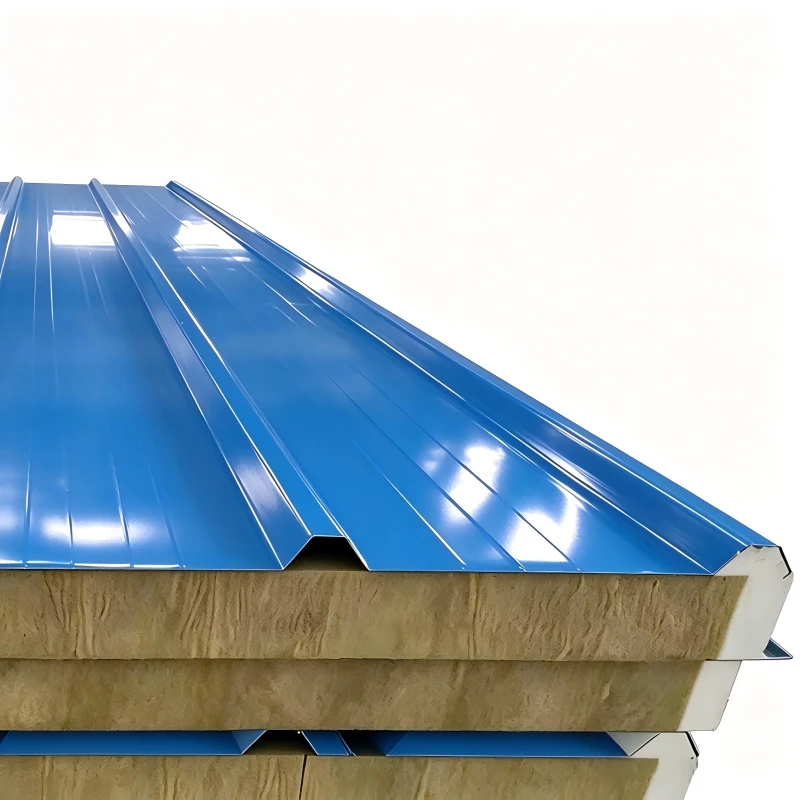
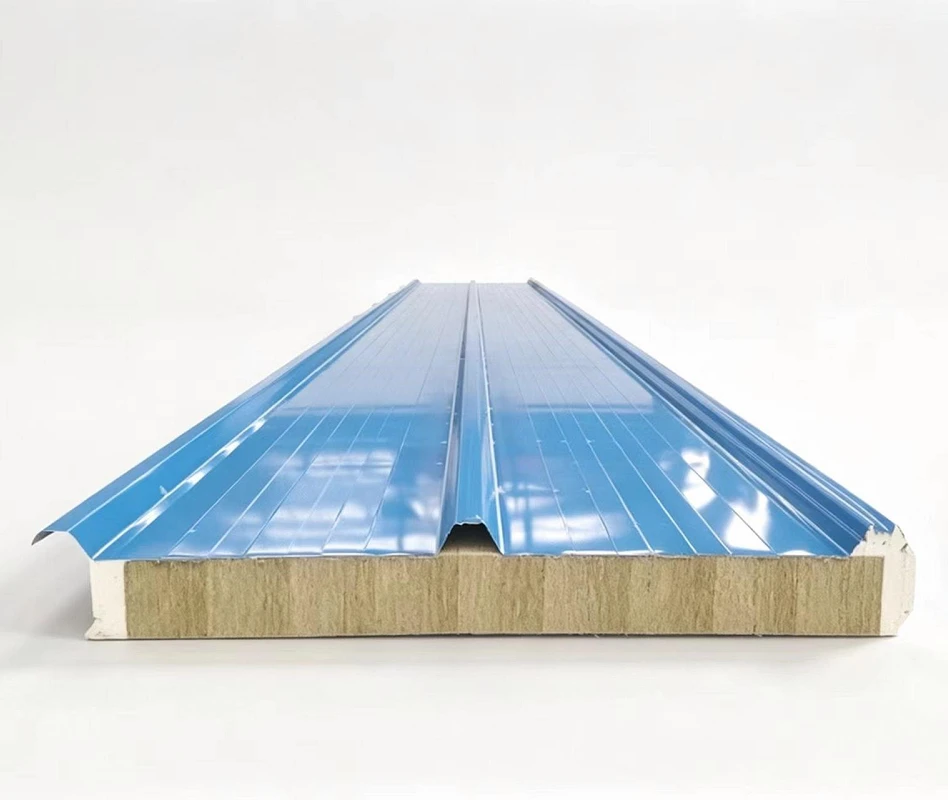
Shenyang Qiangyun Color Steel & Steel Structure Co., Ltd. is one of the most reliable manufacturers and suppliers of insulated puf panel roof in China. With abundant experience, we are committed to providing high quality customized products with competitive price. Welcome to wholesale advanced insulated puf panel roof in stock here from our factory. Also, pricelist is available.
Technical Specifications
|
Parameter |
Specification |
|
Product Name |
Insulated Puf Panel Roof |
|
Material |
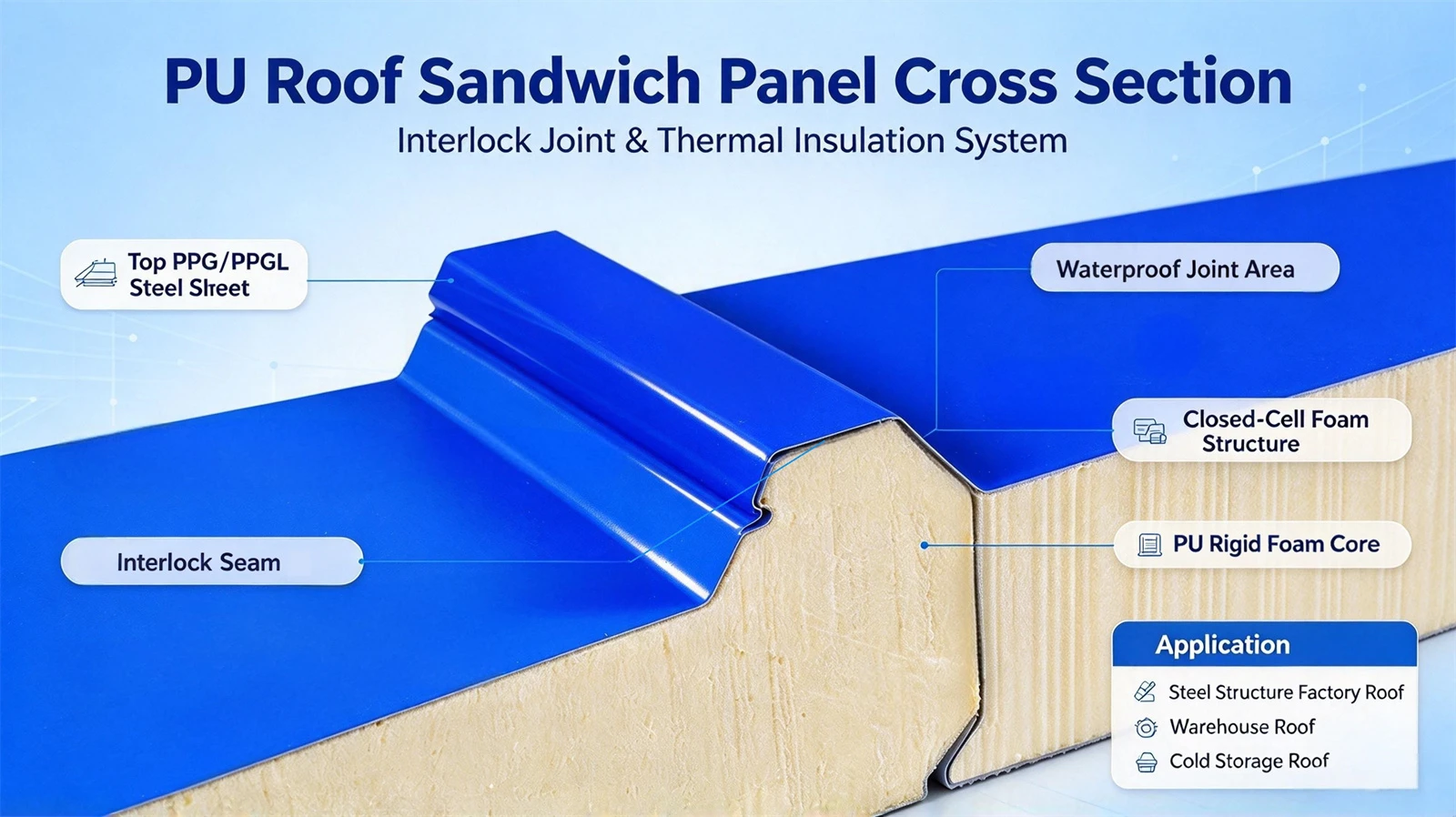
Non-combustible rock wool core + closed-cell PU edge seal, between two metal faces |
|
Surface Material |
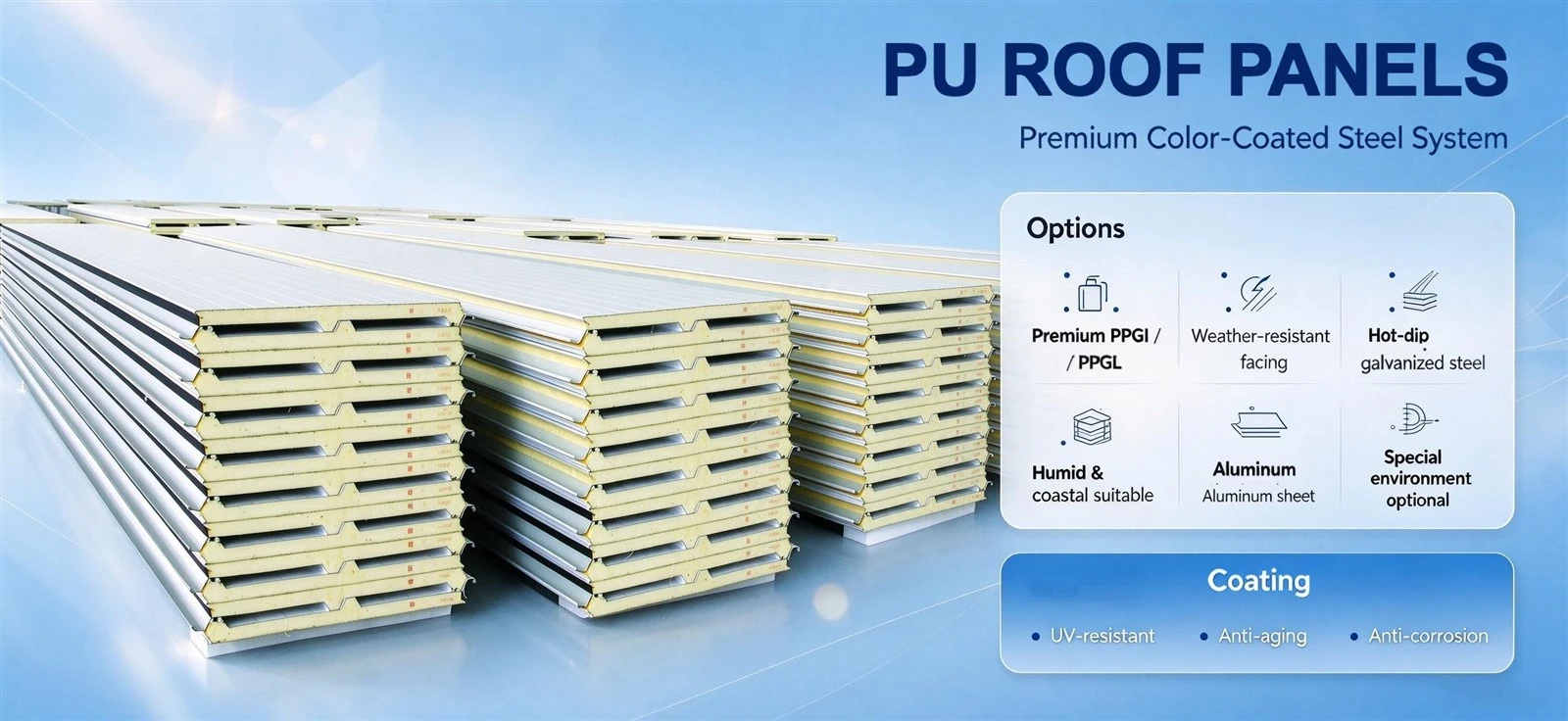
PPGI/PPGL, galvanized, Galvalume, optional Al/stainless |
|
Core Material |
Mineral rock wool to EN 13162; rigid PU confined to the edge seal zone |
|
Panel Thickness |
30 / 50 / 75 / 100 / 120 / 150 / 200 mm - 50-75 mm typical for roof-only duty |
|
Sheet Thickness |
0.3–0.8 mm |
|
Width |
950 / 1000 mm (custom available) |
|
Length |
Cut to drawing, maximum 11.9 m for a 40HQ container |
|
Core / Edge-Seal Density |
Rock wool 100-150 kg/m³; PU edge seal 38-43 kg/m³ |
|
Thermal Conductivity |
Rock wool core 0.036-0.040 W/(m·K); PU edge seal 0.022-0.024 W/(m·K) |
|
Water Absorption |
≤ 1.5% |
|
Reaction to Fire |
Euroclass A2-s1,d0 - EN 13501-1 (rock wool build-up); full PIR core B-s1,d0 - verify per thickness |
|
Connection |
Concealed-fixed corrugated / tongue-and-groove, sealed |
|
Custom Colors |
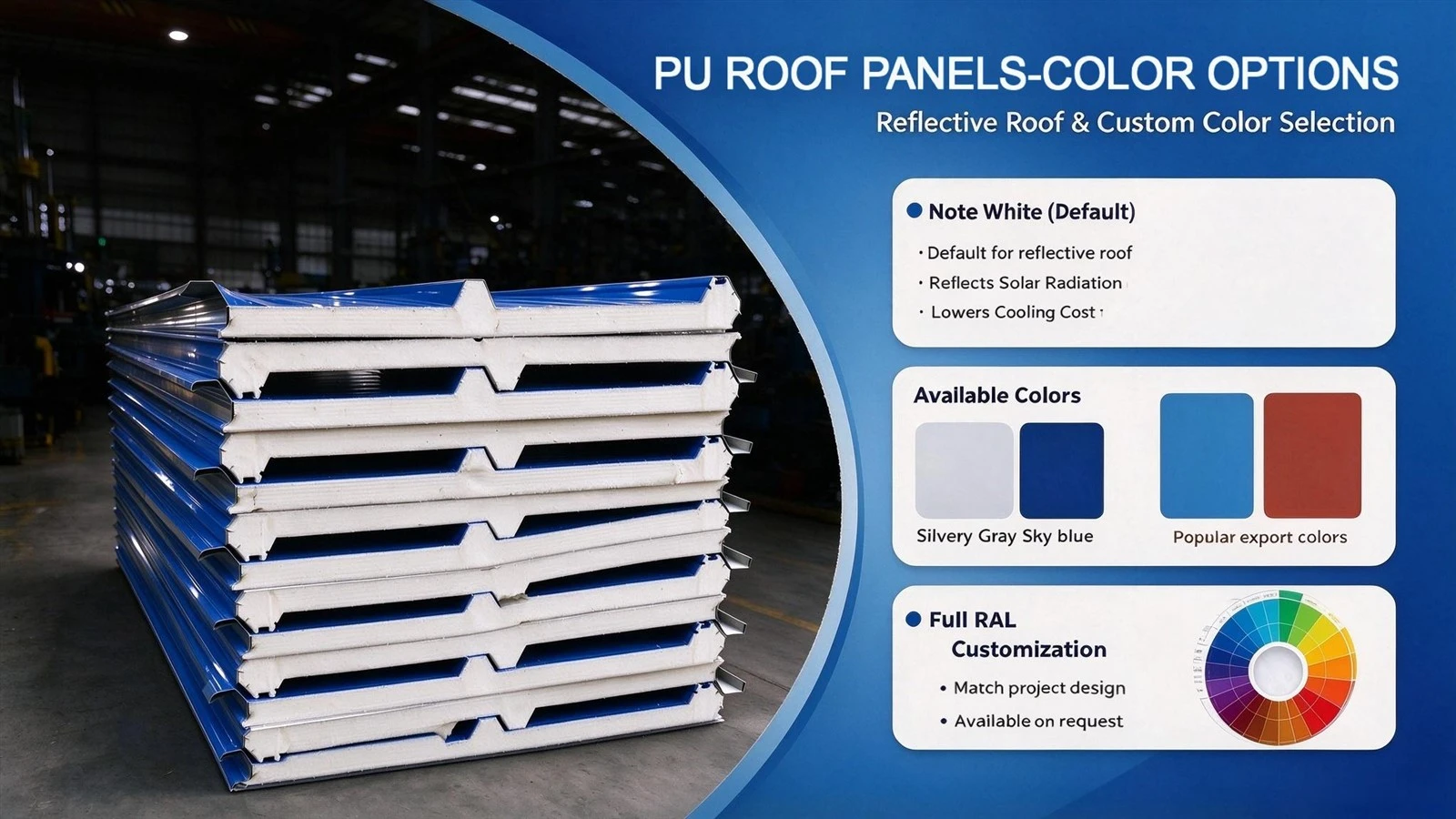
White, light grey, sky blue, brick red plus full RAL and printed marking |
|
Applications |
Schools, clinics, mine camps, agro-sheds, market halls and coastal light industry |
|
Service Lifespan |
20-25 years with an annual wash and sealant check |
|
Brand |
QY |
|
Place of Origin |
Liaoning, China |
Thickness & Core Options
Do not over-specify. Across most of sub-Saharan Africa the roof is shading a ventilated building rather than a refrigerated one, so the thickness that pays back is usually thinner than buyers expect. Core-only U-values from lambda = 0.040 W/(m·K) are about 0.80 W/(m²·K) at 50 mm, 0.53 at 75 mm and 0.40 at 100 mm, before the 5-10% you add for joints and fixings. Our usual guidance is 50 mm for ventilated sheds and camps, 75 mm for workshops and schools, 100 mm where the building is air-conditioned, and 150-200 mm only for genuine cold storage. Spending more on the coating system is frequently the better decision.
|
Thickness (mm) |
Recommended for |
|
50 mm |
Ventilated sheds, shelters, camps, market structures |
|
75 mm |
School blocks, clinics, workshops, site offices |
|
100 mm |
Air-conditioned buildings and temperature-buffered stores |
|
150 mm |
Chilled rooms in hot climates |
|
200 mm |
Frozen stores - beyond this the payback rarely justifies the cost |
|
Spend the money instead on |
A better coating system and, near the coast, Galvalume substrate |
Surface Material & Coating Options
|
Option |
Guidance for African duty |
|
PPGI / PPGL pre-painted steel |
Inland urban and rural sites with no salt exposure |
|
Hot-dip galvanized steel |
Economical base, but not recommended within a few km of the coast |
|
Galvalume (aluminium-zinc) |
Default for coastal and lagoon sites - resists salt-spray and cut-edge attack |
|
Aluminium / stainless steel |
Food-grade or chemically aggressive environments on request |
|
Coating |
PVDF for maximum UV life; SMP for value; PE only where fully protected |
Color & Customization
White, light grey, sky blue and brick red are stocked and the full RAL chart is available on request. In practice white is the default for anything un-cooled, because it reflects solar radiation and lowers the interior ceiling temperature for free. Institutional and camp clients often want identifiable buildings instead - schools, clinics and site offices colour-coded - and we can print or coil-coat to any RAL code you specify.
Application Scenarios
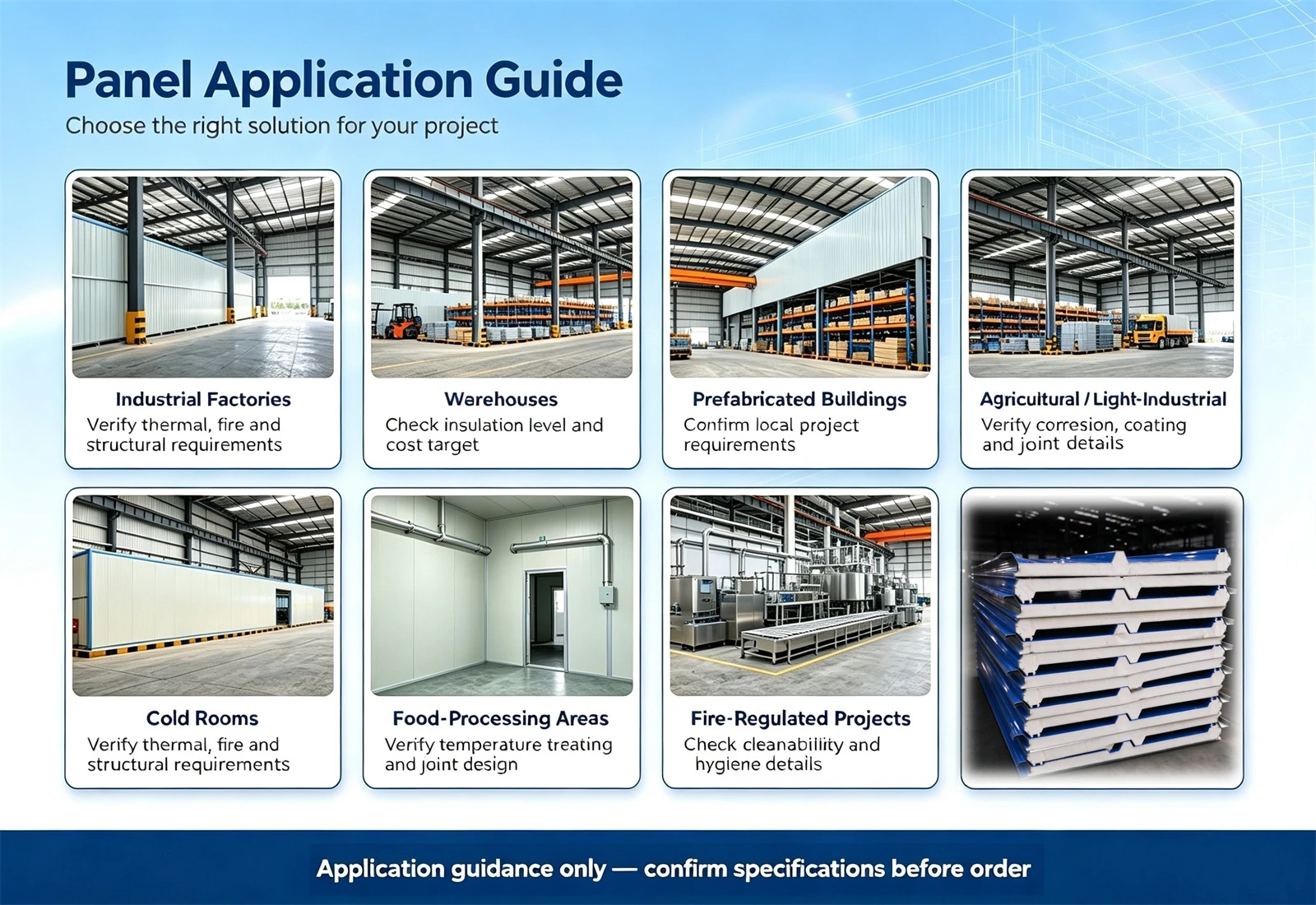
The applications that repeat across the region: school and clinic blocks delivered under education or health programmes, mine-site workshops and accommodation camps that have to be erected inside one dry season, agro-processing and packing sheds where a cooler interior protects the crop, market halls and light industrial units, and coastal facilities where a galvanized roof will not survive five years. What they share is that nobody will be maintaining them later.
Project Reference
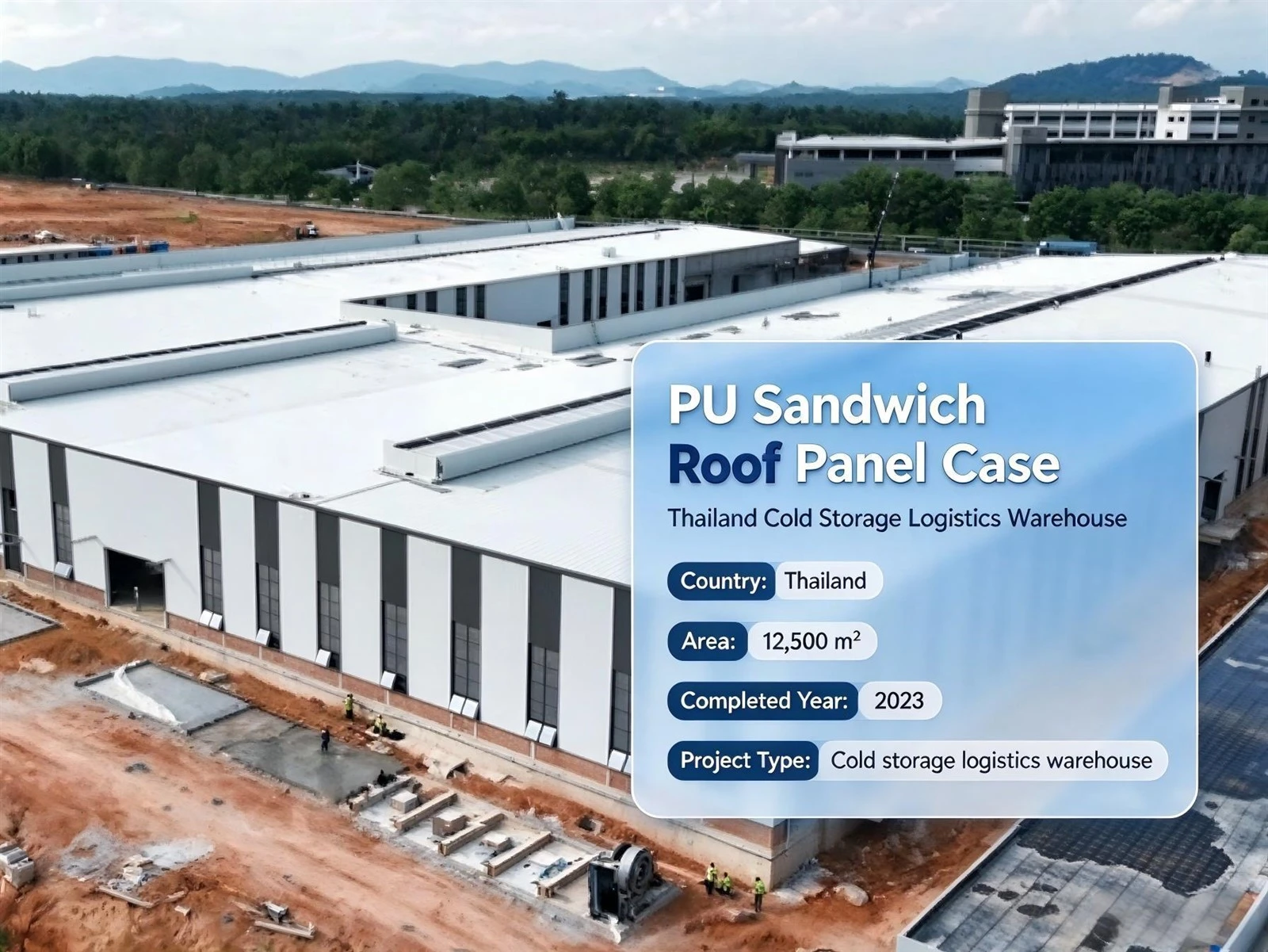
Lagos, Nigeria - 6,300 m² pharmaceutical distribution warehouse, delivered 2023. The client needed temperature-buffered storage for heat-sensitive stock with generator-backed cooling, on a site where the previous fibre-cement roof had failed at the laps within six years. We supplied 100 mm panels on Galvalume faces with SMP coating, chosen over galvanized because of the salt-laden air off the lagoon. Panels arrived cut to length and palletised by roof zone, so a local crew of eight closed the roof in 19 days without any cutting on site, and no follow-up call-out has been logged since handover. Delivery and coating records for the shipment are available if you want to check them.
Customization & OEM Service
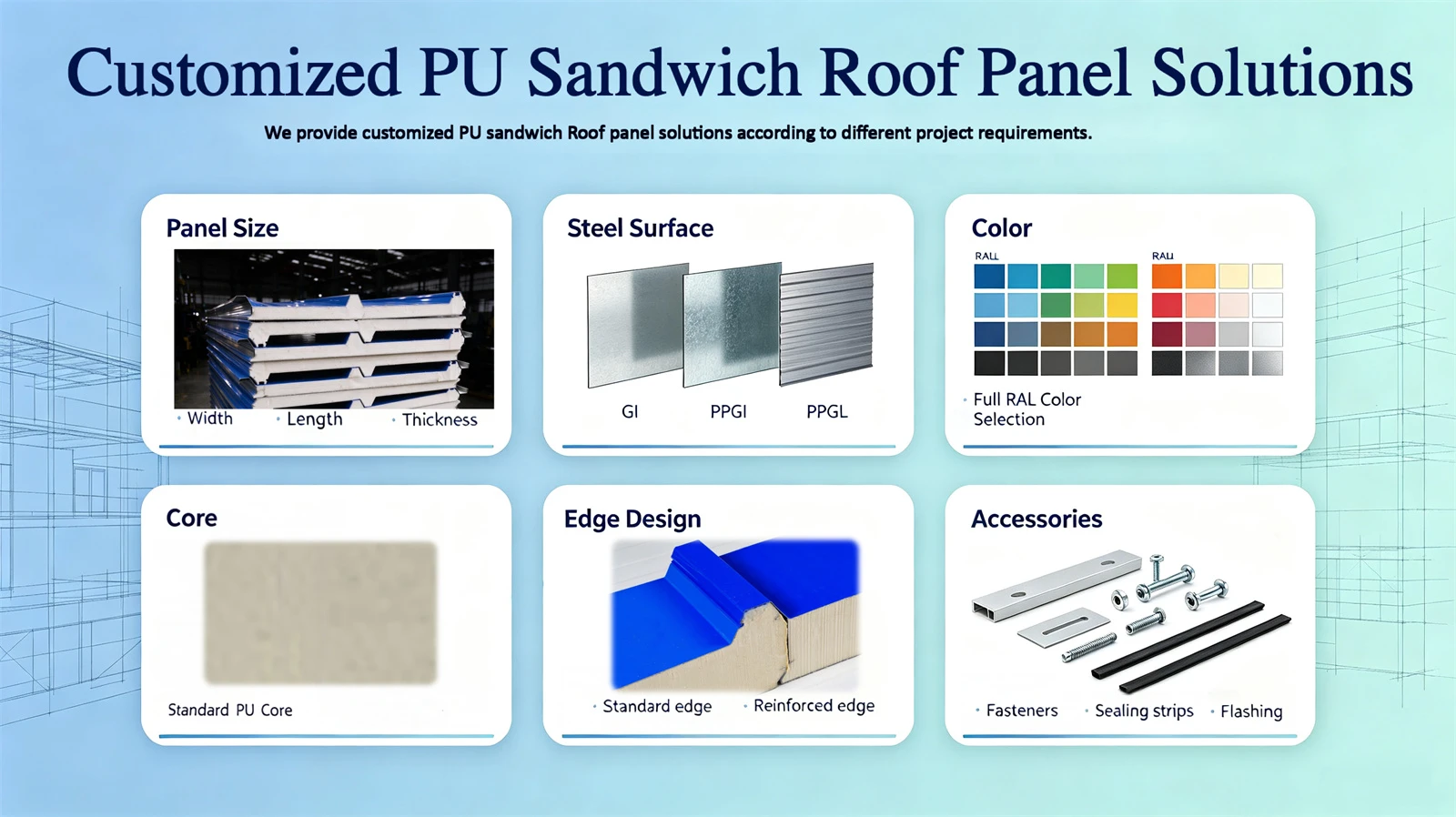
Panels are cut to length up to 11.9 m, in effective widths of 950 / 1000 / 1150 mm and thicknesses from 30 to 200 mm, with faces, core grade and colour configurable. We pack by roof zone so each pallet corresponds to a drawing area, which removes sorting on site - the single biggest delay we see on first-time projects. Matching ridges, flashings, seal strips and fasteners travel in the same container, and we can print your own markings or labels for multi-site programmes.
Packaging & Shipping
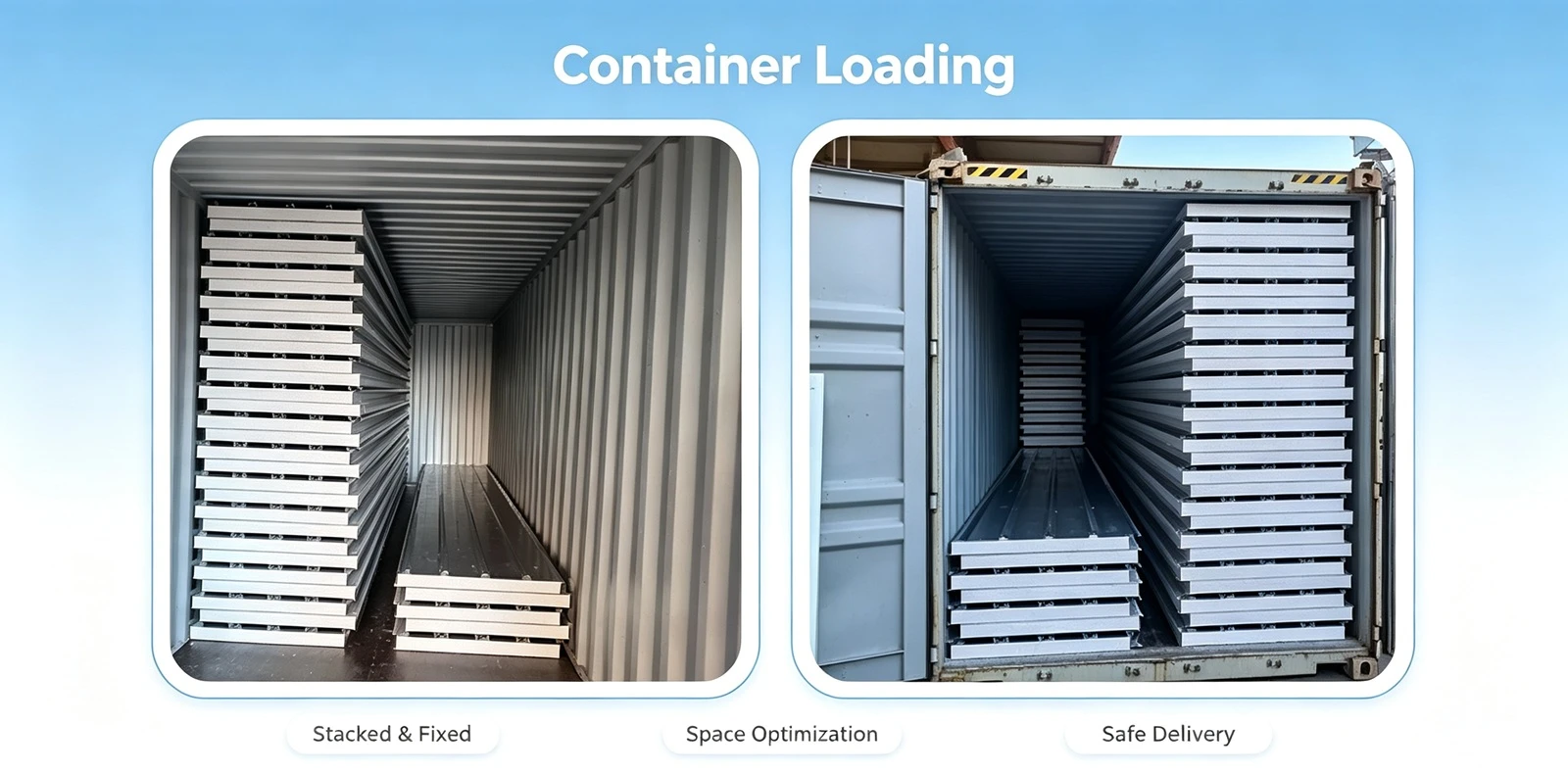
Logistics is usually the real risk on African orders, so it gets specified rather than assumed. We work FOB, CIF or DDP and route most West and East African shipments through established freight partners who handle inland haulage, customs and container unloading. Export packaging is full-surface protective film, corner guards, fumigated pallets and stretch wrap rated for long sea transits and extended port dwell. Loading is supervised and photographed, and we will tell you honestly which ports we have reliable experience with and which ones we have not shipped into before.
Certifications & Compliance
We supply the paperwork a funding agency or a consulting engineer will ask to see: EN 13501-1 reaction-to-fire classification for the ordered build-up, EN 13162 conformity for the mineral wool core, EN 14509 for the assembly, and EN 12667 thermal conductivity data. Steel is supplied to EN 10346 with coating mass stated per coil. The plant operates under ISO 9001, ISO 14001 and ISO 45001. Where a national standards body requires its own mark, we will say up front which items we can evidence and which need local testing rather than promising both and delivering neither.
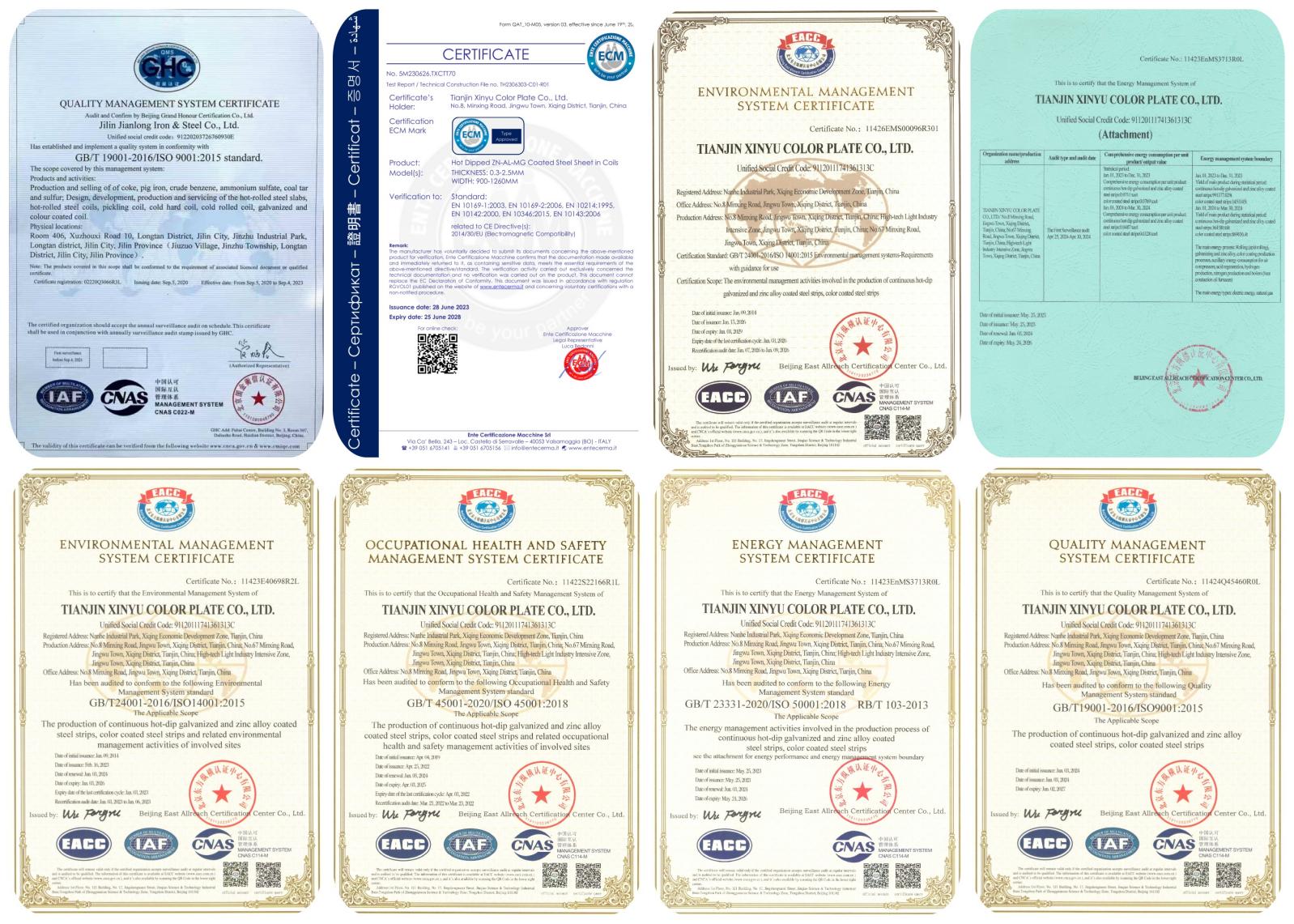
Manufacturing Strength & Quality Control
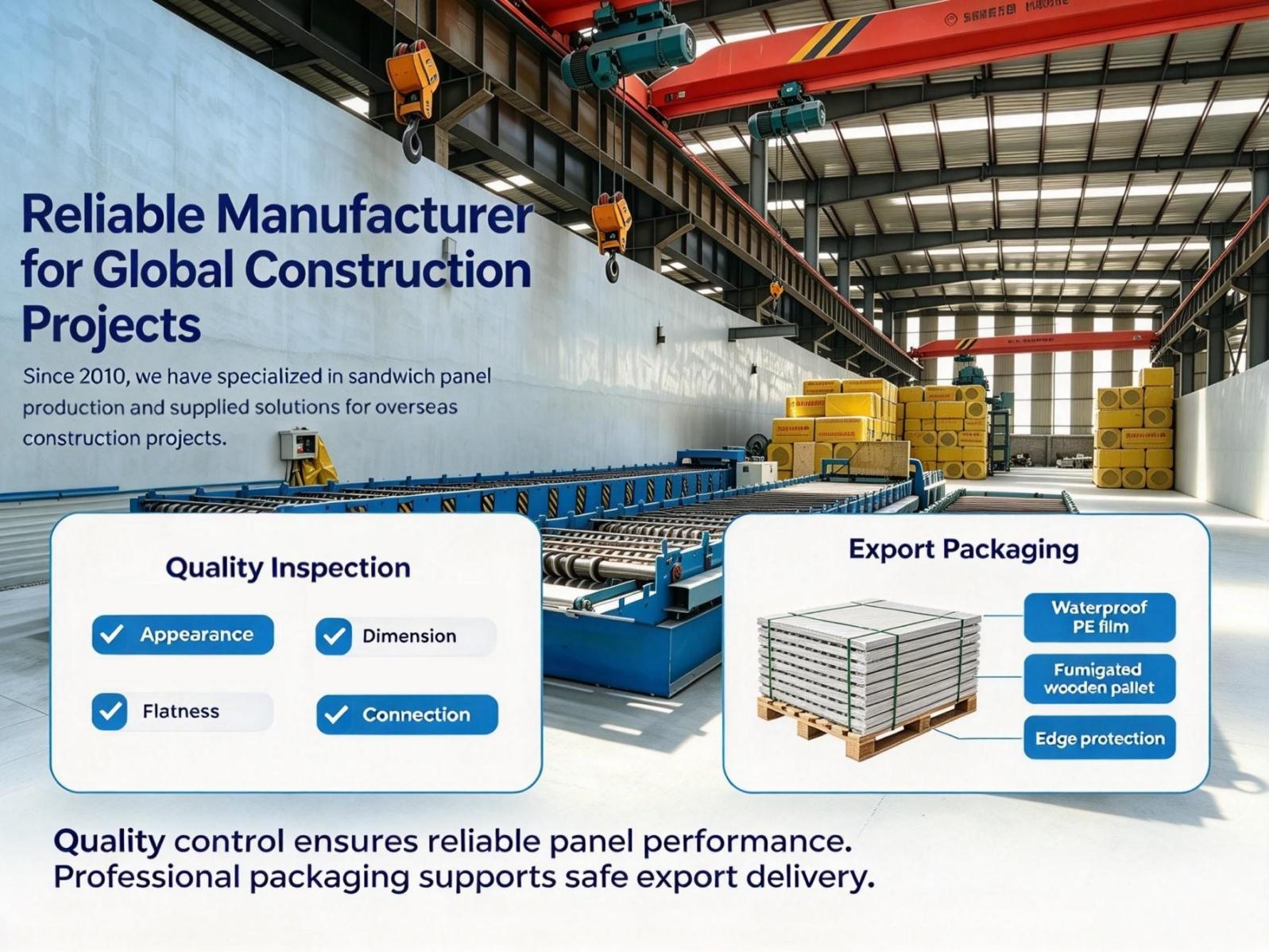
- Background: in production since 2010, with roof and wall panels delivered into Nigeria, Ghana, Kenya and Tanzania as well asSoutheast Asia and the Middle East.
- Plant: 15,000 m² factory, 26 lines, roughly 20,000 m² of output per day - enough to load a programme of several containers on one schedule.
- Inputs: coil certificates checked for coating mass and thickness; rock wool verified for density. No reclaimed filler is used, which matters because filler slump is what turns a cheap roof into a sagging one within a couple of seasons.
- Inspection: bond strength, length tolerance, flatness and core integrity sampled every shift; we photograph loading and will arrange third-party inspection where a funder requires it.
- Packing discipline: pallets are built by roof zone against your drawings, sequentially numbered, and capped against rain - because a wet core is the most common complaint we could prevent and do not.
- Support: written quotations inside a working day, including freight options, documents for customs and installation drawings for crews that have not used these panels before.
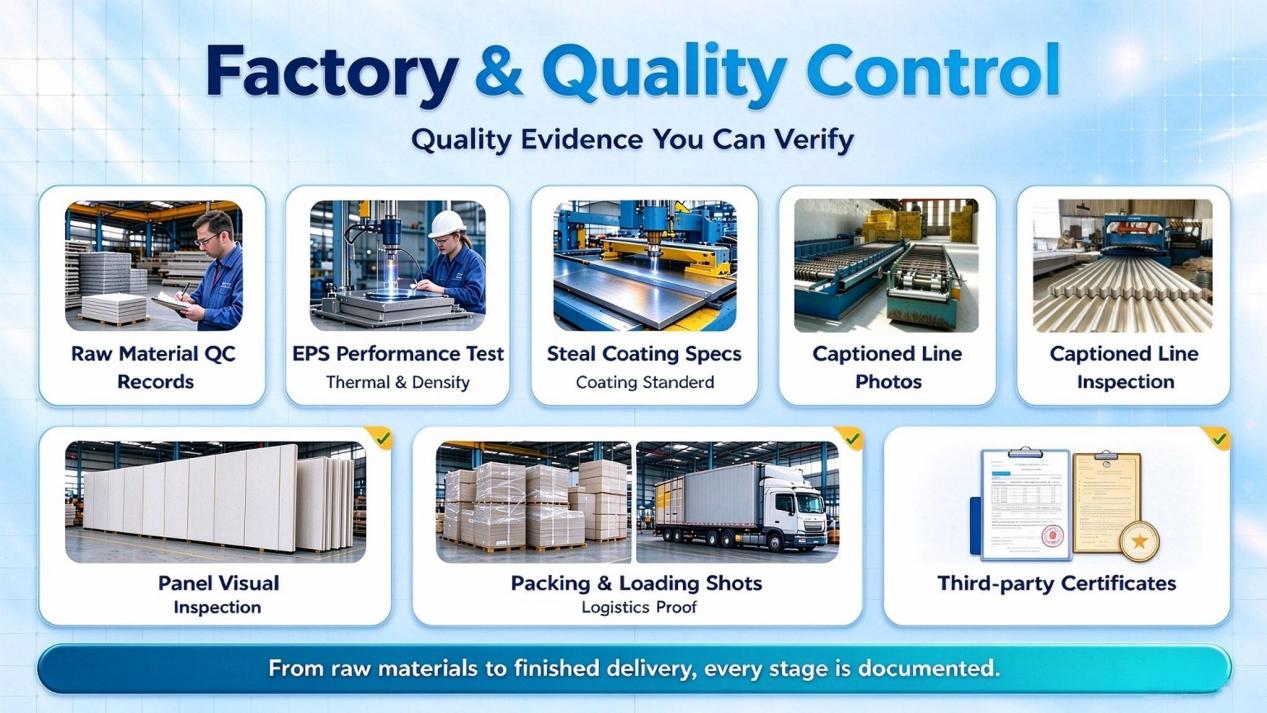
Lead Time, MOQ & Trade Terms
|
Item |
Detail |
|
Lead Time |
Two days for samples. Allow 5-7 days for consignments up to 5,000 m² and 7-15 days for 10,000-50,000 m². Bespoke profiles or coatings take 10-18 days from drawing approval. |
|
Minimum Order |
1 m² for samples; a 20GP or 40HQ container depending on programme size |
|
Trade Terms |
FOB / CIF / CFR / DDP under Incoterms 2020, with inland haulage arranged where required |
|
Payment |
T/T or L/C at sight; terms stated on the proforma invoice |
|
Packing |
Sequenced by roof zone, protective film, corner guards, fumigated pallets, stretch wrap for long sea transit |
Warranty After-Sales Service
Panels are warranted against delamination and against manufacturing defects in the core or the bond, and the coating carries a film-integrity warranty whose term depends on the system and the exposure class - stated on the quotation, not in small print afterwards. We exclude mechanical damage, standing water, unwashed deposits and unsealed cut edges, because those are site conditions and pretending otherwise would make the warranty meaningless. Given how remote some sites are, we put more effort into remote guidance than most suppliers: installation drawings, a video walkthrough, and WhatsApp support in English and Chinese during your working hours.
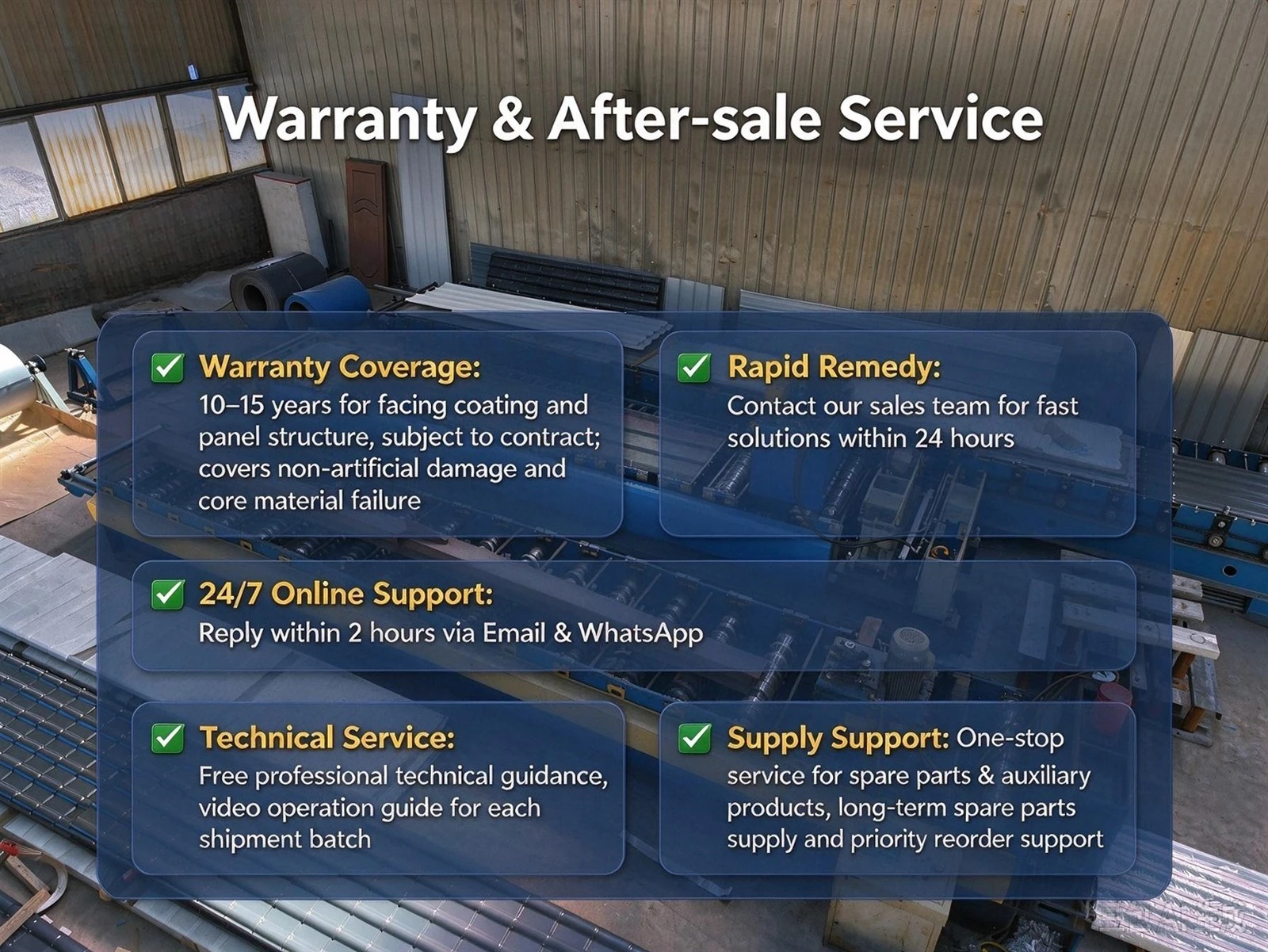
Company Profile
Tell us the building type, roof area, bay spacing and destination port and we will return a thickness recommendation, a zone-by-zone packing plan, freight options into your port and a loaded price - normally within one working day. We have manufactured insulated sandwich panels since 2010 in a 15,000 m² Liaoning plant running 26 lines at about 20,000 m² per day. Samples, third-party reports and documentation are included with any serious enquiry, and if panels are the wrong answer for your building we will say so.
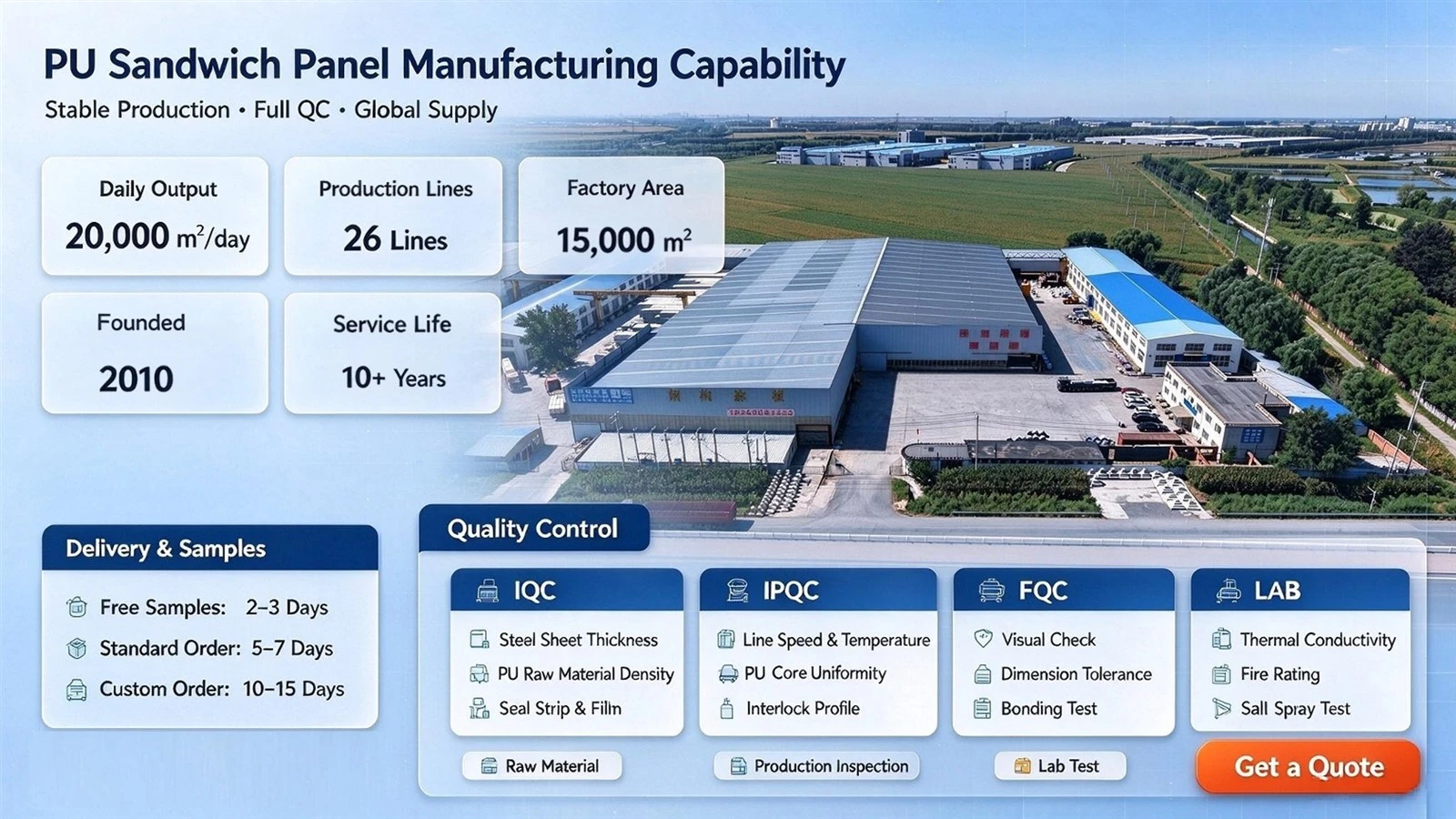
FAQ
Q1: Where does the money actually get saved?
A: Mostly in the frame and in programme time, not in the panel itself. A lighter roof lets the structural engineer drop a size or two on purlins and rafters, and modular panels convert a wet, multi-trade roof build-up into a single dry fixing operation.
Q2: What fire classification will it carry?
A: Euroclass A2-s1,d0 per EN 13501-1 for the rock wool build-up, with the report issued for the thickness you actually order, because the classification is thickness-dependent. Tell us which national code applies and we will confirm whether the EN report is accepted or local testing is required.
Q3: How much maintenance should we budget for?
A: Realistically: an annual wash and a look at sealant around penetrations and flashings. There is no periodic re-coating schedule and nothing to replace. If somebody offers you a roof that needs less than that, ask what they left out.
Q4: What do African projects specifically need from a roof panel?
A: Three things: speed, because the erection window is often a dry season; tolerance of rough handling and long dwell at port; and zero maintenance afterwards. We therefore recommend Galvalume faces near the coast, 50-75 mm for ventilated buildings, and pallets sequenced to your drawings.
Q5: Can it span a full-width hall without intermediate joints?
A: Up to 11.9 m in one panel, which clears most hall widths without an end lap. Where the building is longer we use a sealed transverse joint detailed for the purpose rather than leaving a butt joint to leak - tell us the span and we will return a fixing layout with the quotation.
Related Sandwich Panel Products
The three-way choice is straightforward. EPS is cheapest per square metre and fine for a temporary structure with no fire review - but it will not pass one. PIR insulates best per millimetre, which is why it wins in cold rooms, at Euroclass B-s1,d0. The rock wool core in this panel is non-combustible, so it clears fire review on its own merits. For most African projects we end up recommending the middle option on fire safety and spending the saving on a better coating instead, because corrosion kills more roofs here than fire does.
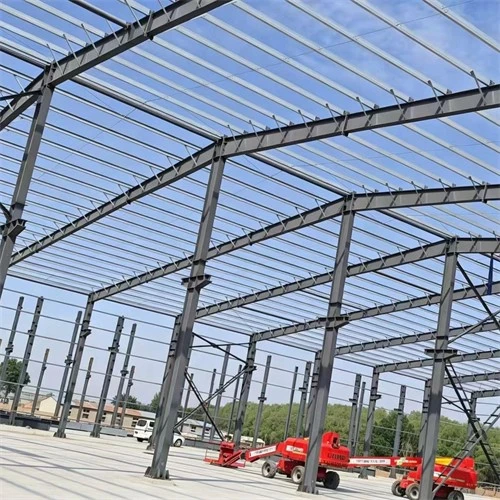
Steel Structure
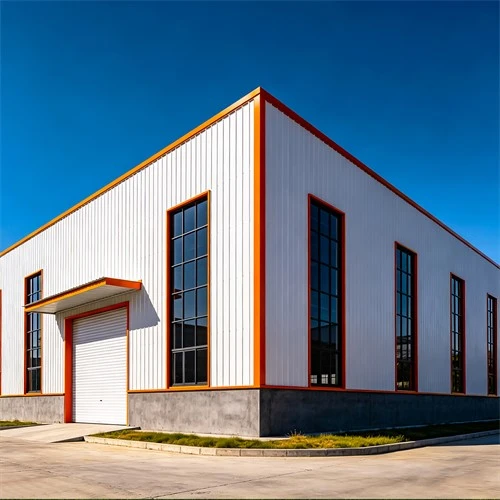
Steel Structure
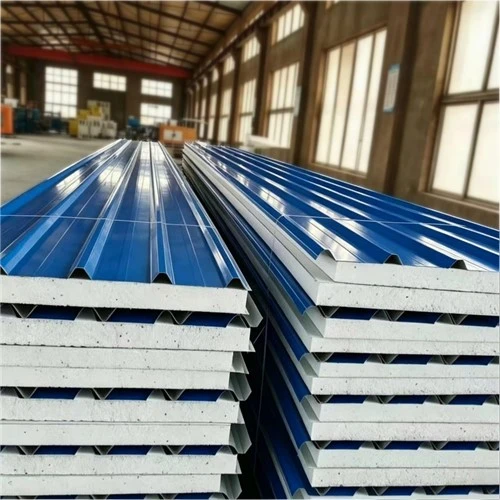
Eps Composite Panels
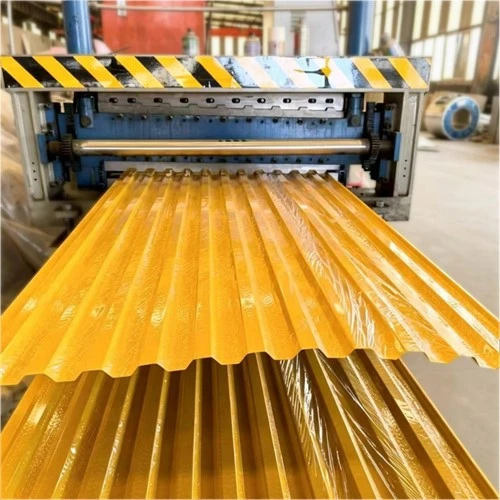
PPGI/PPGL Sheet
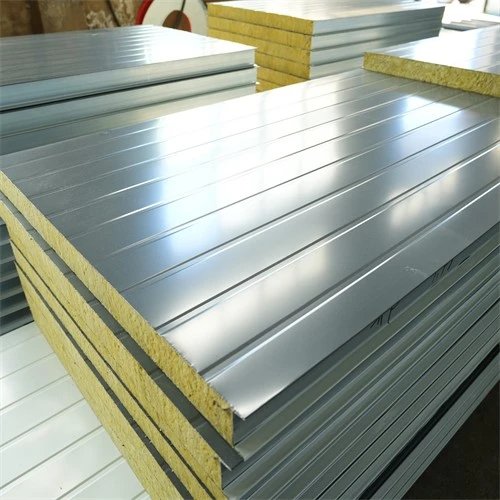
Rockwool Sandwich Panels
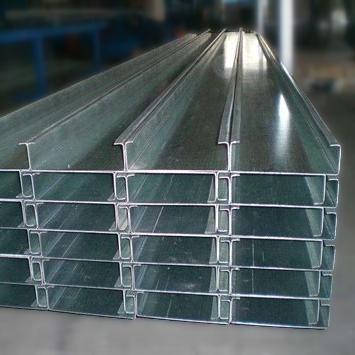
C and Z purlin
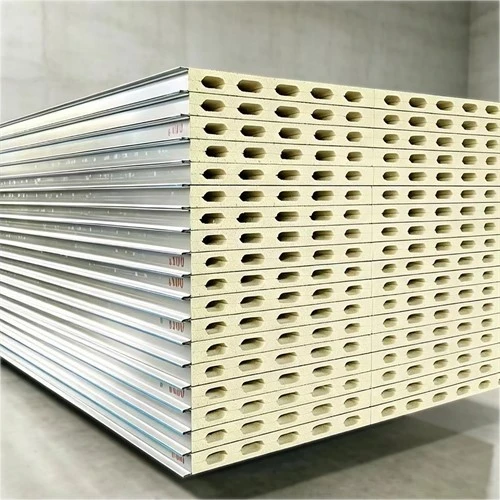
Clean Room Sandwich Panel
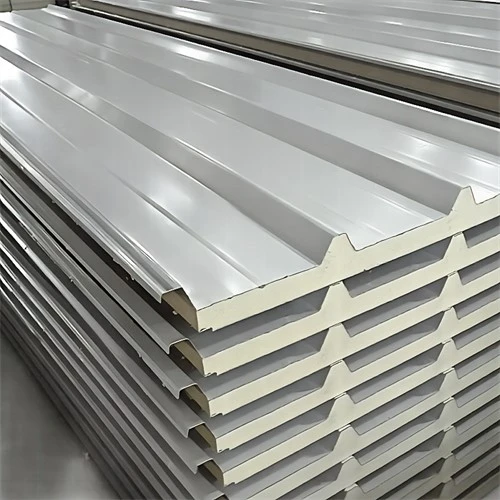
PIR Sandwich Panel
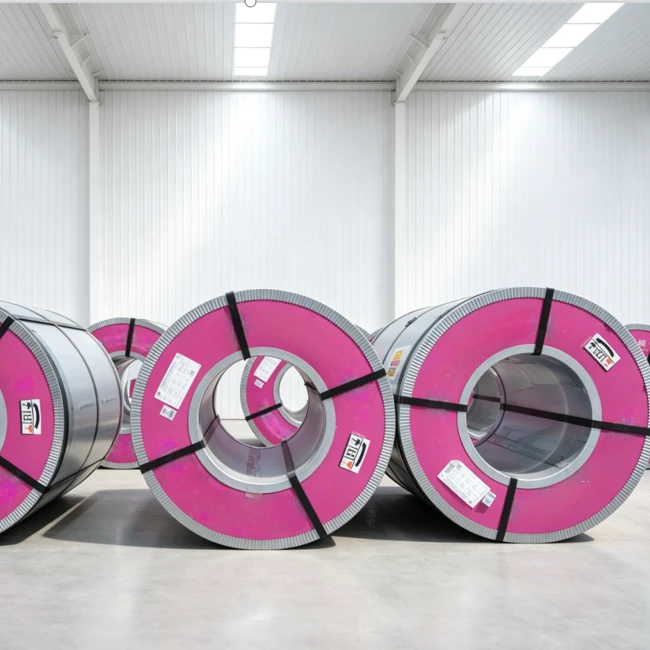
PPGI/PPGL Coil
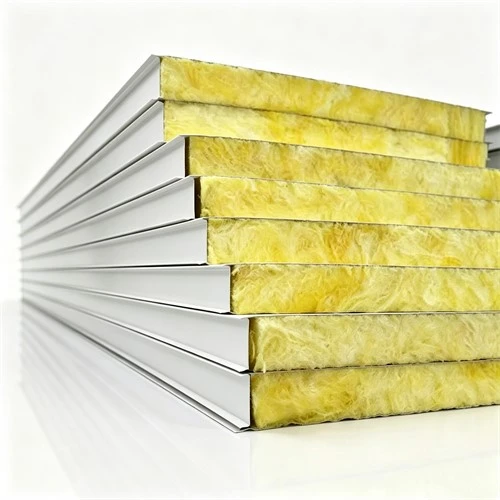
Glasswool Sandwich Panel
Hot Tags: insulated puf panel roof, China insulated puf panel roof manufacturers, factory


