

Shenyang Qiangyun Color Steel & Steel Structure Co., Ltd. is one of the most reliable manufacturers and suppliers of polyurethane foam puf panels roof in China. With abundant experience, we are committed to providing high quality customized products with competitive price. Welcome to wholesale advanced polyurethane foam puf panels roof in stock here from our factory. Also, pricelist is available.
Key Advantages
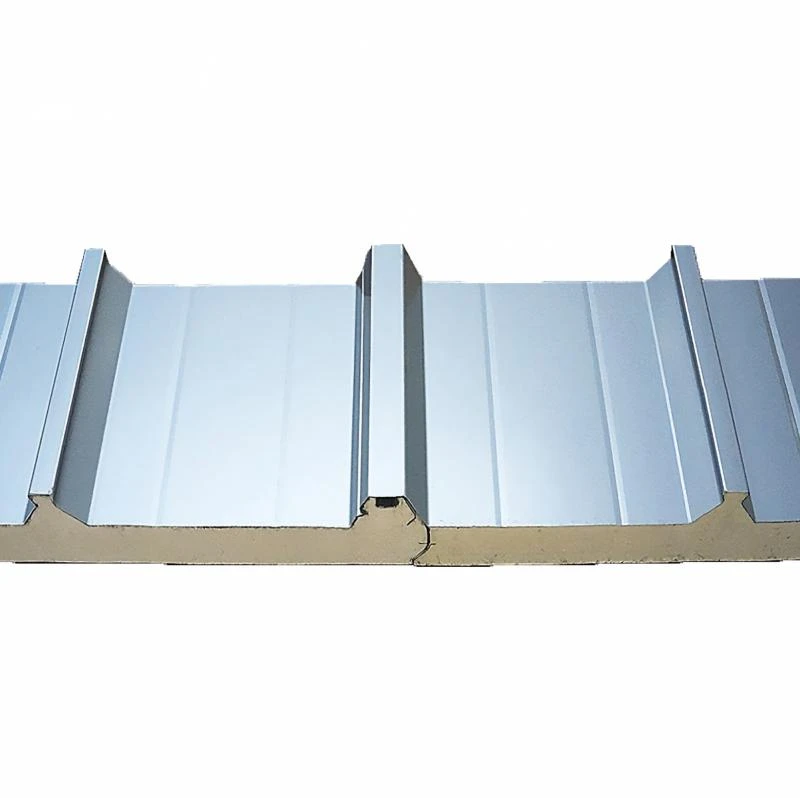
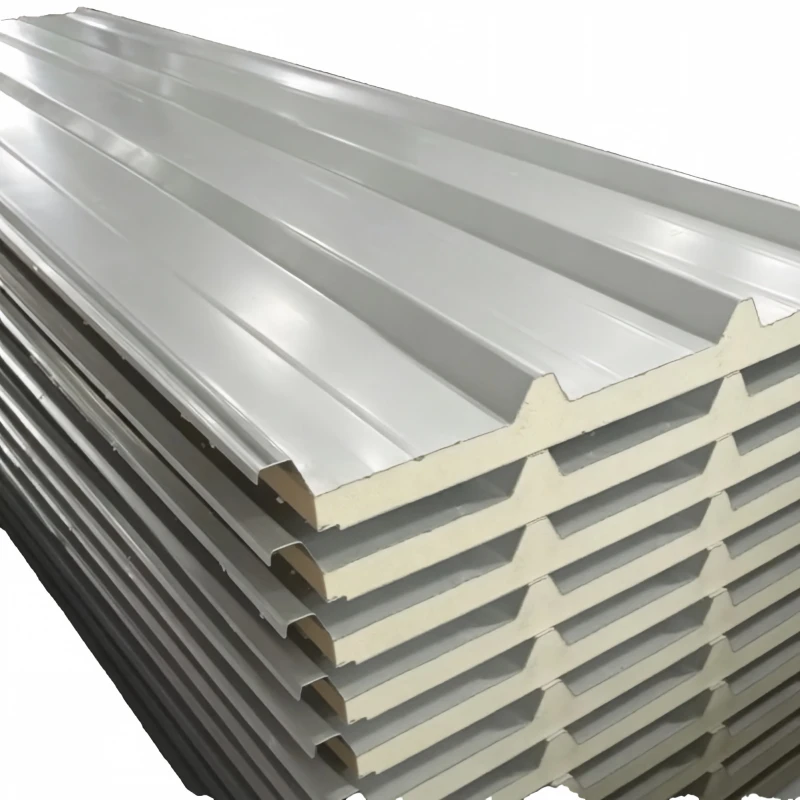
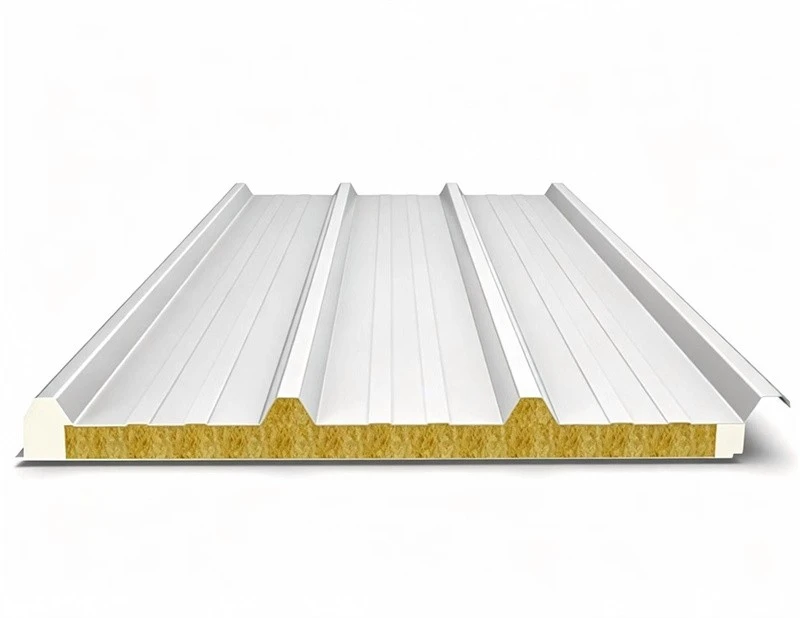
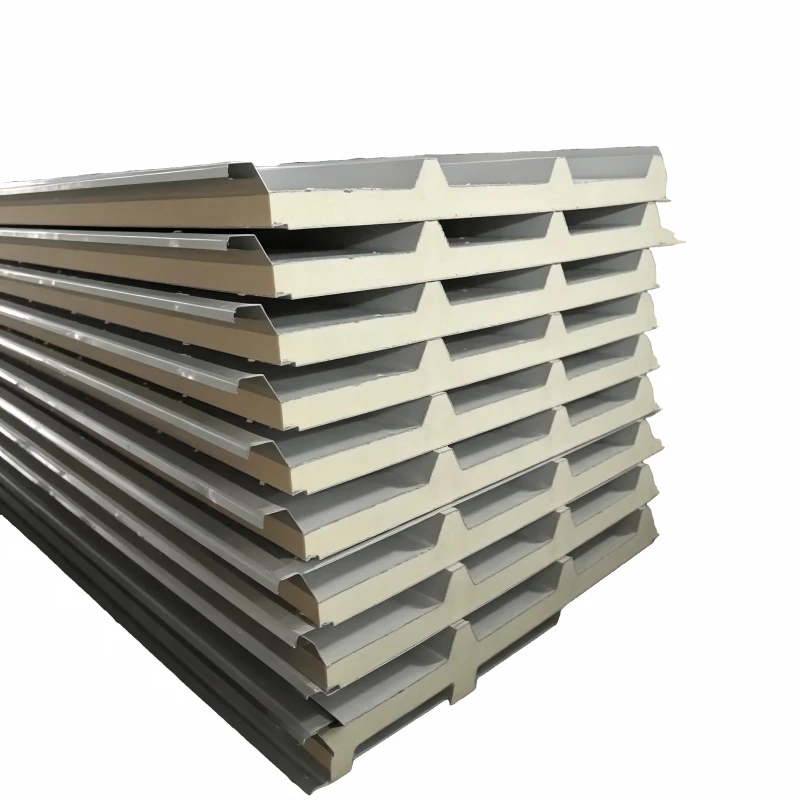
Faces can be pre-painted steel, hot-dip galvanized, Galvalume or aluminium, roll-formed into a corrugated concealed-lap profile so that no fixing penetrates the weather line. One-piece forming on a continuous line keeps core density even across the whole panel and eliminates batch-to-batch colour variation, which is the complaint we hear most often from contractors re-ordering for the same roof.
Advantages & Buyer Benefits
- Rock wool core at lambda 0.036-0.040 W/(m·K): cuts heat gain through the roof so chillers and AC units run shorter cycles.
- Corrugated concealed-lap profile: higher section stiffness, tested to 2.5 kN/m² gravity load and 1.2 kPa wind uplift.
- Euroclass A2-s1,d0 (EN 13501-1) for the standard rock wool build-up - see the test report for the exact thickness you order, because the classification is thickness-dependent.
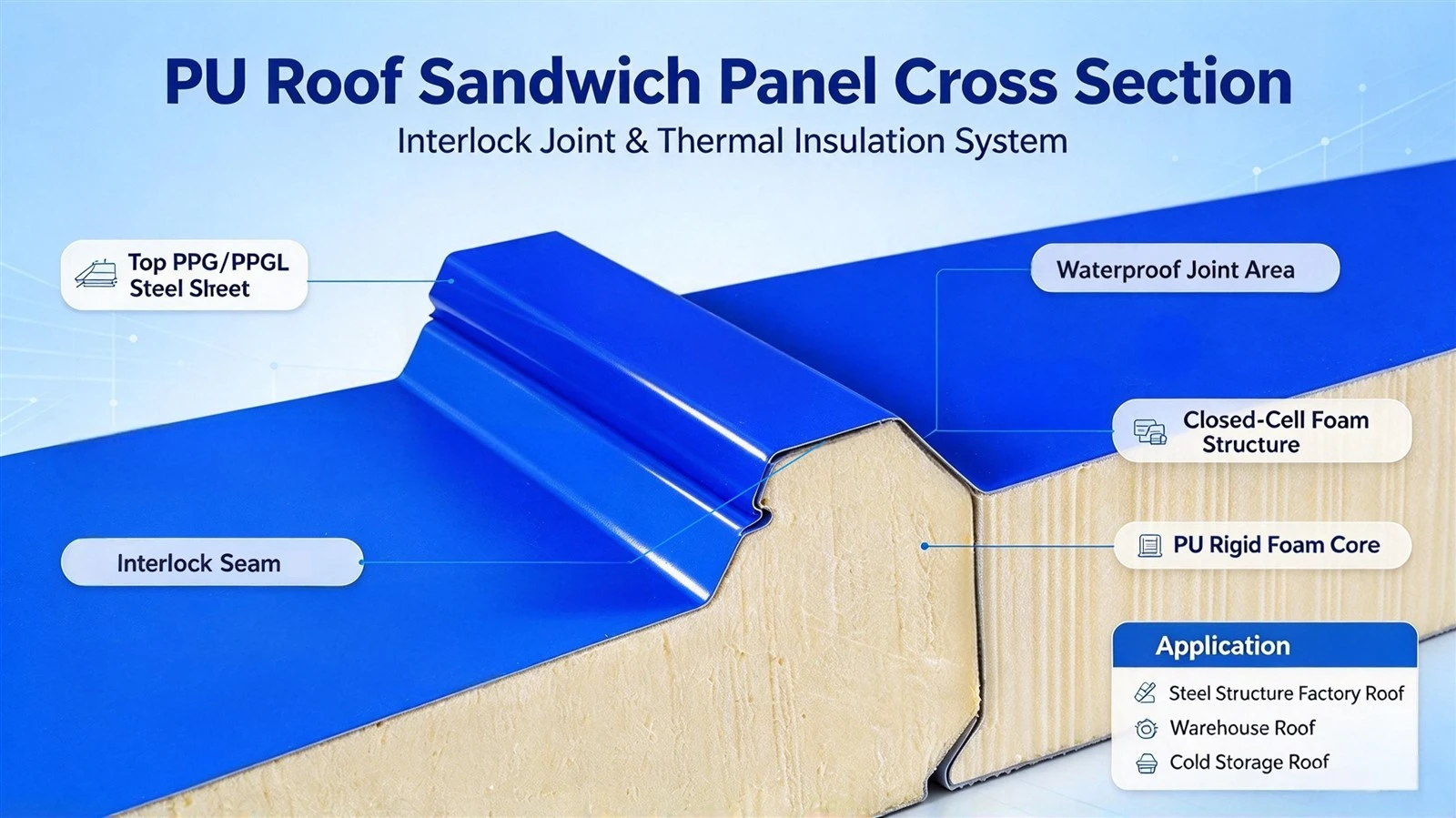
- PU-filled tongue-and-groove joint: the seal is foamed in place, so there is no unsealed path for driven rain to follow.
- PVDF or SMP topcoat: holds colour and gloss under tropical UV, and resists the acid rain that follows monsoon in industrial areas.
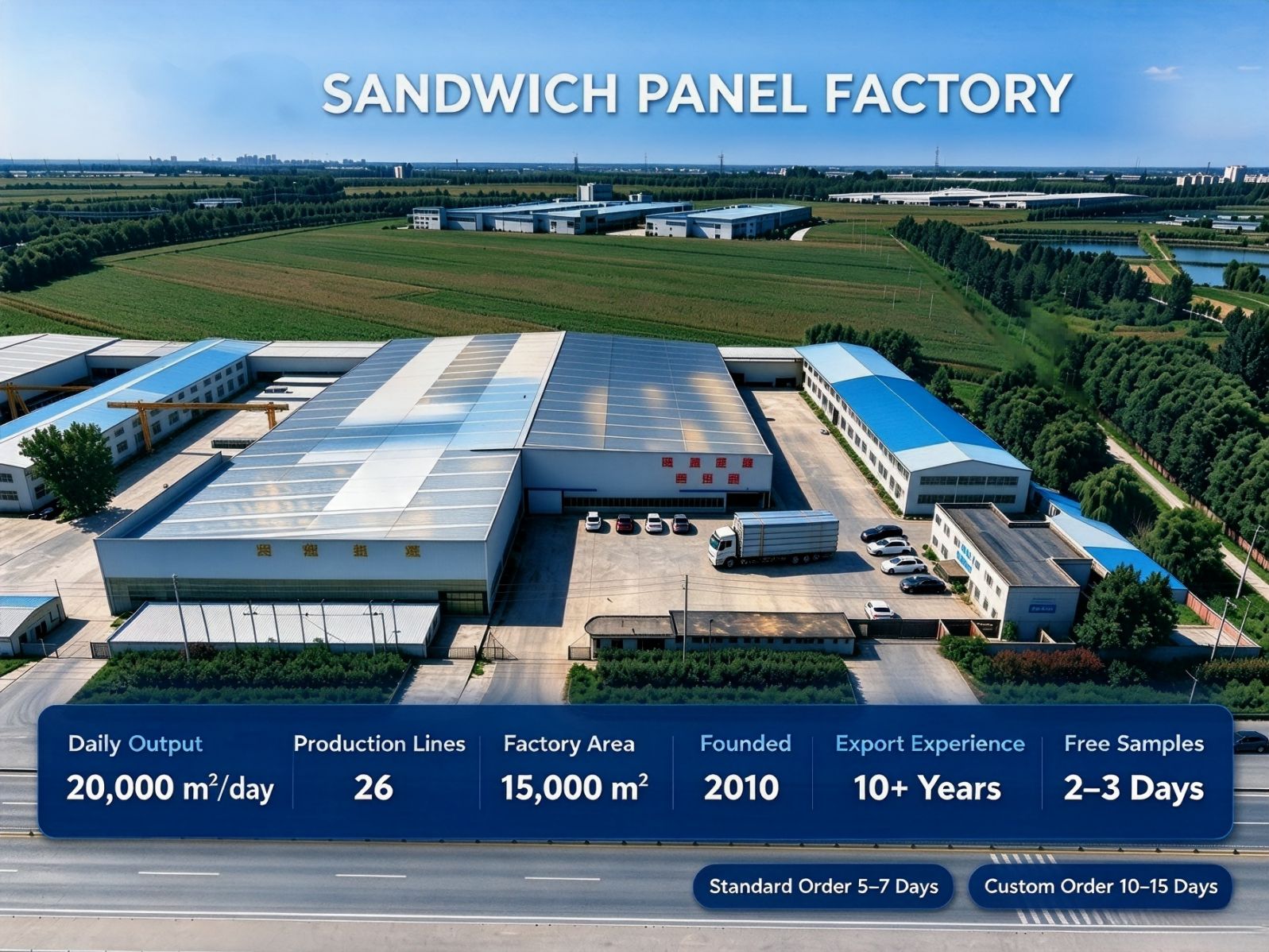
- Capacity of roughly 20,000 m² per day across 26 lines, so a full-container order is a production slot, not a special favour.
Technical Specifications
|
Parameter |
Specification |
|
Product Name |
Polyurethane Foam Puf Panels Roof |
|
Core Material |
Non-combustible rock wool core (EN 13162) + closed-cell PU edge seal |
|
Surface Material |
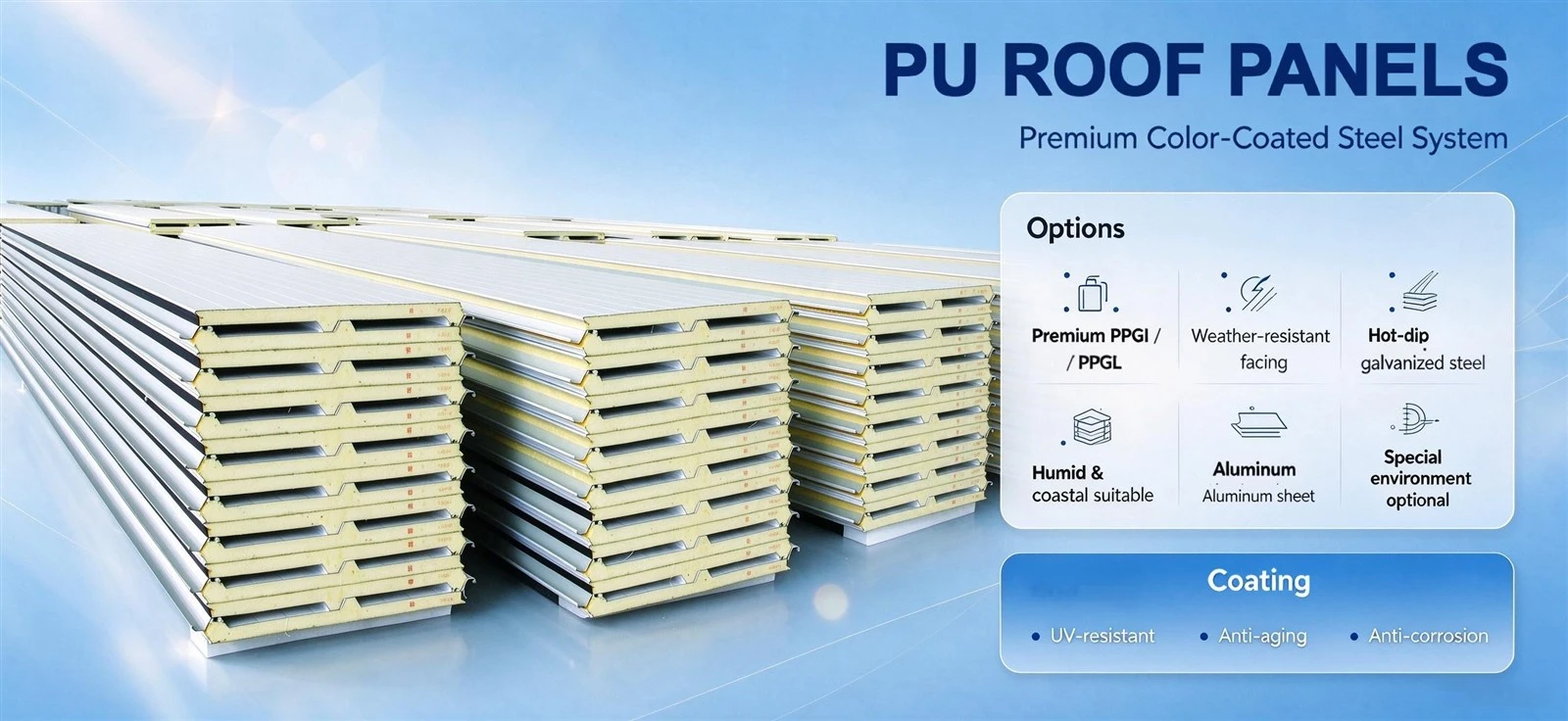
PPGI/PPGL, galvanized, Galvalume, optional Al/stainless |
|
Core Material |
High-density rigid closed-cell polyurethane foam |
|
Panel Thickness |
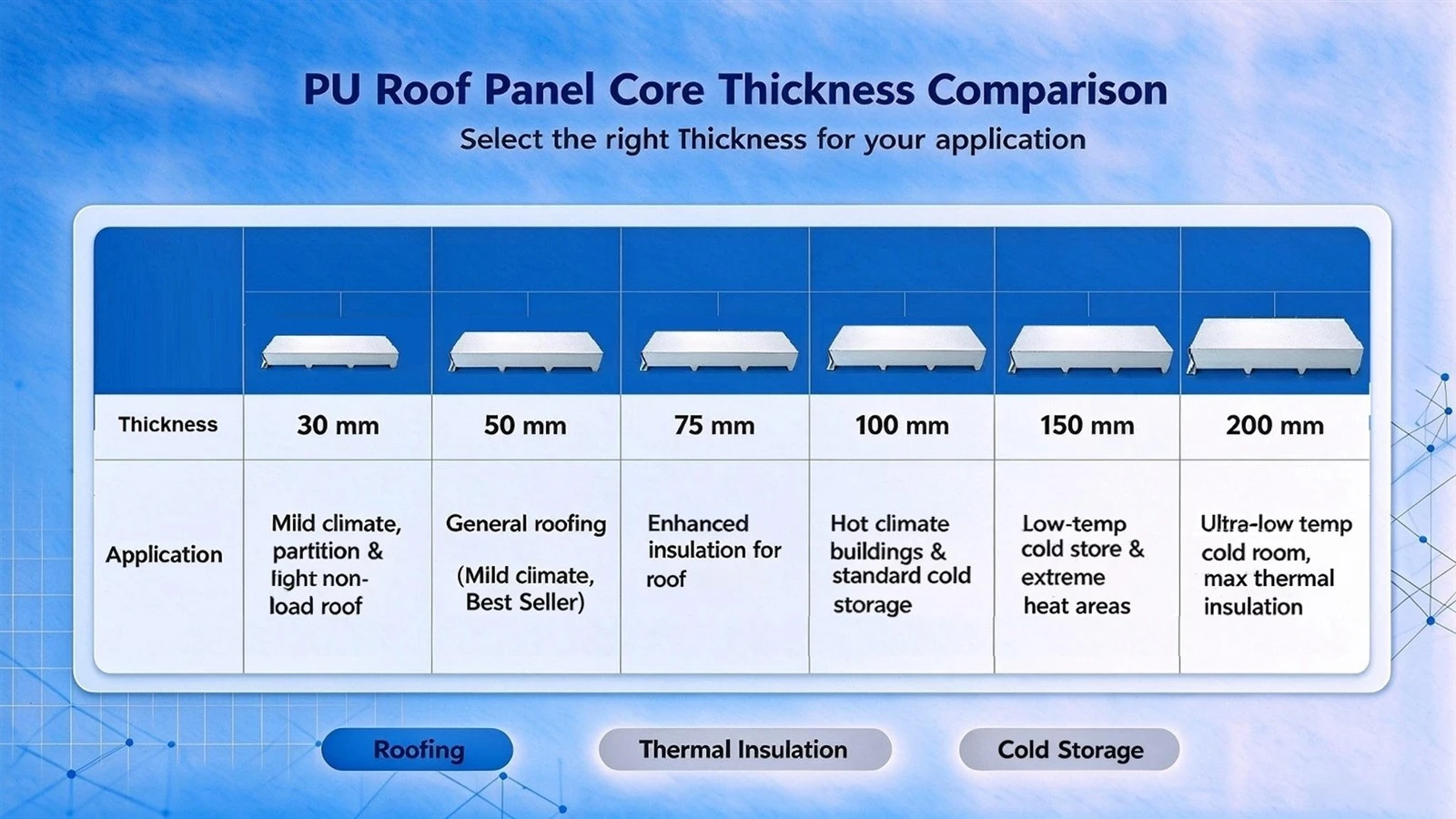
30 / 50 / 75 / 100 / 150 / 200 mm |
|
Sheet Thickness |
0.3–0.8 mm |
|
Width |
950 / 1000 mm (custom available) |
|
Core Density |
Rock wool 100-150 kg/m³; PU edge seal 38-43 kg/m³ |
|
Thermal Conductivity |
Rock wool core 0.036-0.040 W/(m·K); PU edge seal 0.022-0.024 W/(m·K) |
|
Thermal Conductivity |
0.022–0.024 W/(m·K) |
|
Reaction to Fire |
Euroclass A2-s1,d0 - EN 13501-1 (rock wool build-up); full PIR core variant B-s1,d0. Verify per thickness against the test report. |
|
Fire Resistance |
B1 (GB 8624) / Euroclass B-s2,d0 - EN 13501-1; PIR upgrade B-s1,d0 |
|
Connection |
Concealed-fixed corrugated / tongue-and-groove, sealed |
|
Custom Colors |
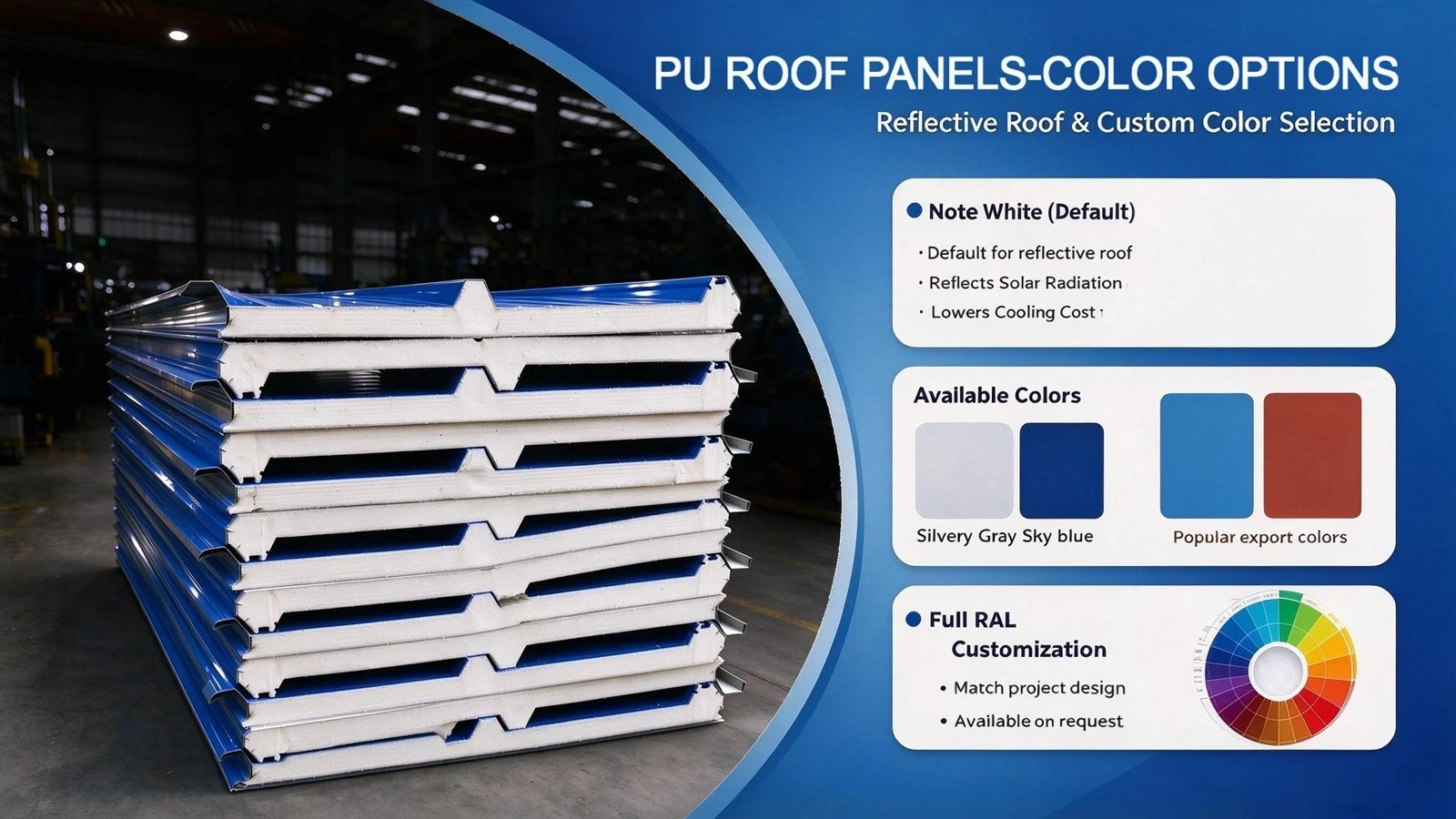
White, light gray, sky blue, brick red + full RAL |
|
Applications |
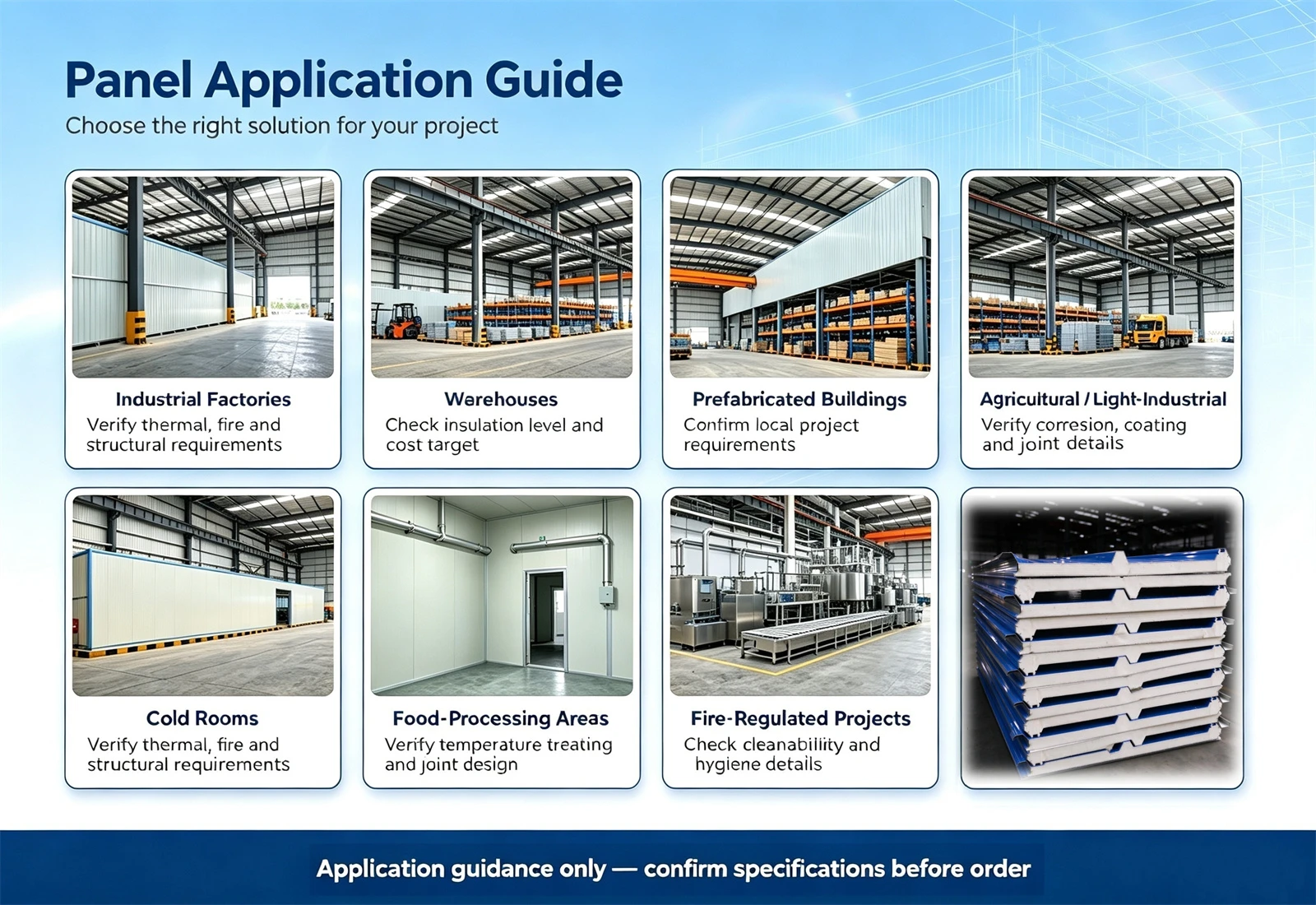
Factory / warehouse / cold-store / prefab / commercial roofs |
|
Service Lifespan |
15–25 years |
|
Moisture Performance |
Closed-cell seal, water absorption <= 1.5%; no wicking through the mineral core |
|
Recommended Duty |
Tropical / high-humidity roofing; chilled and frozen storage |
Performance Parameters
|
Property |
Value / Rating |
|
Core Thermal Conductivity (lambda) |
0.036-0.040 W/(m·K) - EN 12667 |
|
Indicative U-value (core only) |
0.80 W/(m²·K) at 50 mm; 0.40 at 100 mm; 0.27 at 150 mm - add 5-10% for joints |
|
PU Edge-Seal Density |
38-43 kg/m³, closed-cell ratio >= 90% |
|
Water Absorption |
<= 1.5% - joint seal stays closed, core does not wick |
|
Core Combustibility |
Non-combustible mineral wool; melting point > 1000 °C |
|
Reaction to Fire (panel) |
Euroclass A2-s1,d0 - EN 13501-1; thickness-dependent, tested per build-up |
|
Service Temperature / Life |
-40 °C to +80 °C; 20-25 years with routine coating care |
Thickness Selection for Tropical Duty
For a tropical roof the question is usually driven by condensation control rather than by heating cost. Indicative U-values for the rock wool core, taken as lambda / thickness with lambda = 0.040 W/(m·K) and excluding joints and fixings, are roughly 0.80 W/(m²·K) at 50 mm, 0.53 at 75 mm, 0.40 at 100 mm, 0.27 at 150 mm and 0.20 at 200 mm; add 5-10% for thermal bridging before you compare against a target. As a working rule for our Southeast Asian orders: 50-75 mm for ambient warehouses, 100-120 mm for chilled stores, and 150 mm and above for frozen stores and blast freezers. If you tell us the internal set-point and the ambient design conditions we will confirm the figure in writing rather than leaving you to interpolate.
Surface Material & Coating Options
|
Option |
Where it earns its keep |
|
PPGI / PPGL pre-painted steel |
Default weather-resistant facing for inland and urban sites |
|
Hot-dip galvanized steel |
Baseline choice where humidity and monsoon rain dominate |
|
Galvalume (aluminium-zinc) |
Coastal and salt-laden atmospheres - resists cut-edge corrosion far better |
|
Aluminium / stainless steel |
Food-grade and chemically aggressive environments on request |
|
Coating system |
PVDF for tropical UV and colour retention; SMP or HDP as value options; PE only for internal faces |
Color & Customization
White, light grey, sky blue and brick red are stocked; full RAL matching is available on request. For roofs in hot climates the colour choice is a thermal decision, not only an aesthetic one - a light finish reflects solar radiation, keeps the roof surface cooler and reduces the temperature difference the insulation has to work against. We will quote the solar reflectance figure for whichever shade you are considering so you can see the trade-off before committing.
Application Scenarios
Specified across Southeast Asia for cold stores and food-processing plants where a stable interior temperature is a licence condition, for steel-structure factories that need to keep dead load off the frame, for large logistics roofs that must go up inside a single dry season, and for coastal agricultural buildings where galvanized or Galvalume faces are mandatory rather than optional.
Project Reference
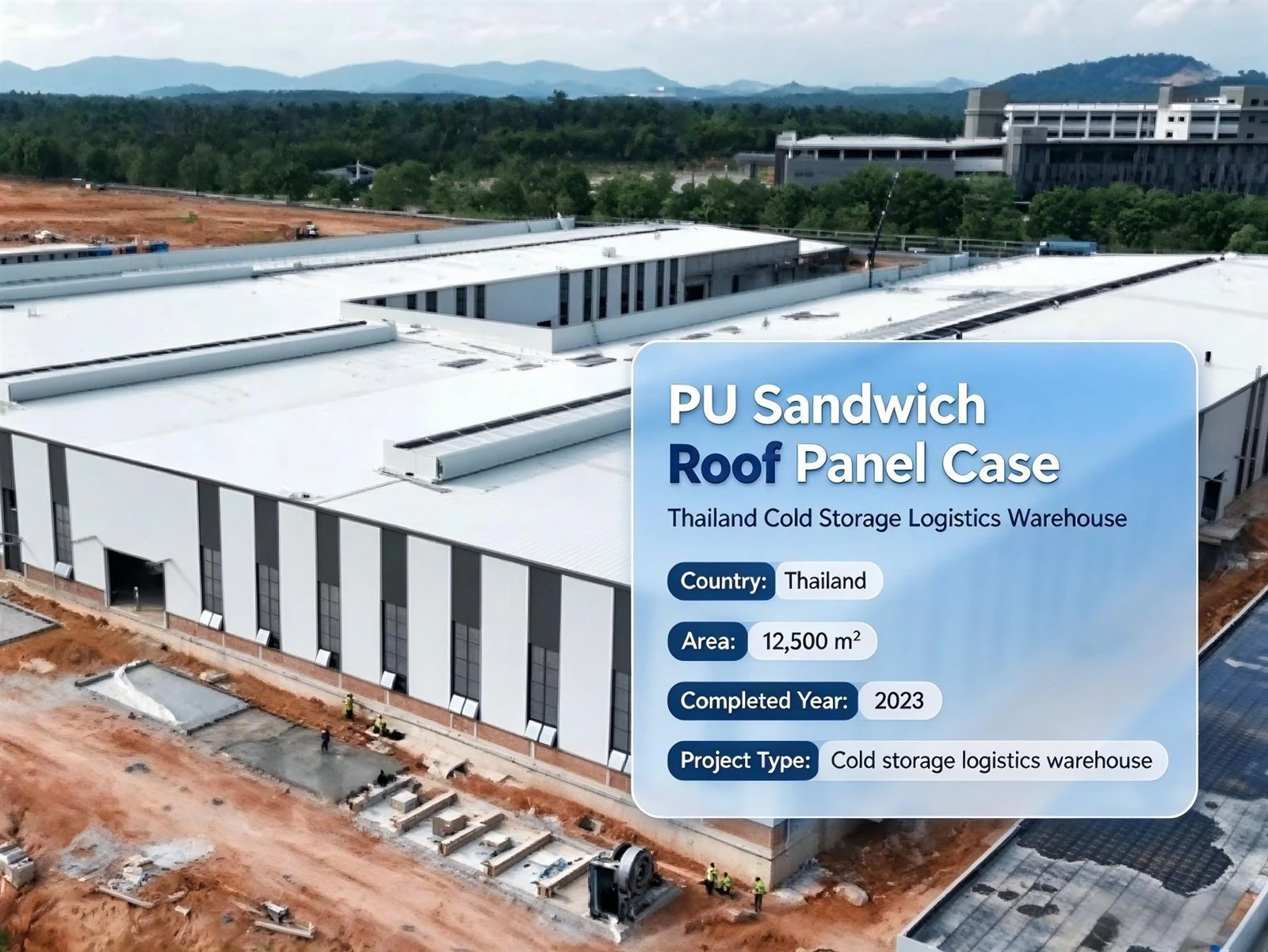
Thailand cold-chain logistics warehouse, 12,500 m², completed 2023. The operator needed a continuous -18 °C envelope with no thermal bridging at the laps, in a climate that swings between 35 °C daytime heat and monsoon humidity. We supplied 150 mm panels with foamed PU edge seals; the sealed lap not only stopped water ingress but removed the condensation drip that had plagued the previous single-skin roof. Panels were shipped from Tianjin in 40HQ containers cut to the roof length, so no site cutting was needed and the roof was closed before the rainy season. This case should be read as indicative: the thickness recommendation and the achievable energy figures depend on your own design conditions, and we are happy to put the delivery and coil records behind it.
Customization & OEM Service
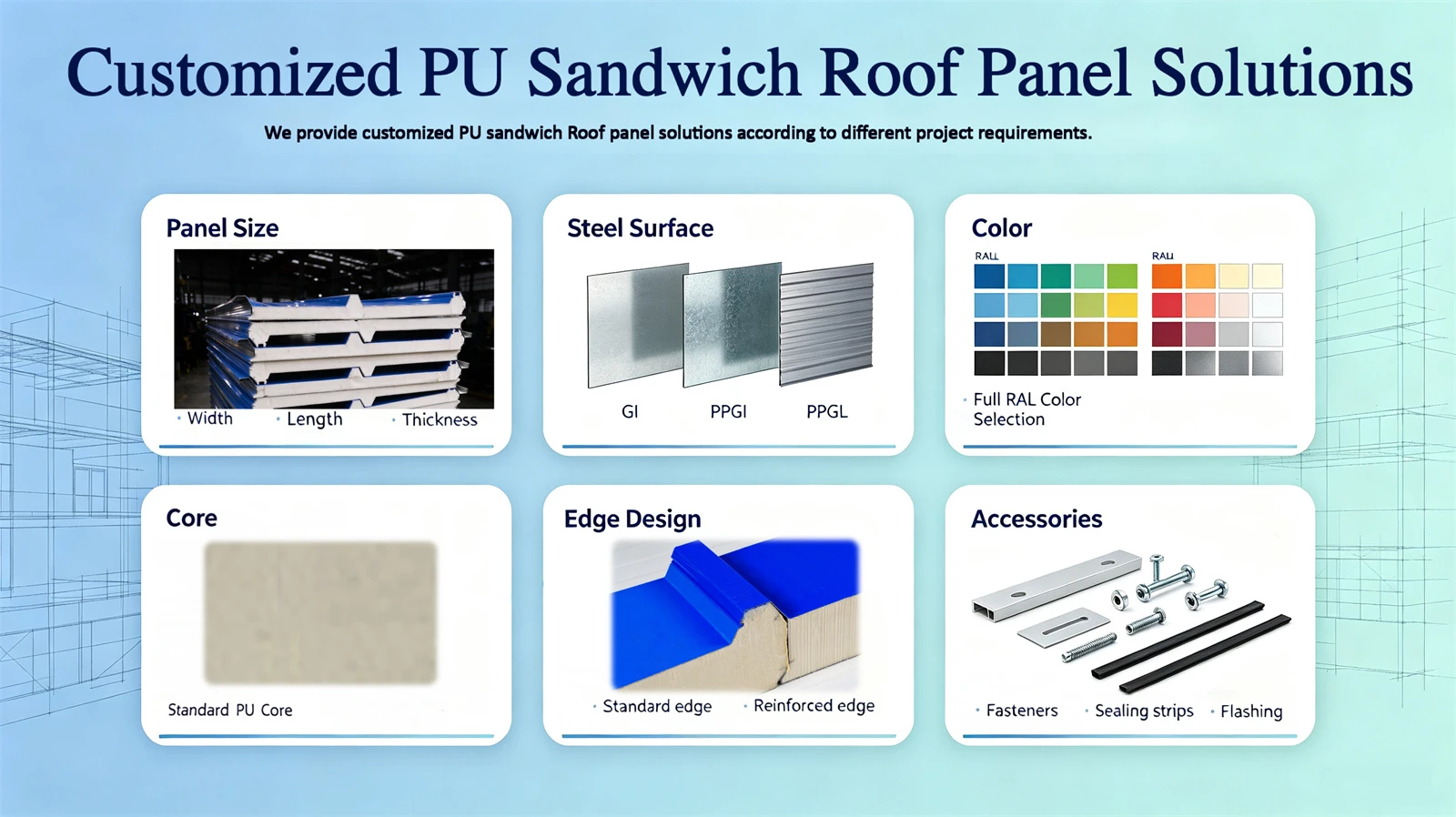
Thickness from 30 to 200 mm, effective widths of 950 / 960 / 1000 mm (1150 mm on request) and lengths up to 11.9 m, which fits a 40HQ container and removes end-joints from most roof runs. Faces, core grade and RAL colour are configurable; flat, matte and embossed finishes are available. Rib count and lap style can be adjusted to suit your fixing centres. OEM labelling is supported, and we ship matching ridges, flashings, seal strips and fasteners with the panels so one purchase order covers the roof.
Certifications & Compliance
Every roof panel leaves with the documentation an inspector will ask for: EN 13501-1 reaction-to-fire classification for the specified build-up, EN 13162 conformity for the mineral wool core, EN 14509 for the self-supporting panel, and thermal conductivity to EN 12667. Steel substrates are supplied to EN 10346 with coating mass stated on the mill certificate. Production runs under ISO 9001 quality, ISO 14001 environmental and ISO 45001 occupational health and safety systems. We issue the classification report with the quotation rather than after you ask - and we will tell you plainly which clauses are covered by test evidence and which still need local sign-off.
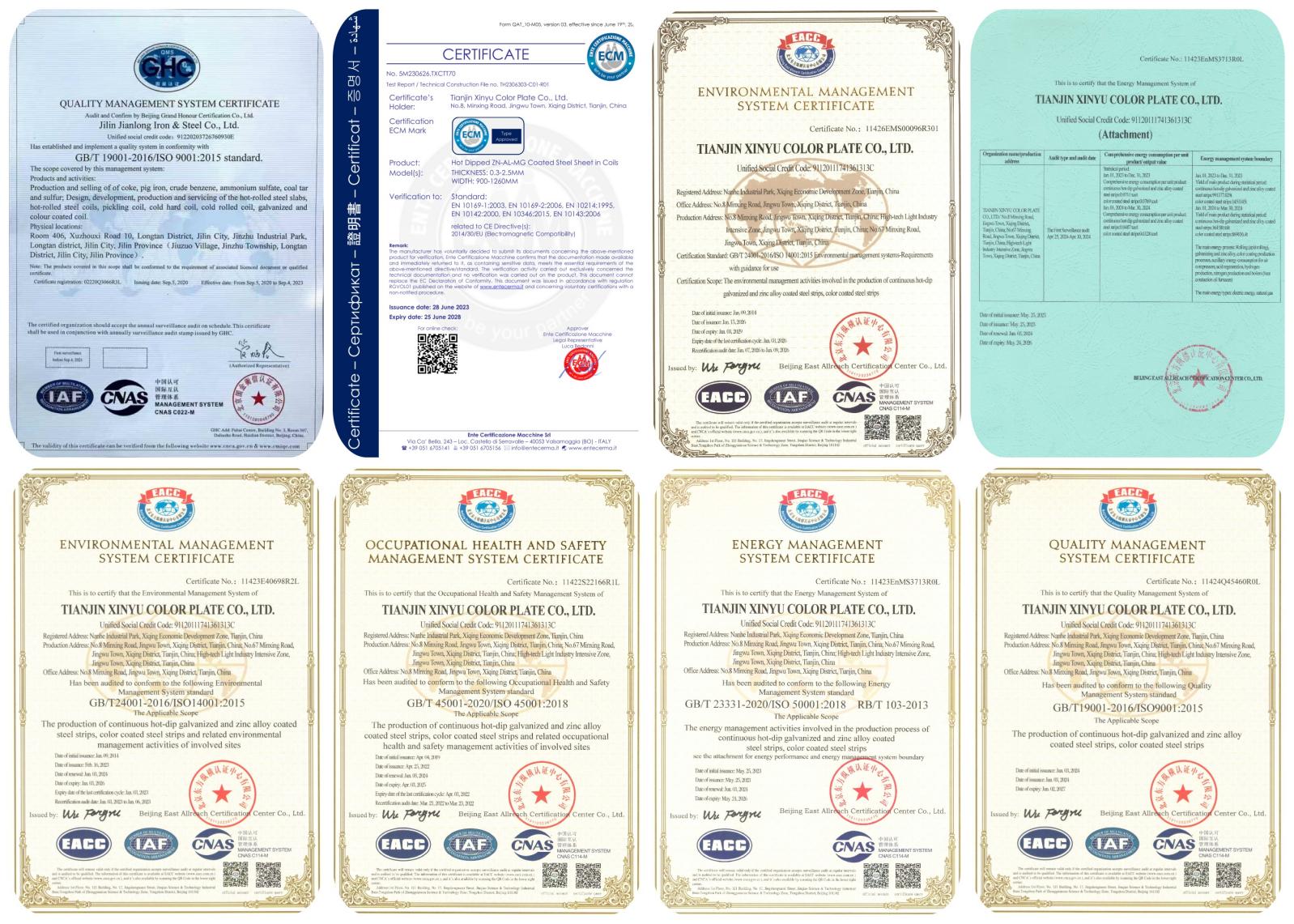
Manufacturing Strength & Quality Control
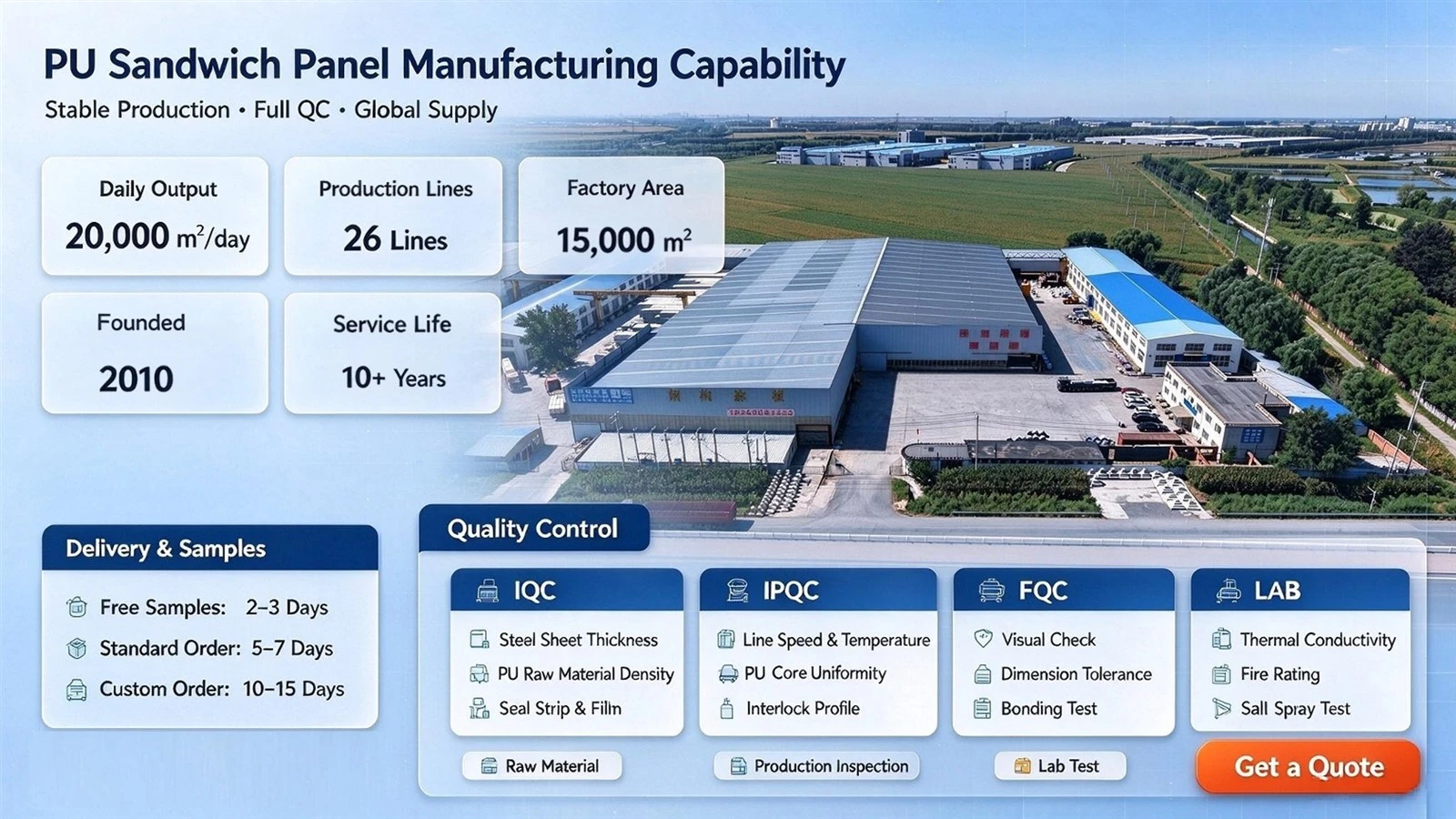
- Experience: Founded in 2010, we have shipped roof and wall sandwich panels to more than 20 countries across Southeast Asia, the Middle East, Africa, South America and Eastern Europe.
- Plant: 15,000 m² factory running 26 production lines with roughly 20,000 m² of daily output.
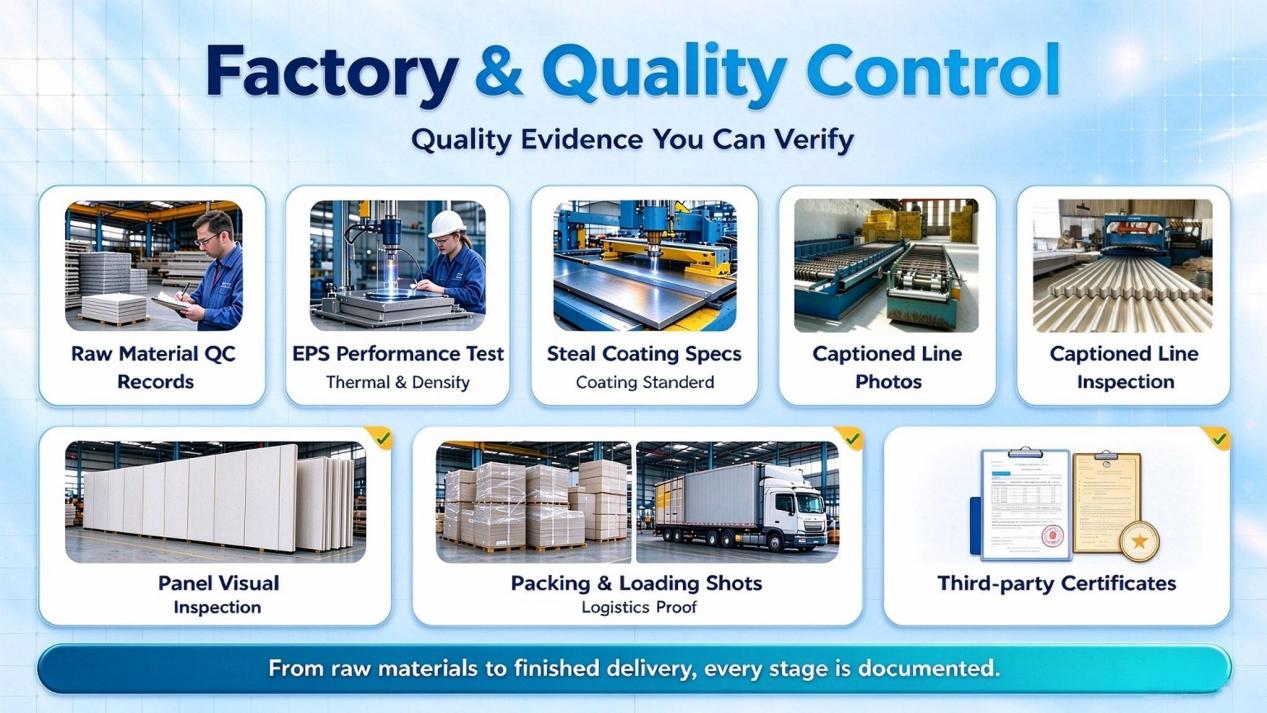
- Incoming inspection: steel coil certificates, coating mass and base thickness are checked; rock wool is verified for density and thickness; no reclaimed filler is used in the core.
- In-process QC: length tolerance, bond strength, panel flatness and core integrity are sampled every shift, with third-party inspection arranged on request.
- Traceability: every pallet carries a batch code that traces back to the coil and the core batch, so a panel delivered to site can be traced to its raw materials.
- One-stop service: written quotations within one working day, export packing, loading supervision with photographs, and a full documentation set prepared against your destination's requirements.
Lead Time, MOQ & Trade Terms
|
Item |
Detail |
|
Lead Time |
Samples 2 working days. Up to 5,000 m²: 5-7 days. 10,000-50,000 m²: 7-15 days. Custom profile or coating: 10-18 days after drawing approval. Urgent slots can be arranged. |
|
Minimum Order |
MOQ 1 m² for samples; 20GP container is the practical minimum for export freight economics |
|
Trade Terms |
FOB / CIF / CFR / DDP / EXW - Incoterms 2020 |
|
Payment |
T/T or L/C at sight; terms confirmed in the proforma invoice |
|
Packing |
PE protective film, corner guards, fumigated wooden pallet, stretch wrap for sea freight; loading photographed |
Warranty and After-Sales Service
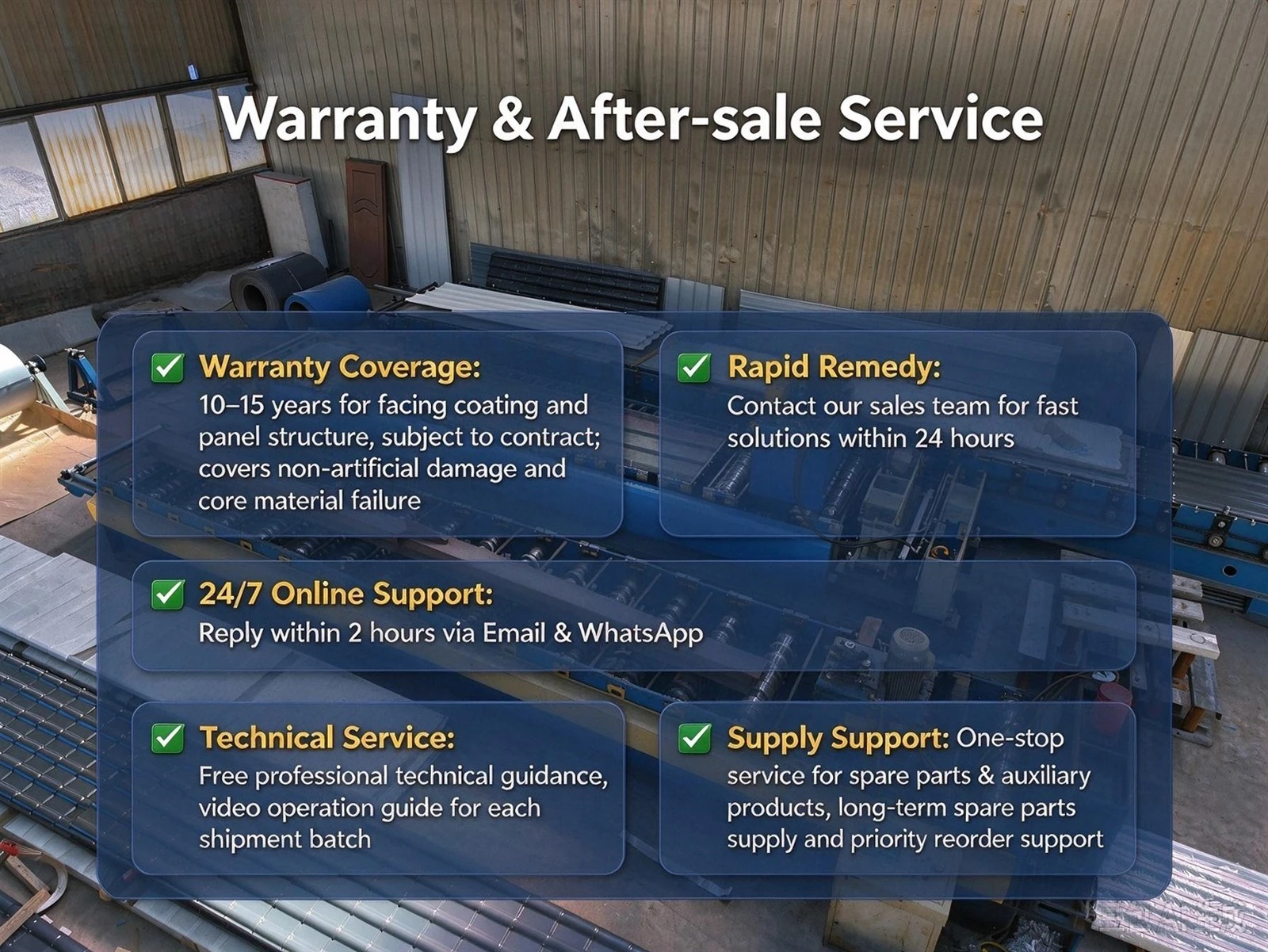
Panels carry a warranty against delamination and against manufacturing defects in the core or the bond. The coating carries a separate film-integrity warranty whose length depends on the coating system and the exposure class - PVDF runs longer than PE, and we state the exact term on the quotation. Not covered: mechanical damage during handling, standing water, unwashed salt or chemical deposits, and unsealed field-cut edges, since those are site conditions rather than panel defects. Remote installation guidance is included, we respond to technical queries within 24 hours, and where a genuine quality issue is confirmed we replace or credit the affected panels before arguing about freight.
Company Profile
Ask us about PUF roof sandwich panels for a tropical project. Send roof area, span, target internal temperature and destination port and we will come back with a thickness recommendation, a U-value calculation, a container plan and a loaded FOB price - normally within one working day. Shenyang Qiangyun was established in 2010; our 15,000 m² plant in Liaoning runs 26 lines at about 20,000 m² per day and ships from Dalian, Tianjin and Yingkou. Samples, third-party test reports and export documentation are provided with the quotation.
FAQ
Q1: Why not just use single-skin corrugated sheet or an EPS core?
A: Because the insulation is in the panel and the joint is sealed, the roof performs in one pass. A bare sheet absorbs heat and drips condensation; an EPS core is thermoplastic and melts in a fire. The rock wool core here is non-combustible, so fire performance does not depend on thickness.
Q2: What does the foamed PU edge seal actually do?
A: It removes the two failures we are called about most: water tracking through the lap, and the condensation line that forms above an uninsulated joint. Because the seal is foamed in place it bonds to the metal faces instead of relying on a site-applied bead.
Q3: What lambda value should I design to?
A: Use lambda = 0.040 W/(m·K) for the rock wool core: roughly 0.80 W/(m²·K) at 50 mm, 0.40 at 100 mm and 0.27 at 150 mm, before the 5-10% you should add for joints and fixings. We will put the EN 12667 test data behind those numbers.
Q4: How does the panel handle monsoon humidity?
A: The joint seal blocks driven rain and the rock wool core does not wick water, so insulation survives the wet season. The real tropical risk is condensation on the underside, which is why we size the thickness against your internal set-point and specify a vapour control layer where the dew-point calculation says it is needed.
Q5: What maintenance does a PUF roof need?
A: Wash salt and industrial deposits off once a year, re-check sealant around penetrations and keep drainage clear. That is genuinely all that is required; the core itself does not age, so the coating is what eventually decides when the roof is re-sheeted.
Related Sandwich Panel Products
The honest way to pick a core is to rank your constraints. If fire approval is the binding one, nothing here beats mineral wool. If insulation per millimetre is what matters and the building is low-risk, PIR at lambda 0.022 outperforms everything else and lets you use a thinner panel. If capital cost rules and the roof is unregulated, EPS is cheaper per square metre. We manufacture all of them, so we can quote the three side by side for the same roof instead of steering you to whichever has the best margin.
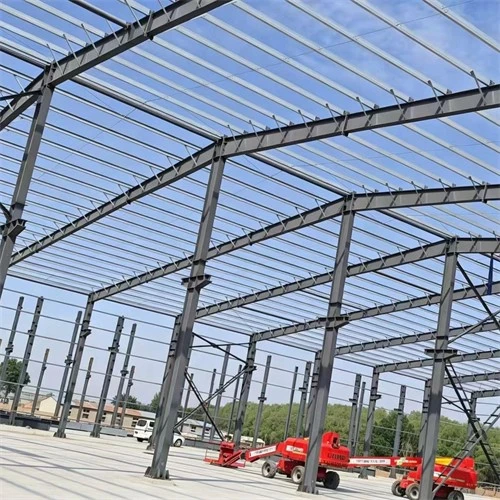
Steel Structure
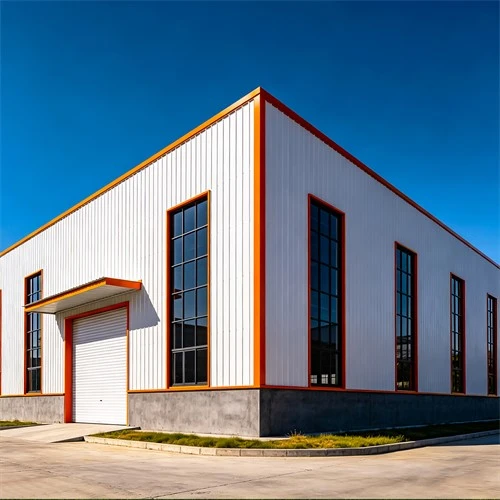
Steel Structure
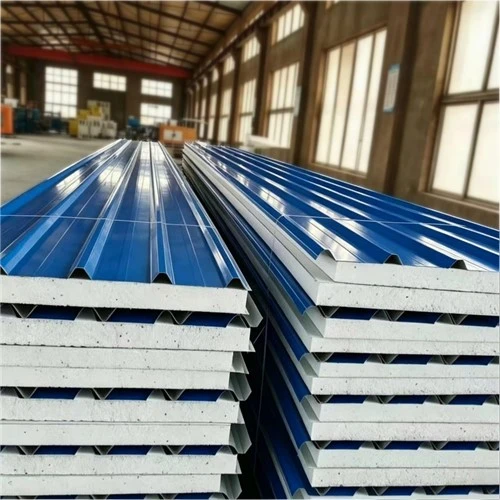
Eps Composite Panels
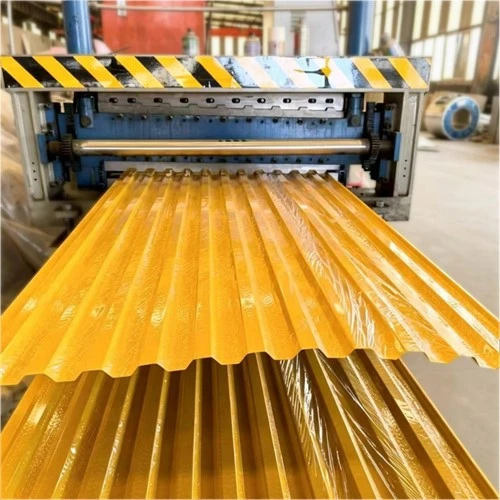
PPGI/PPGL Sheet
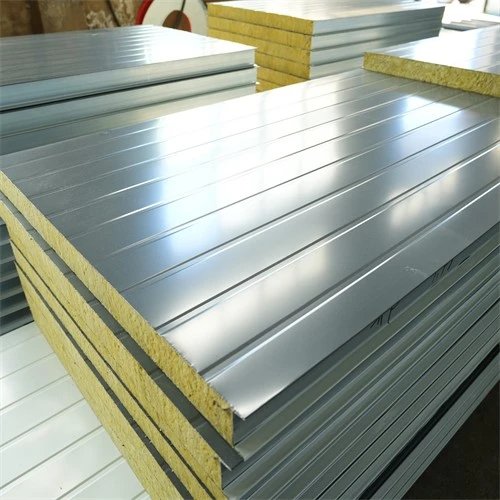
Rockwool Sandwich Panels
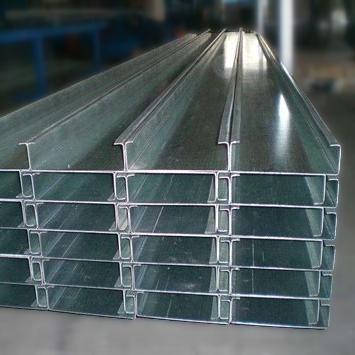
C and Z purlin
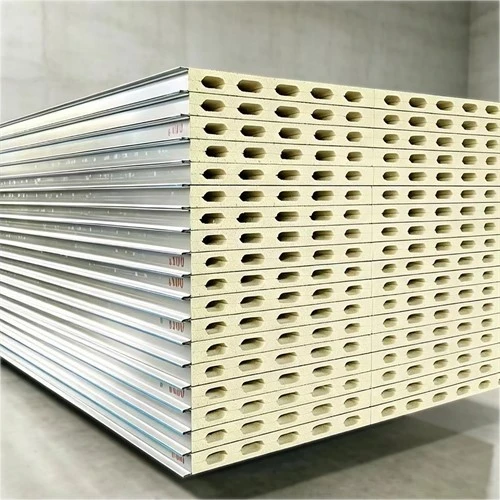
Clean Room Sandwich Panel
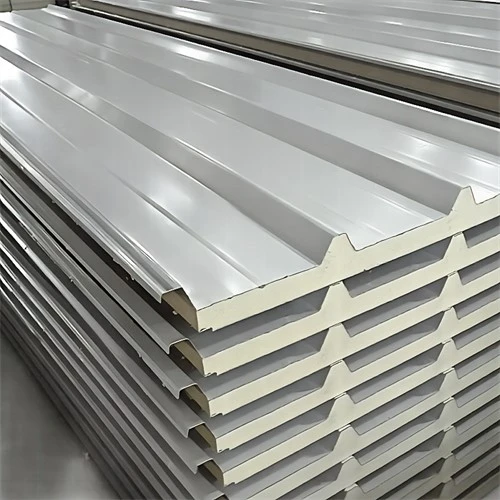
PIR Sandwich Panel
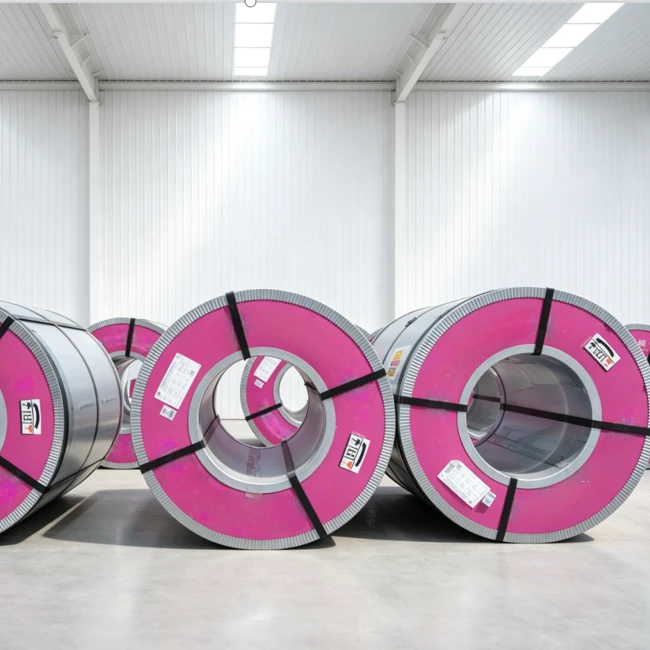
PPGI/PPGL Coil
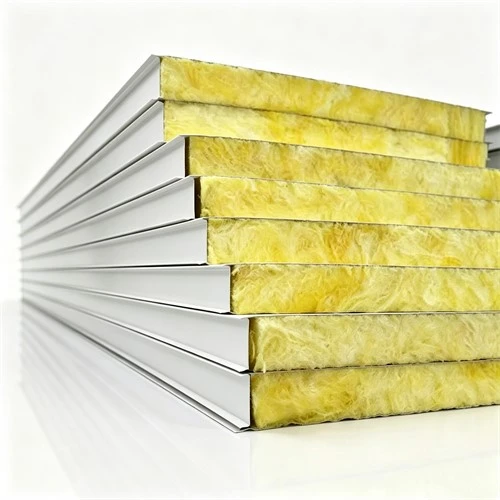
Glasswool Sandwich Panel
Hot Tags: polyurethane foam puf panels roof, China polyurethane foam puf panels roof manufacturers, factory


