

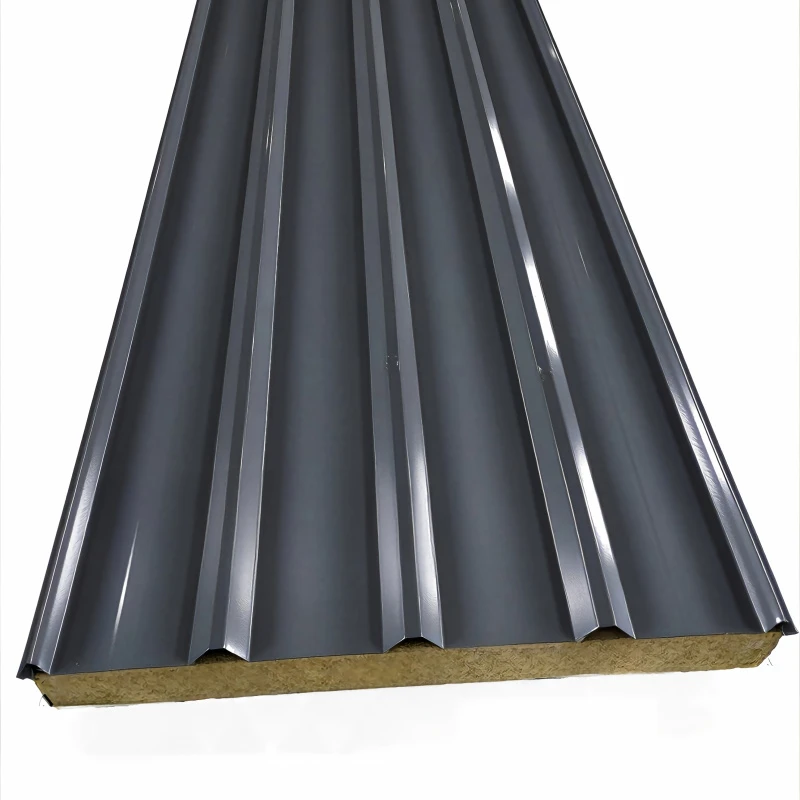
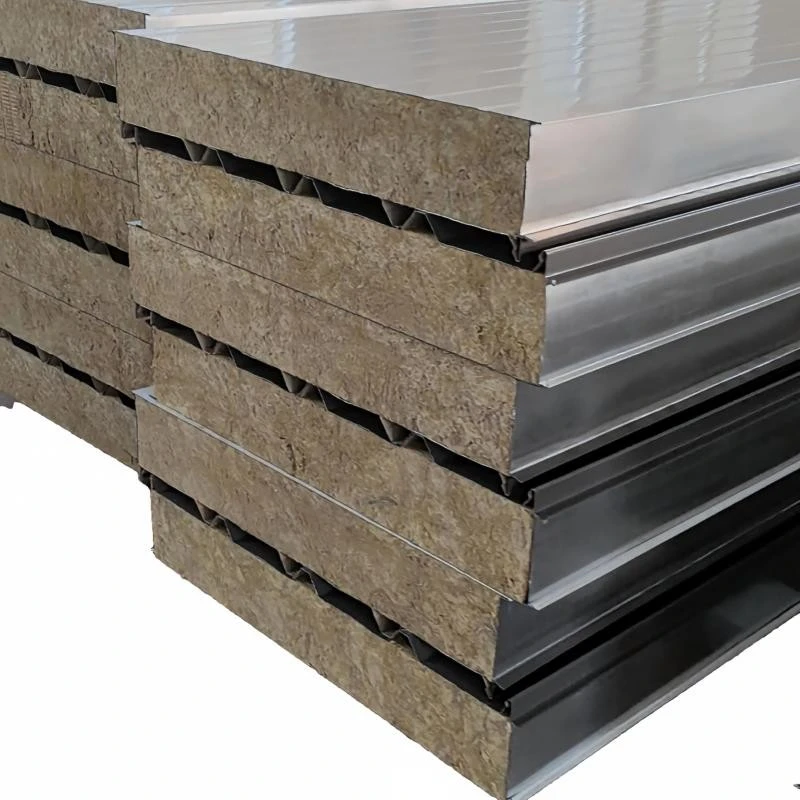
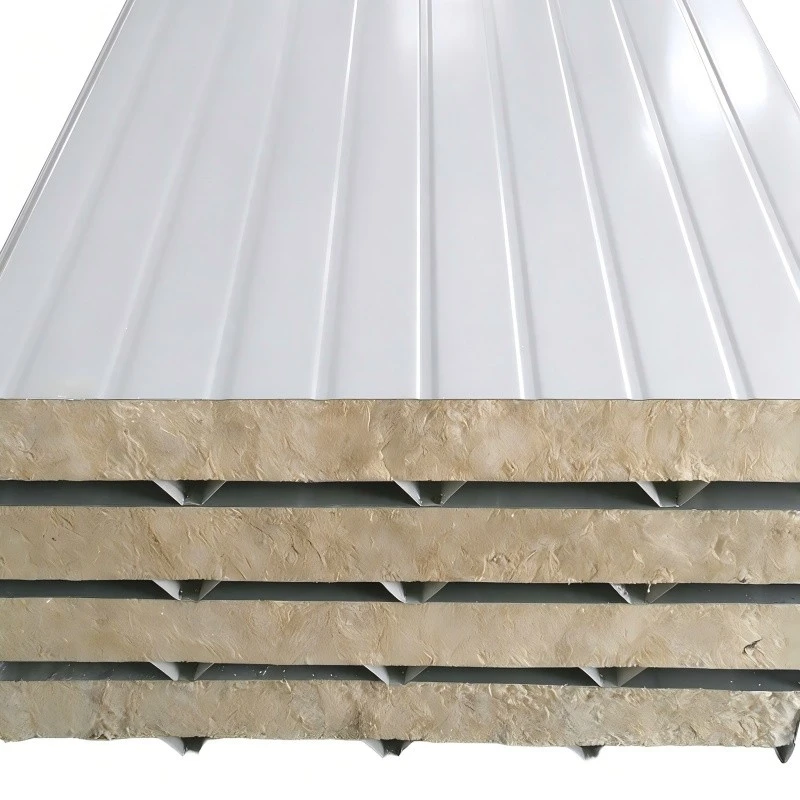
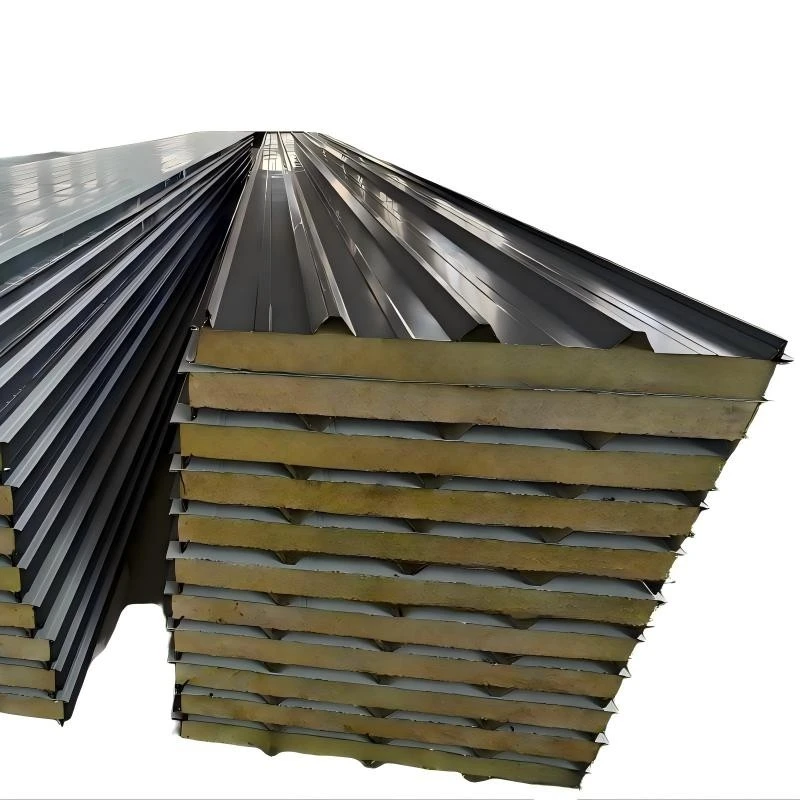
Shenyang Qiangyun Color Steel & Steel Structure Co., Ltd. is one of the most reliable manufacturers and suppliers of roof mineral wool composite panels rockwool in China. With abundant experience, we are committed to providing high quality customized products with competitive price. Welcome to wholesale advanced roof mineral wool composite panels rockwool in stock here from our factory. Also, pricelist is available.
Market Positioning & Pain Points Solved
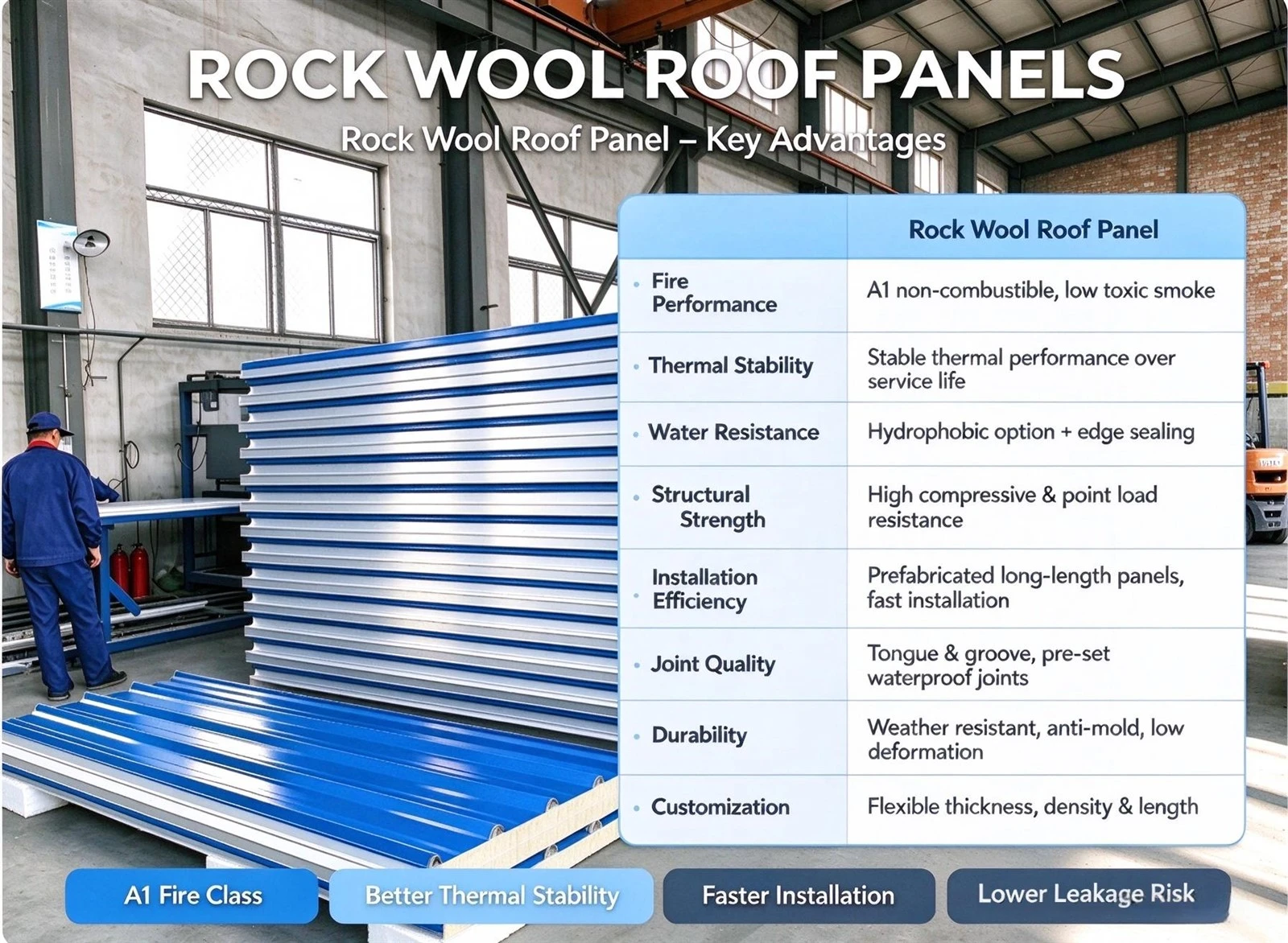
Industrial roofs across South America are increasingly being asked to prove their fire performance. Local fire services, insurers and corporate risk audits all look at what the core is made of, not just at the steel. EPS cores soften and collapse at comparatively low temperatures; PU and PIR cores burn and generate dense, toxic smoke. Either can turn a small incident into a total roof loss and a long production stoppage - and the stoppage usually costs far more than the roof does. Mineral wool behaves differently: it is inorganic, adds nothing to the fire load, produces no molten droplets, and keeps its insulating and structural function at temperatures that destroy organic cores. Set against a single-skin PPGI/PPGL sheet, the composite panel also adds genuine thermal insulation and acoustic absorption instead of a bare metal drum.

Key Advantages
Euroclass A1 core: non-combustible, no molten droplets, limited smoke. Because basalt fibre is inorganic it does not rot, does not support mould growth and does not lose thickness with age, so the insulation you specified is the insulation you still have in fifteen years. Optional hydrophobic treatment keeps short-term water absorption low, so performance survives a wet season. The dense core absorbs sound - rain impact and plant noise - instead of reflecting it. Tongue-and-groove edges speed erection and seal the roof against driving rain. Non-toxic, recyclable, and configurable in length, thickness, core density and coating to suit the structural and fire design.
Technical Specifications
|
Parameter |
Specification |
|
Product Name |
Roof Mineral Wool Composite Panels (Rockwool) |
|
Material |
Rock Wool core + color-coated metal faces |
|
Metal Thickness |
0.3-0.8 mm |
|
Panel Thickness |
50 / 75 / 100 / 120 / 150 mm (200 mm to order) |
|
Core Density |
80-150 kg/m³ (higher grades for span and load duty) |
|
Width |
950 mm / 1150 mm |
|
Color |
Customized (RAL, safety or identification colours) |
|
Fire Rating |
Non-combustible (Class A / A1) |
|
Thermal Conductivity |
≤ 0.040 W/(m·K) |
|
Sound Performance |
30-50 dB |
|
Design Service Life |
20+ years with routine coating maintenance |
|
Brand |
QY |
|
Place of Origin |
China |
Performance Parameters
|
Property |
Value / Rating |
|
Reaction to Fire |
Euroclass A1 (non-combustible) - EN 13501-1 |
|
Smoke / Flaming Droplets |
s1 (limited smoke), d0 (no flaming droplets) |
|
Fire Resistance (load-bearing) |
0.5 h / 1 h / 2 h / 4 h (assembly-dependent) |
|
Thermal Conductivity (λ) |
≤ 0.040 W/(m·K) |
|
Core Density |
80-150 kg/m³ |
|
Compressive Strength |
85-105 kPa |
|
Shear Strength |
60-80 kPa |
|
Sound Insulation |
30-50 dB |
|
Water Absorption (short-term) |
≤ 1 kg/m² with hydrophobic treatment (EN 1609) |
|
Core Melting Point |
> 1000 °C (mineral wool, inorganic) |
Thickness, Density & Fire Rating Selection
Thickness is only one of three variables - the others are core density and the supporting structure. Indicative core-only U-values, calculated as λ / thickness with λ = 0.040 W/(m·K) and excluding joint and fastener effects, work out at roughly 0.80 W/(m²·K) for a 50 mm core, 0.53 for 75 mm, 0.40 for 100 mm, 0.33 for 120 mm and 0.27 for 150 mm. Density selection: 80-100 kg/m³ for general insulated roofing on standard purlin spacing; 120-150 kg/m³ where spans are wider, the roof carries plant equipment, or maintenance foot traffic is expected - higher density buys compressive strength and fixing pull-through resistance, not better insulation, since λ is broadly constant across the range. One caveat we always state: fire resistance duration is a property of the complete assembly - panel thickness, span, support type and joint detailing - not of the panel on its own. Give us the span and support and we will say what your build-up can be expected to achieve, with the test report behind it.

Surface Material & Coating Options
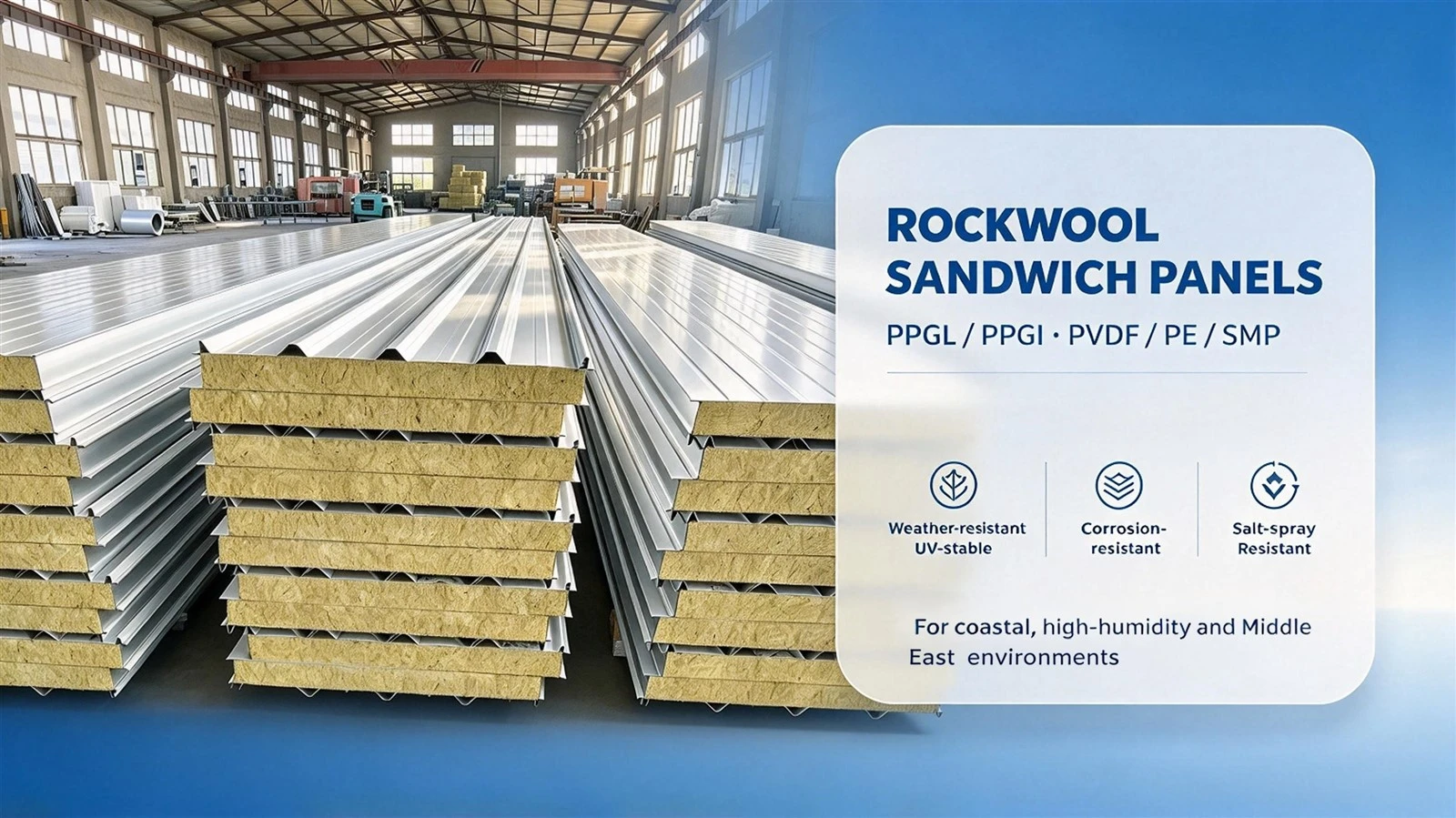
Substrate options are hot-dip galvanised steel (Z275) and aluminium-zinc coated steel (AZ150). For the coastal and high-humidity industrial sites common in South America - and for plants with fertiliser, chemical or salt-laden atmospheres - we normally specify aluminium-zinc, whose sacrificial protection resists salt spray and cut-edge corrosion considerably better than a standard zinc coating. PVDF is the coating of choice where UV load is high; SMP and PE are offered for inland or budget-driven projects. We deliberately do not recommend the same build-up for a plant in Lima and a plant in Manaus: substrate and coating should be matched to the actual exposure class, and the exposure class we assumed is stated on the quotation.
Colour, Marking & Customization
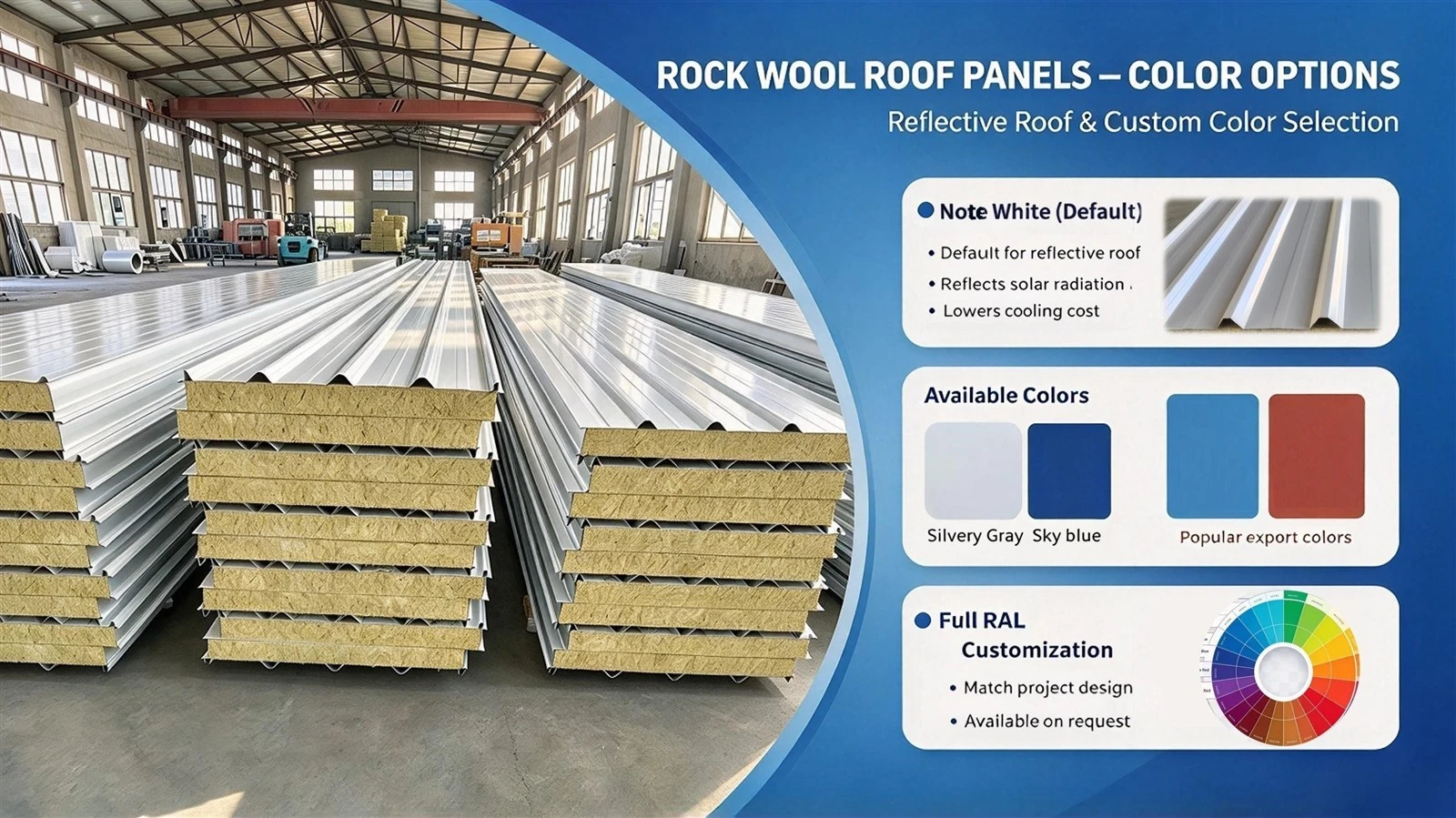
Off-white is the energy-efficient default, but industrial clients usually need marking rather than styling: safety colours for walkways and plant areas, corporate RAL shades, or printed identification and handling instructions on the coil. Every RAL code can be matched, and panel length, thickness and profile are set to suit the structural grid so that cutting on site - and the core exposure that comes with it - is minimised. One honest caveat: darker colours absorb more heat. Where roof temperature or cooling load matters, ask us for the reflectance figure before you commit to a colour.
Application Scenarios
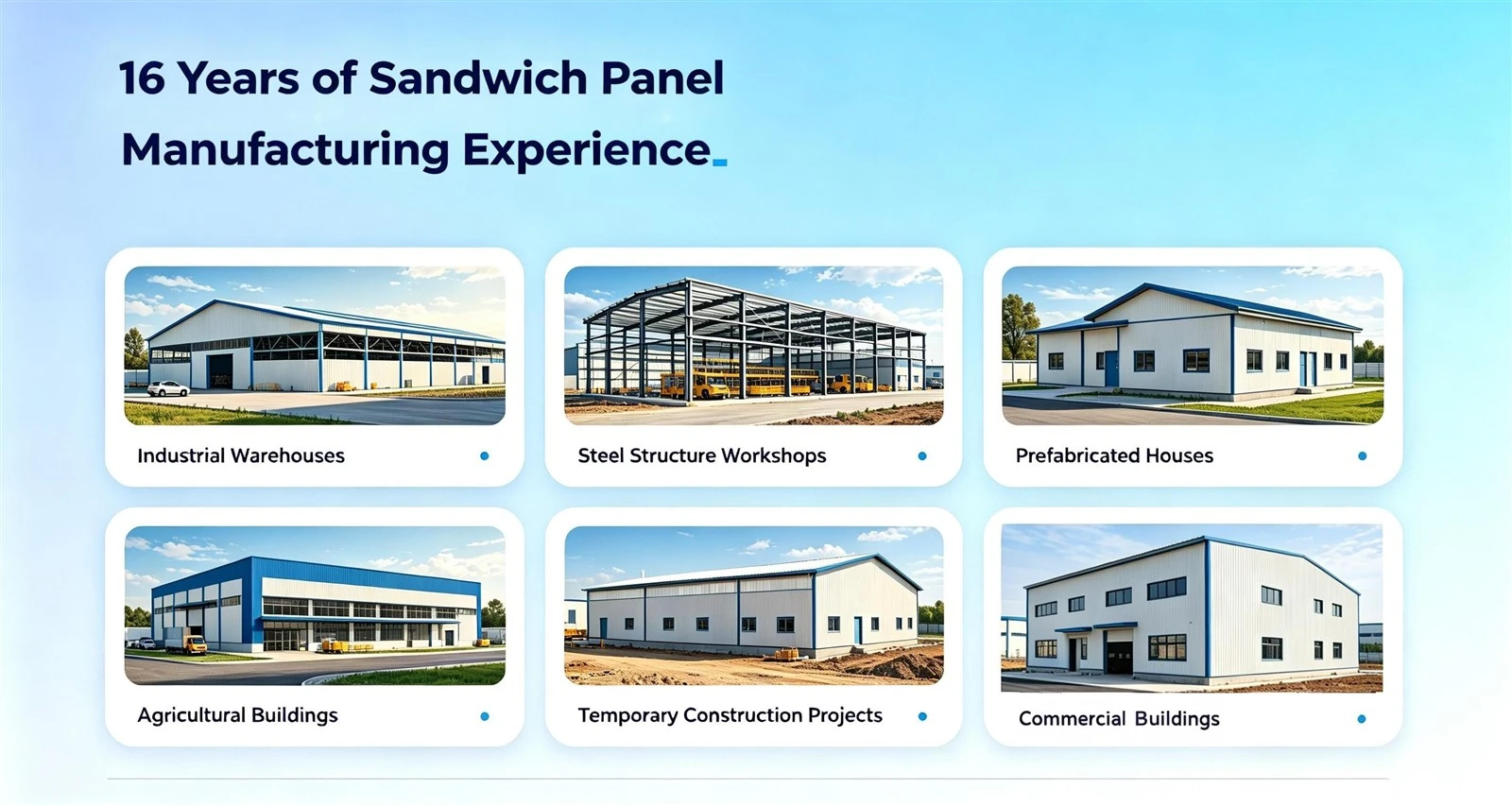
Specified for duty-class industrial roofs rather than for light commercial sheds: steel-structure plants with continuous equipment operation and vibration; warehouses with high-bay racking and dense cargo turnover where fire compartmentation is written into the licence; processing and assembly facilities that need rain-noise and plant-noise control; and coastal or high-humidity sites where salt and standing moisture destroy unprotected steel within a few seasons.
Representative Project Reference
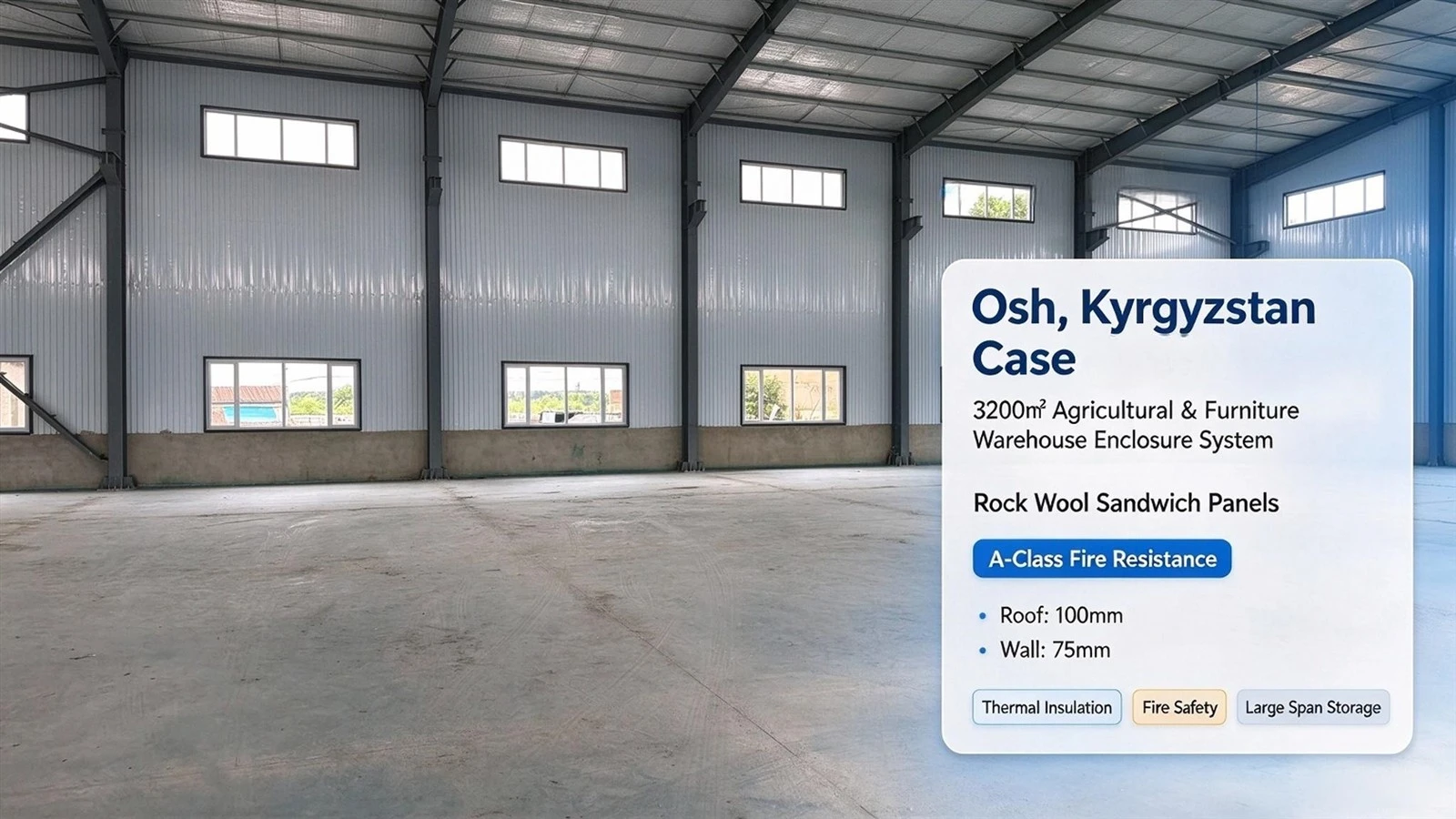
Callao, Peru - 5,400 m² steel-structure warehouse for a food-group logistics operator (2023). 120 mm mineral wool composite panels with a 120 kg/m³ core on aluminium-zinc substrate with SMP coating, erected over purlins at 1.8 m centres. The roof build-up was submitted to the local fire authority as part of the licensing file and accepted on the strength of the A1 core documentation; the client also reported noticeably lower rain noise in the picking area than in the older single-skin building beside it. Erection took 21 days. Panel and coating certificates for the shipment are available on request.
Customization & OEM/ODM Service
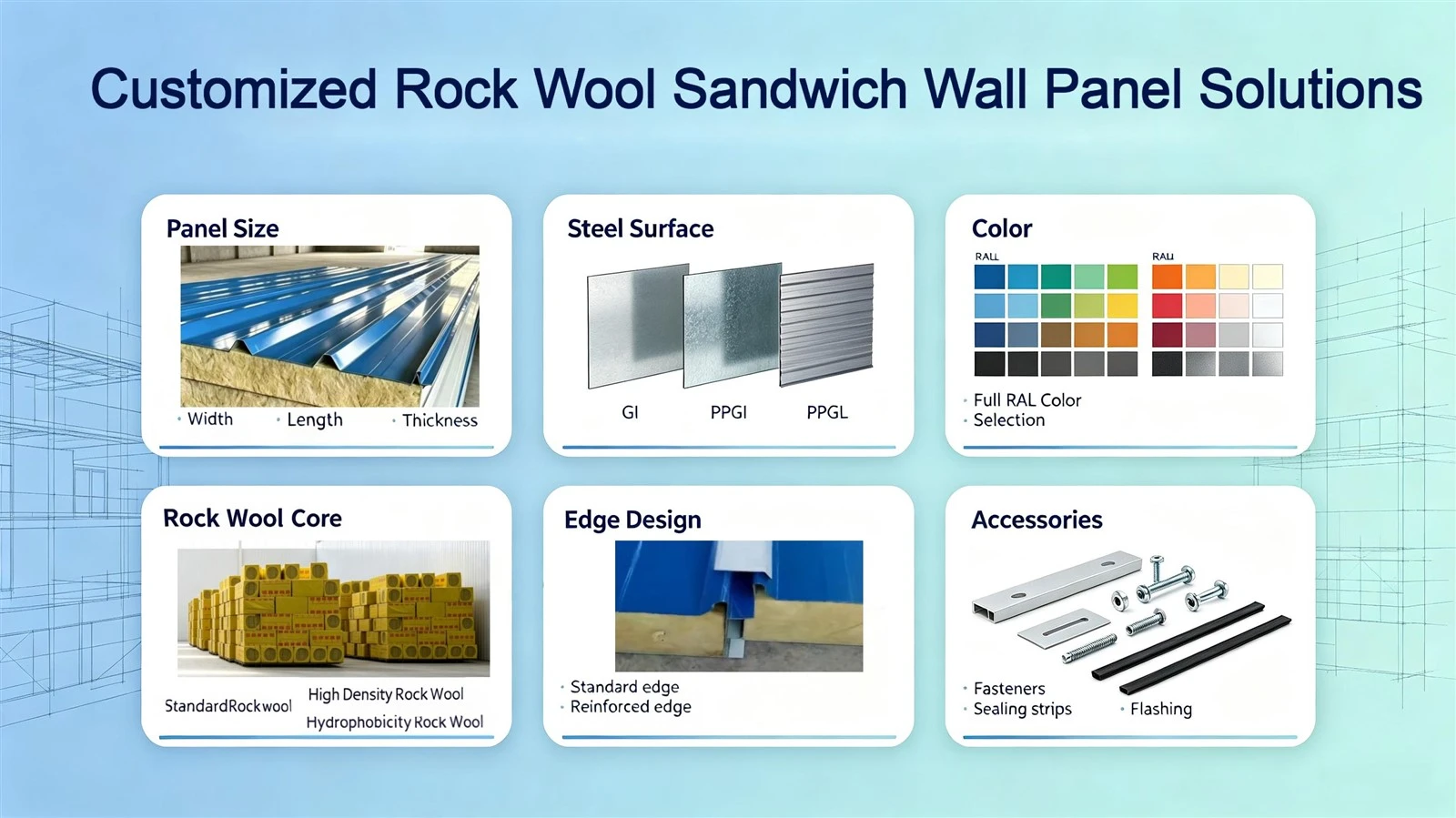
We build to the structural and fire design rather than to a catalogue: length, thickness, core density, steel grade, substrate, coating and RAL colour are all configurable, and we produce to your drawings under your brand with your packing and marking. Engineering support covers span and load checks, joint detailing, and the documentation set needed for the local fire submission. Incoming coils and rock wool are inspected and logged before pressing; bond strength, core density and dimensions are verified on line; pallets are inspected and photographed at loading, so what leaves the factory is what reaches your site.
Certifications & Compliance
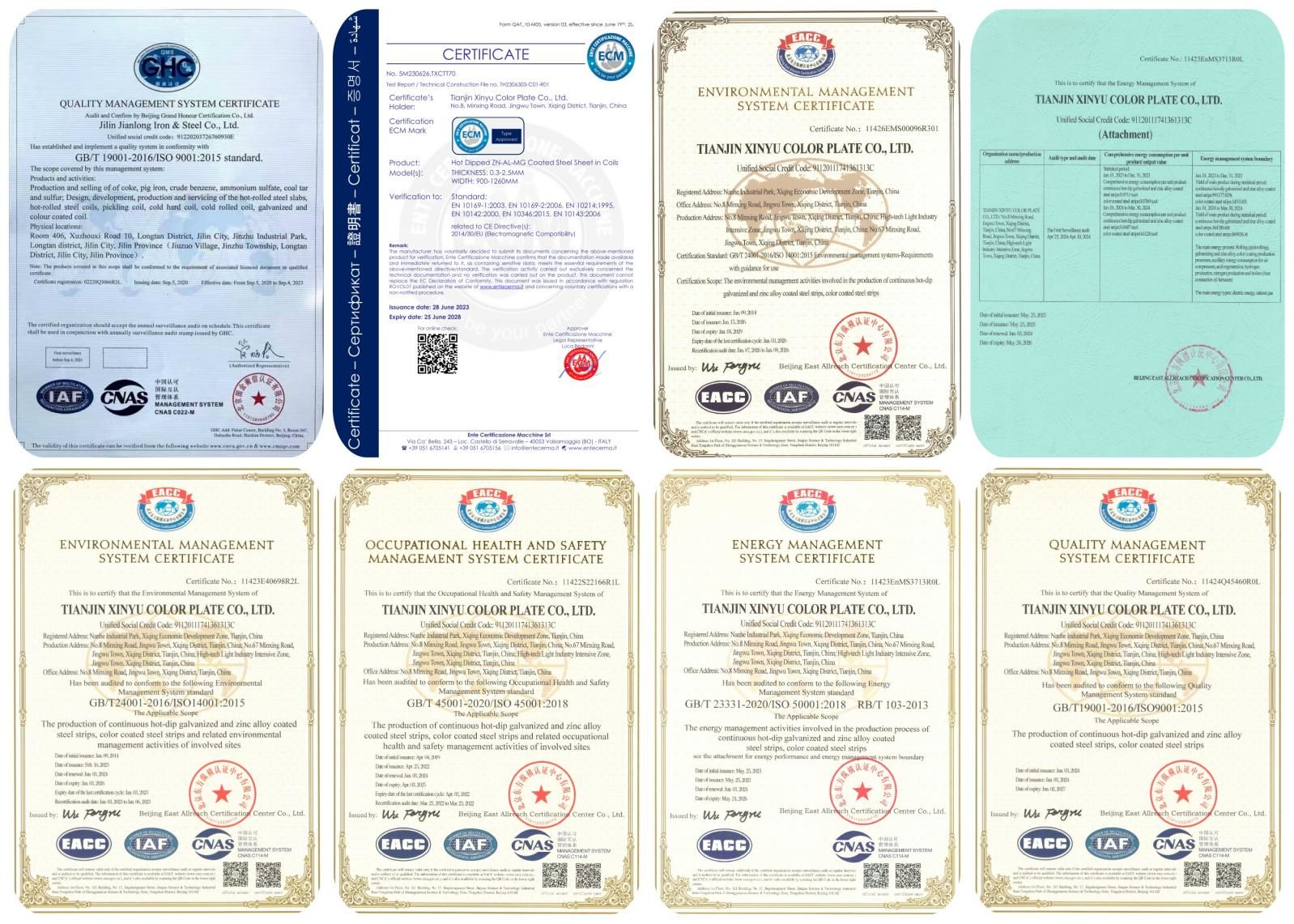
Fire performance is documented to EN 13501-1 (Euroclass A1, including smoke and flaming-droplet classification); core product conformity to EN 13162; sandwich panel performance to EN 14509; thermal conductivity to EN 12667 / EN 12939. Production runs under an ISO 9001 quality management system. Where a project authority applies local or national provisions - Brazilian ABNT NBR or Chilean NCh fire requirements, for example - we supply the evidence in the format the reviewing body asks for, and we state plainly which clauses are covered by test reports and which rest on engineering judgement. Declarations of performance and CE documentation are issued per shipment.
Manufacturing Strength & Quality Control
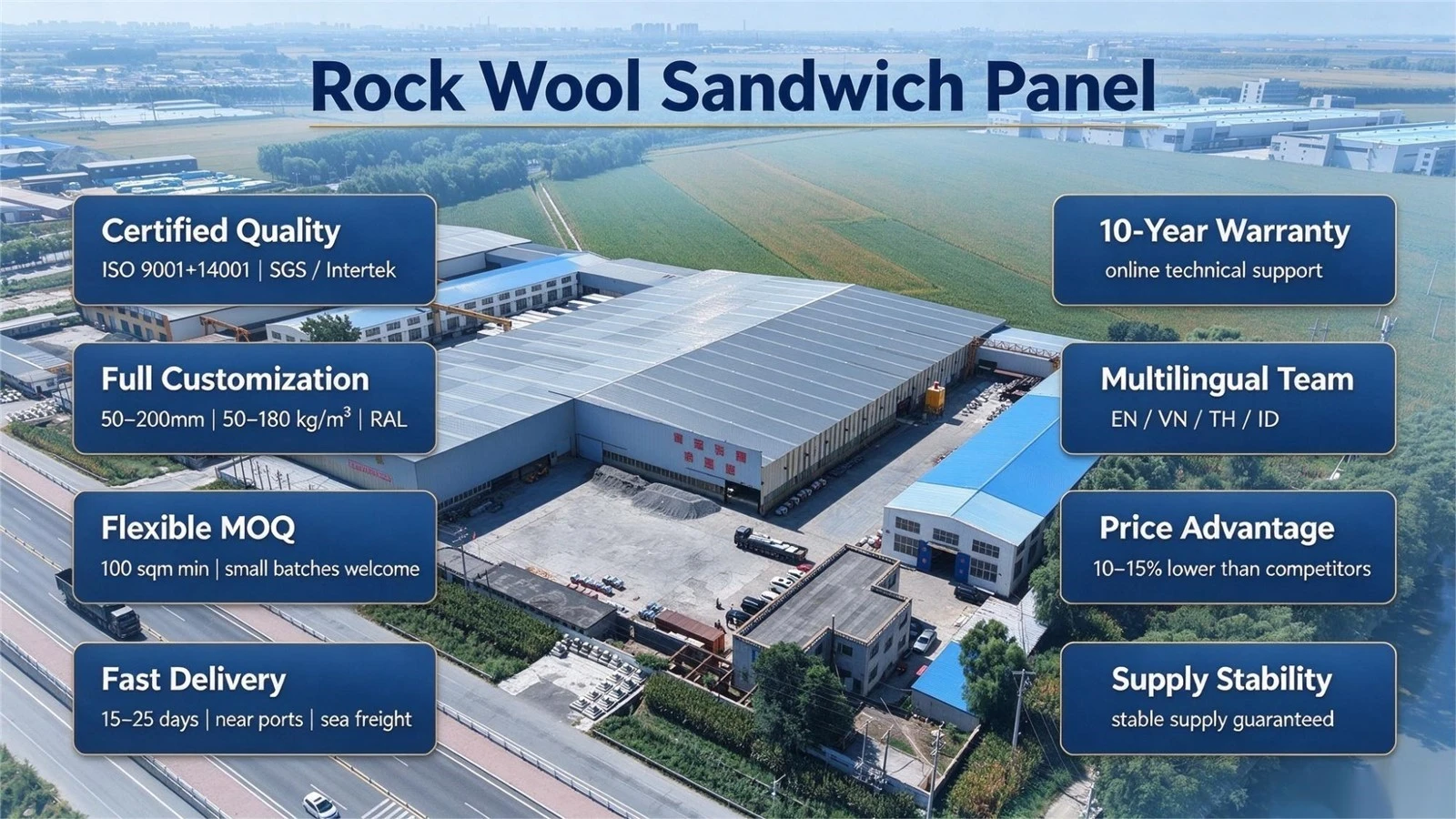
Founded in 2010, our 15,000 m² factory operates 26 production lines at roughly 20,000 m² of daily capacity. Quality control is document-driven: coil certificates are checked against the order before uncoiling, core density and thickness are verified per batch, and bond strength, panel length and squareness are sampled on line and again at packing. Every pallet carries a batch code that traces back to the coil and to the core batch. More than ten years of export production means panels are packed, marked and documented for customs clearance and site handover as a matter of routine. A 20-plus year design life is a reasonable assumption - but be clear about what sets that limit: it is the steel and its coating, not the mineral wool, which does not age.
Lead Time, MOQ & Trade Terms
|
MOQ |
1 m². For export orders a 20GP container is the practical minimum, since freight per m² drops sharply. |
|
Price Range |
USD 4.29 - 17.9 / m² FOB, varying with core thickness, density and quantity |
|
Lead Time |
Samples 2-3 days; standard bulk 7-10 days; custom specifications 10-15 days. Large or urgent orders can be scheduled ahead. |
|
Trade Term |
FOB / CIF / CFR / EXW (Incoterms 2020), or as negotiated |
|
Payment |
T/T, L/C, Western Union - other terms negotiable |
|
Packing |
Samples: bubble bag + carton. Bulk: stretch-wrapped on fumigated wooden pallets with waterproof PE film and corner protectors. |
|
Port of Loading |
Dalian / Tianjin |
|
Documents Provided |
Mill test certificates, packing list, certificate of origin, DoP / CE, fire test reports |
|
Sample Policy |
Cut samples (up to 4 pieces) free of charge; courier freight collect |
FAQ
Q1: Is the panel really non-combustible?
A: The mineral wool core is classified Euroclass A1 to EN 13501-1 - it does not burn, melt or produce flaming droplets. The steel faces are non-combustible, so the classification of the assembled panel is driven by the core. Classification reports are supplied with the quotation rather than after you ask.
Q2: How long will the roof resist fire?
A: Fire resistance duration (0.5 h, 1 h, 2 h or 4 h across our range) belongs to the complete assembly - panel thickness, span, support type and joint detailing - not to the panel in isolation. Send us the span and support arrangement and we will state the achievable rating together with the test evidence behind it.
Q3: Which core density should I choose?
A: 80-100 kg/m³ for general insulated roofing on standard purlin spacing. Move to 120-150 kg/m³ where spans are wider, the roof carries plant equipment, or maintenance foot traffic is expected. Higher density buys compressive strength and fixing pull-through resistance; it does not meaningfully improve thermal conductivity, which is broadly constant across the range.
Q4: Will the core take up water in a humid climate?
A: Untreated mineral wool will absorb water if it is left exposed. Our production core is hydrophobic-treated and the tongue-and-groove joints are sealed on site, so short-term absorption stays low and the insulation recovers once dry. Cut edges must be sealed - in our experience this is the single most common cause of wet-core complaints, and it is a site issue rather than a panel defect.
Q5: Can you support the fire-authority submission?
A: Yes. We supply the declaration of performance, CE documentation where applicable, the EN 13501-1 classification report and thermal test data, and we will tell you in advance which items are backed by test evidence and which need local engineering sign-off.
Q6: What service life should we assume?
A: The mineral wool core does not age, rot or settle, so it keeps its insulating value. Service life is limited by the steel and its coating: with substrate and coating matched to the exposure class and with normal maintenance, 20-plus years is a reasonable design assumption. Coastal and chemically aggressive sites need the higher-grade specification, and we say so on the quotation rather than after delivery.
Contact
Talk to us about Roof Mineral Wool Composite Panels for your plant. Send the roof area, purlin spacing, required fire rating and destination port, and we will come back with a panel build-up, a core density recommendation, the fire classification your assembly can realistically be expected to achieve, and a loaded quotation - normally within one working day. Custom specifications, bulk orders, one-stop engineering support and the full certification package for overseas projects are standard. And if a cheaper core would genuinely serve your building better, we will tell you that at the start.
Choosing the Right Core: An Honest Comparison
Rock wool is not the right answer for every roof, and we would rather say so at quotation stage than at claim stage. If budget is the binding constraint and the building carries low fire risk, EPS or PIR will beat mineral wool on price per square metre or on insulation per millimetre. If the building is a cold store, PIR's low thermal conductivity wins outright. Mineral wool earns its premium where fire compliance, insurance review, high occupancy or hot plant equipment make a non-combustible core a requirement rather than a preference - and where the roof is still expected to be performing in twenty years. We manufacture the full range and will quote the alternatives against each other, so the decision is made on the numbers for your building rather than on a generic claim.
Steel Structure
Steel Structure
Eps Composite Panels
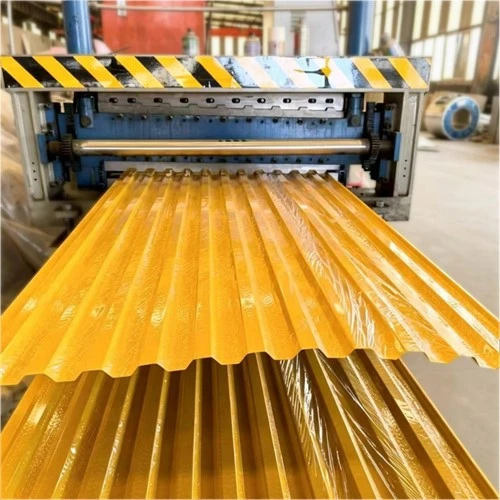
PPGI/PPGL Sheet
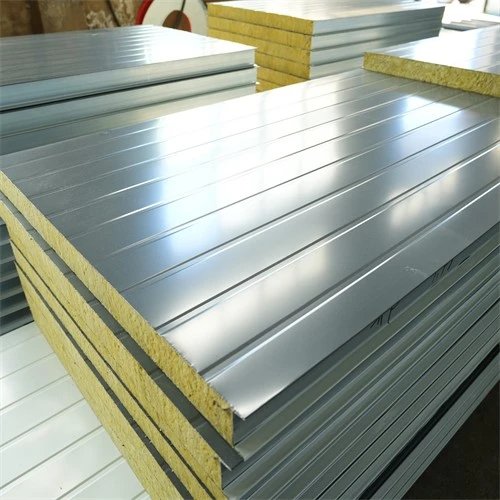
Rockwool Sandwich Panels
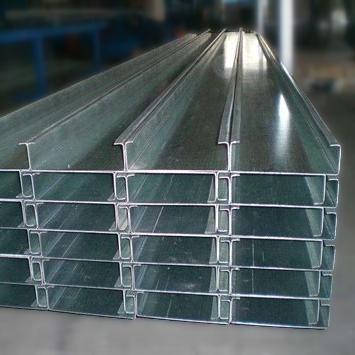
C and Z purlin
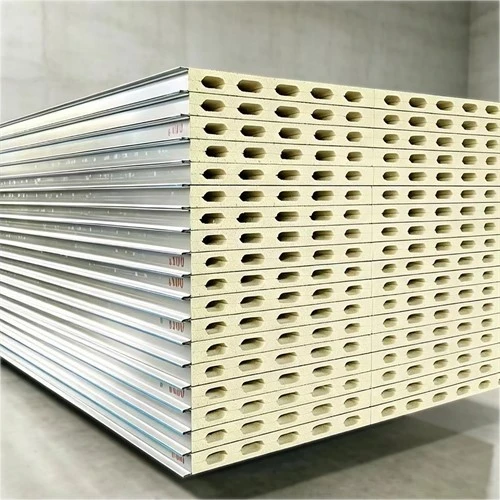
Clean Room Sandwich Panel
PIR Sandwich Panel
PPGI/PPGL Coil
Glasswool Sandwich Panel
Hot Tags: roof mineral wool composite panels rockwool, China roof mineral wool composite panels rockwool manufacturers, factory


